
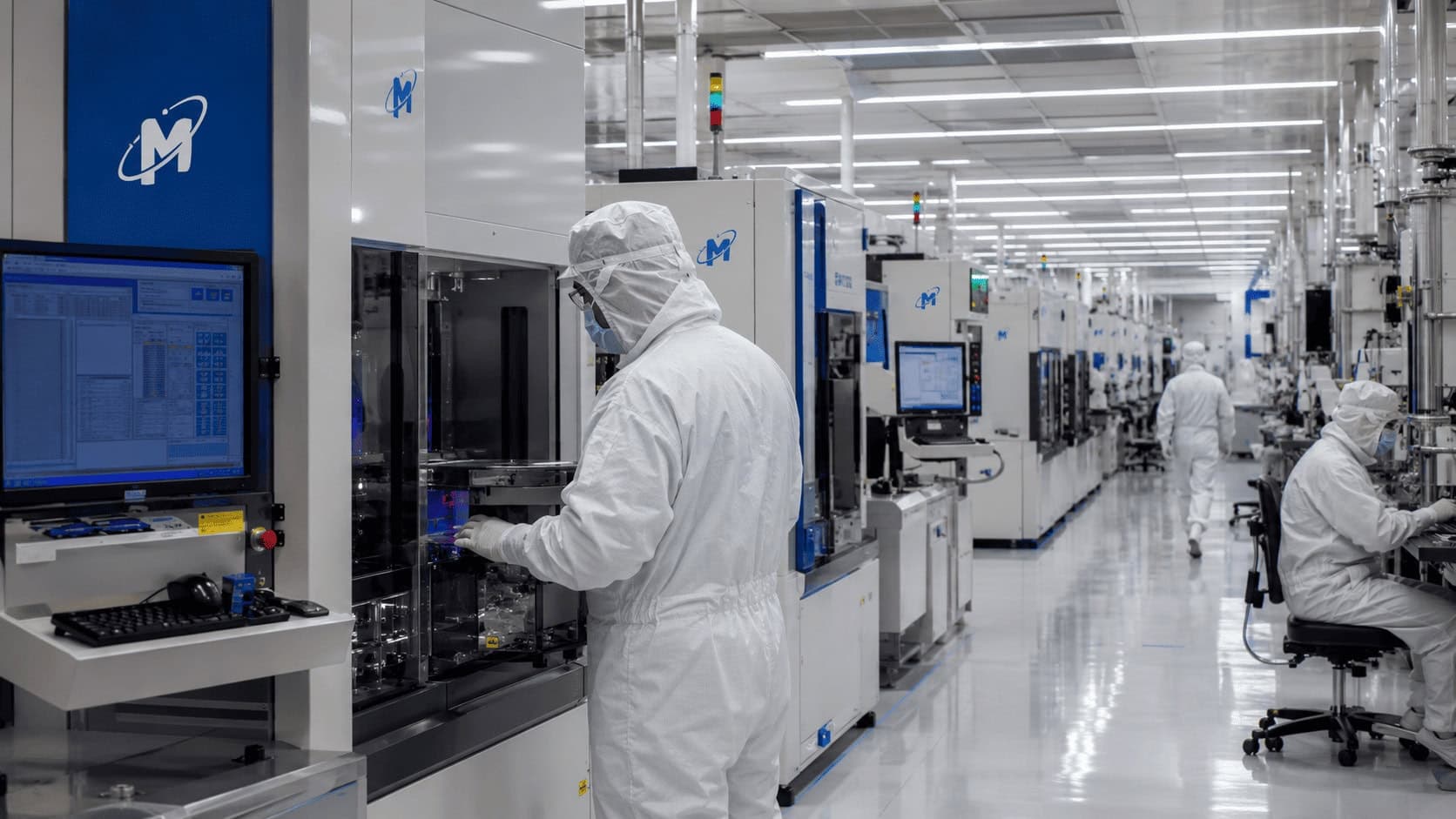
Chipmakers and cloud providers, including Micron and Oracle, have utilized multi-year take-or-pay supply contracts to stabilize capital-intensive AI infrastructure expansions. Analysts warn that these backlog-heavy business models mirror past hardware industry cycles that resulted in costly contract renegotiations when demand eventually softened.
The shift toward non-cancellable contracts provides short-term financial stability but creates a brittle supply chain. If demand for AI compute or memory rolls over, suppliers face the choice of enforcing agreements against cash-strapped customers or accepting costly renegotiations that delay the next demand cycle. For the streaming and broader tech ecosystem, this infrastructure layer is now heavily leveraged against future growth that may not materialize linearly. Watch for any changes in Oracle's RPO conversion rate — currently only 12% is expected to convert within 12 months — as a leading indicator of genuine demand vs. speculative capacity hoarding.
The pressure on AI infrastructure providers is accelerating as the 'Big Four' hyperscalers—Amazon, Alphabet, Meta, and Microsoft—guide toward a combined $725 billion in capital expenditure for 2026. This represents a 77% increase over 2025 levels, per Financial Times reporting in May 2026. Microsoft alone signaled a $190 billion budget for the year, with CFO Amy Hood noting that rising memory chip prices contributed roughly $25 billion to that total. These companies are navigating a market where memory remains the primary bottleneck, with TrendForce reporting that DRAM contract prices surged approximately 95% in Q1 2026.
Hardware manufacturers are responding with unprecedented capacity expansions that mirror the deal structures at Micron. Per TrendForce in April 2026, Nvidia is shifting its mix so that the Blackwell architecture accounts for over 70% of high-end GPU shipments to satisfy this demand. Meanwhile, memory leader SK Hynix announced a $15 billion investment in February 2026 to scale High-Bandwidth Memory (HBM) production, having already sold out its entire 12-month supply under long-term contracts. This industry-wide rush to lock in supply through 2027 and 2028 is designed to 'kill the cycle' of traditional semiconductor volatility, but it leaves both suppliers and hyperscalers acutely exposed to any slowdown in generative AI adoption.
Add StreamingMeme as a preferred source on Google to see more of our streaming news at the top of your Search results.
Add as preferred source