

Agora launches 3D spatial audio API to drive immersive real-time streaming
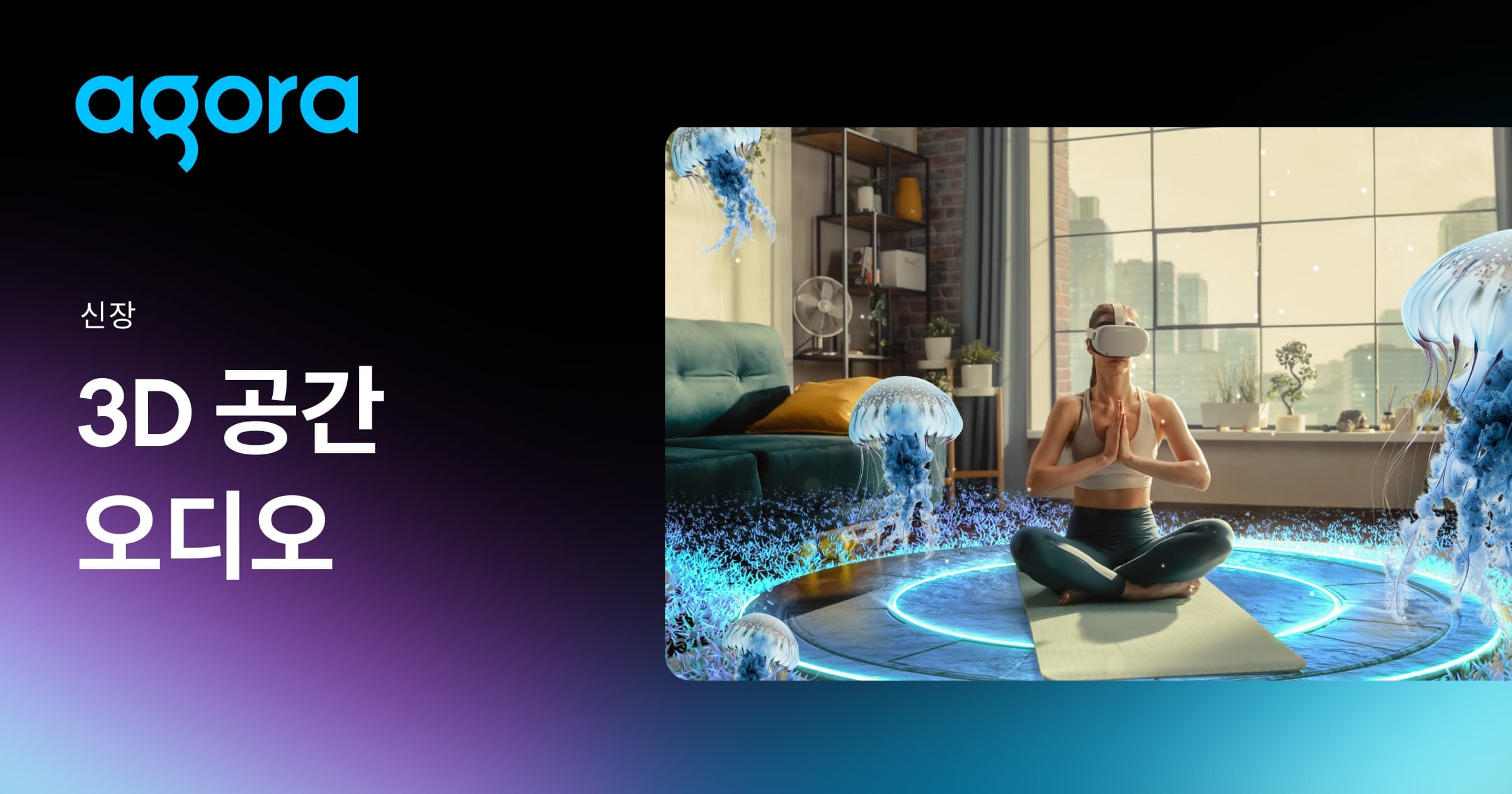
Agora has launched a new 3D spatial audio API designed to provide immersive, high-fidelity, and low-latency audio for real-time experiences. This API integrates with Agora’s existing video, voice, and streaming products, supporting various platforms including mobile and desktop. The technology aims to enhance user engagement by simulating natural listening environments for use cases like livecasting, meetings, and music streaming.
Key Takeaways
- Supports 48kHz full-band sampling to enable precise tracking of speaker direction and distance.
- Cross-platform compatibility includes iOS, Android, macOS, Windows, Unity, React Native, and Electron.
- Integrated directly into Agora Console, allowing one-click activation of 3D audio as an extension.
- Features built-in air attenuation and background blur to replicate physical acoustic environments.
- Scalable infrastructure supports real-time synchronization for sessions ranging from 1:1 calls to millions of users.
Why It Matters
The launch marks a critical shift for real-time engagement (RTE) platforms moving from standard stereo to immersive, context-aware audio environments. For the streaming ecosystem, this reduces the technical overhead for developers competing with high-end proprietary spatial audio solutions from Apple and Meta. By providing out-of-the-box 3D positioning, Agora enables smaller platforms to offer the 'sensory immersion' previously reserved for AAA gaming or premium cinematic content. Watch for the adoption of this API in the social audio and live retail sectors, where spatial positioning can significantly reduce fatigue and increase session duration.
Additional Context
The rollout of the 3D spatial audio API follows a period of financial stabilization for Agora. In May 2026, the company reported Q1 revenue of $37.7 million, representing a 13.5% year-over-year increase and marking its sixth consecutive quarter of GAAP profitability (per company filings, May 2026). This growth is increasingly driven by the 'tech media' segment, where low-latency delivery and intelligent infrastructure are becoming primary differentiators. Deloitte's Fall 2025 Digital Media Trends survey noted that 2026 consumers are shifting toward unified, immersive experiences, with engagement quality now rivaling content volume as a key retention metric.
Strategically, Agora has pivoted toward a 'Physical AI' and Conversational AI focus. In August 2025, the company announced the general availability of its integration with OpenAI’s Realtime API, allowing developers to build low-latency AI voice agents that use Agora’s global Software-Defined Real-Time Network (SD-RTN) for routing (per Agora release, September 2025). This network currently handles over 60 billion minutes of interaction monthly across 200 countries. Competitors like Twilio and ZEGOCLOUD are also pursuing similar high-fidelity audio paths, but Agora’s recent launch of 'Agent Studio'—a no-code platform for deploying voice AI—suggests its strategy is focused on lowering the barrier to entry for complex RTC features (per BofA Global Research, May 2026). CEO Tony Zhao recently signaled confidence in this direction by announcing a personal intent to purchase up to $20 million in Agora shares over the next 12 months (per PR Newswire, June 2026).
Read full article at prod.agora.io
Enjoy our coverage?
Add StreamingMeme as a preferred source on Google to see more of our streaming news at the top of your Search results.
Add as preferred source