

3D Modeling Audits Deepfakes for Physics Inconsistencies
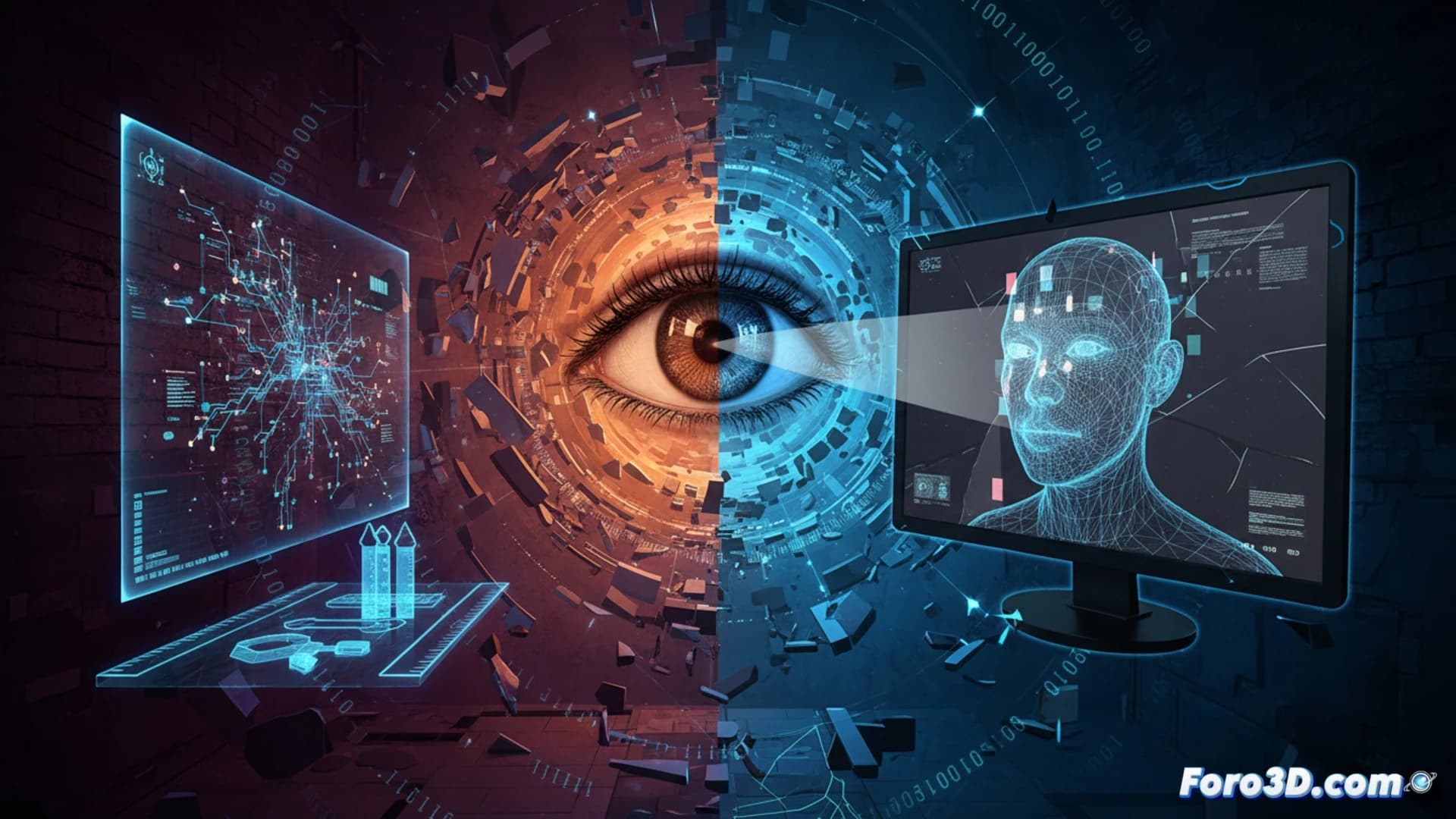
The article discusses how 3D modeling and computer vision are used for deepfake auditing, identifying inconsistencies in lighting, shadows, and facial geometry to distinguish synthetic content from real recordings. This technical analysis helps professionals verify the authenticity of digital media in an era blurred by generative AI.
Key Takeaways
- Deepfake auditing analyzes ambient lighting for accurate light direction and cast shadows, which AI generators often fail to replicate.
- Facial geometry analysis, reconstructing 3D models of faces, compares symmetry and proportions against standard biometric parameters.
- Practical cases show deepfake detection by identifying issues like inaccurate chin shadows during head movement or physically impossible light refractions in rendered objects.
Why It Matters
As generative AI makes synthetic media increasingly realistic, the development of robust detection methods is crucial for maintaining trust in digital content. This technical approach highlights the enduring role of physical laws in verifying authenticity, even as AI advances. The industry will need to integrate such auditing tools into workflows for content verification and intellectual property protection, especially as deepfake generation becomes more accessible. Watch for the adoption rate of these specialized forensic tools within content platforms and news organizations as a measure of their real-world impact.
Additional Context
Deepfake detection remains an active area of research, with new methods constantly emerging to combat the evolving sophistication of generative AI. Recent studies highlight the challenges of maintaining detection accuracy across diverse datasets and unseen video formats (Scientific Reports, May 2026). For instance, a framework leveraging a customized Gated Recurrent Unit (GRU) architecture with a deep-fake-specific gating mechanism has shown promise in capturing temporal inconsistencies and facial dynamics in manipulated videos (Scientific Reports, May 2026). This hybrid approach, combining Vision Transformers for frame-level features and pre-trained Convolutional Neural Networks, aims for high accuracy and strong generalization across datasets like Celeb-DF V2 and FaceForensics++.
Another recent development focuses on lightweight architectures for unimodal deepfake detection across images, audio, and text (Scientific Reports, June 2026). This framework uses various deep learning models, including CNNs and attention mechanisms, achieving high accuracies (up to 99% for text-based deepfakes and 98% for audio). The persistent challenge lies in the continuous evolution of deepfake generation techniques, which often outpace detection methods (Discover Applied Sciences, October 2025). The widespread availability of powerful generative models allows even non-experts to create complex fakes, making robust, adaptable detection systems critical (ScienceDirect, October 2025). Benchmarking efforts like DeepfakeBench, which supports 36 detection methods and uses comprehensive datasets, are essential for standardizing evaluation and inspiring new detection technologies (DeepfakeBench GitHub, ongoing).
Read full article at foro3d.com
Enjoy our coverage?
Add StreamingMeme as a preferred source on Google to see more of our streaming news at the top of your Search results.
Add as preferred source