

BBC Sport transitions World Cup production from green screen to LED
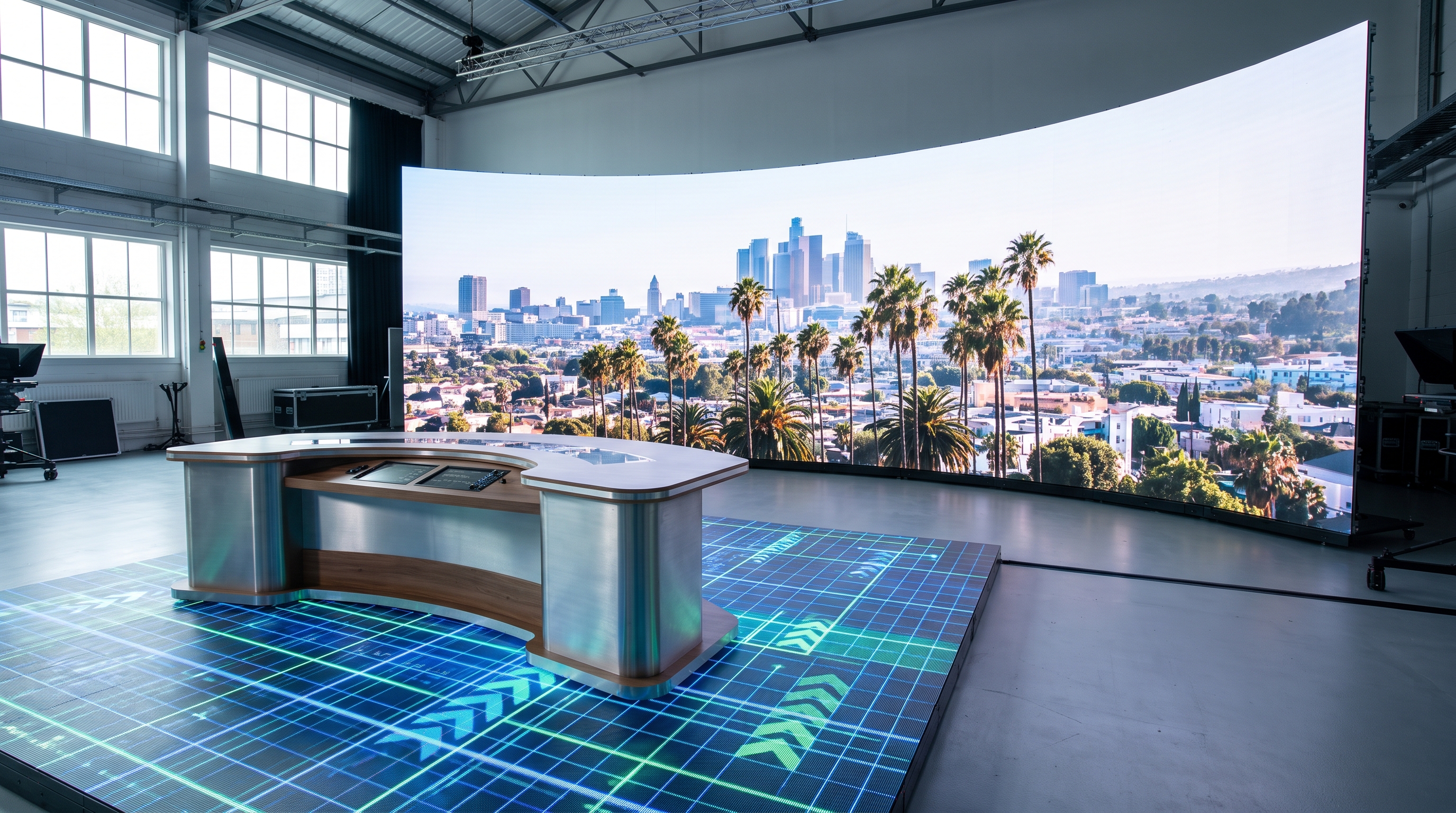
BBC Sport transitioned its World Cup 2026 coverage at MediaCity Studios from green-screen legacy workflows to a new LED volume and extended reality (XR) production pipeline. The new studio environment, which utilizes Unreal Engine, ROE Visual panels, and Mo-Sys camera tracking, is now planned as a production blueprint for Match of the Day.
Key Takeaways
- The 12m x 3m LED volume replaces green screens with reactive backgrounds of cities like Los Angeles and Mexico City.
- A hydraulic desk and ROE Visual LED floor allow pundits to perform tactical analysis directly over virtual formations.
- Production was delivered in native UHD and HDR for BBC iPlayer, requiring precise lighting synchronization between physical and virtual sets.
- The remote production model from Salford reduced the tournament's carbon footprint by a projected 19% compared to 2022.
Why It Matters
The shift from green screen to LED volumes marks a fundamental change in high-end sports broadcasting, prioritizing realism and presenter comfort over post-production flexibility. By grounding the production in Salford rather than North America, the BBC is proving that high-fidelity virtual sets can mitigate the rising costs and environmental impacts of international travel without sacrificing visual authority. For the wider ecosystem, this project establishes a scalable template for national broadcasters to maintain a local footprint while covering geographically dispersed global events. Watch for the incremental integration of these LED analysis workflows into domestic 'Match of the Day' broadcasts starting in late 2026.
Additional Context
The transition to LED volumes at MediaCity follows a multi-year testing phase that accelerated during UEFA Euro 2024. Per SVG Europe (June 2024), the BBC’s earlier Berlin studio successfully combined physical Brandenburg Gate views with XR extensions, providing critical data on how ROE Visual panels perform under shifting daylight conditions. This experience informed the current World Cup setup in HQ3, which utilizes Pixotope for graphics and Mo-Sys for tracking, overcoming previous difficulties in maintaining accurate parallax when using real camera footage as virtual backdrops. Sustainability and cost efficiency are driving these technical shifts across the UK’s public service broadcasting landscape. Per Broadcast Sport (June 2026), BBC Director of Sport Alex Kay-Jelski noted that basing the primary studio in Salford saved millions in license fee money by avoiding the logistical strain of moving 200 staff members across 16 host cities. This remote model mirrors a broader European trend toward centralized production hubs, as seen in Discovery and NBCUniversal’s recent Olympic coverage strategies. Technically, the move to a permanent virtual infrastructure for 'Match of the Day' aligns with the BBC's broader 4K distribution goals. While standard broadcast channels remain in HD, iPlayer has serves as the primary outlet for UHD-HDR content. Per TechRadar (June 2026), the BBC utilized the Hybrid Log Gamma (HLG) HDR format for its 54 World Cup games, ensuring the virtual studio’s high dynamic range was visible to users on supported devices like the PS5 and Roku Streaming Stick 4K.
Read full article at sportsvideo.org
Get this in your inbox → Subscribe
Enjoy our coverage?
Add StreamingMeme as a preferred source on Google to see more of our streaming news at the top of your Search results.
Add as preferred source