
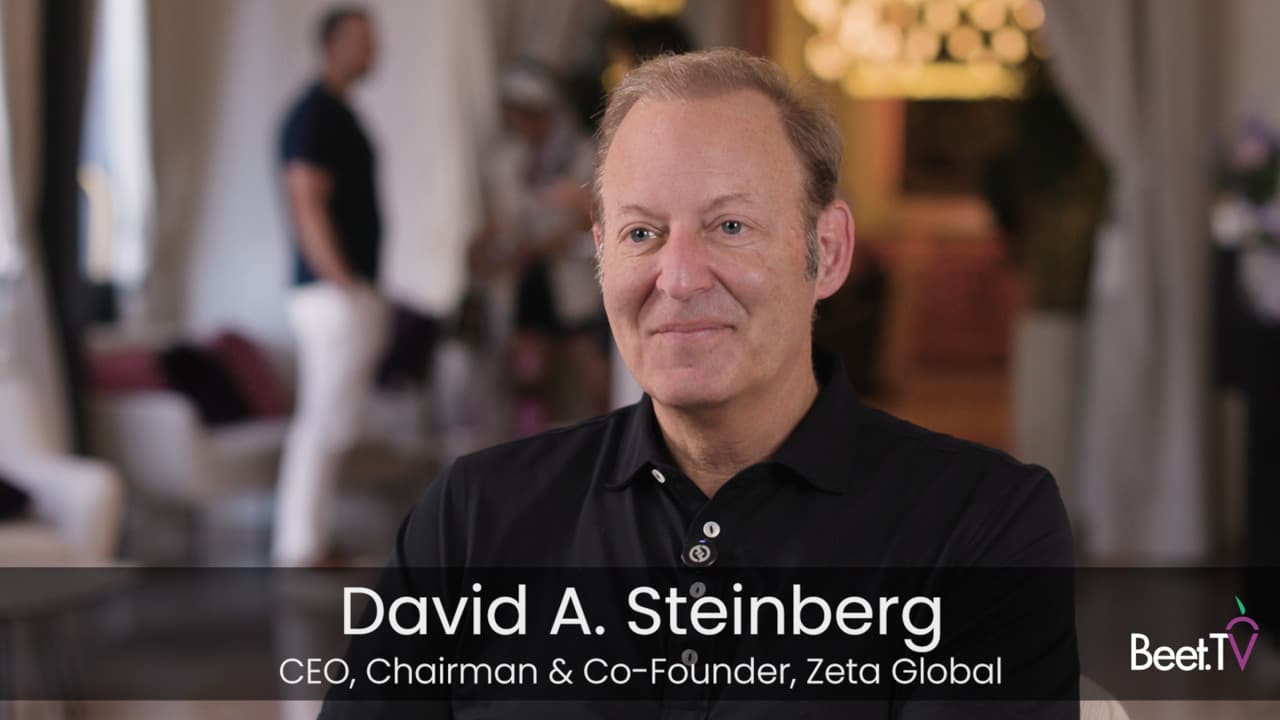
Zeta Global has launched Athena, an agentic AI layer aimed at automating marketing platform configurations to improve programmatic targeting efficiency. The company claims the system reduces decision latency to one millisecond, which it attributes to a significant increase in return on marketing spend.
The shift toward agentic AI represents a move from predictive modeling to prescriptive execution in the ad tech stack. For the streaming ecosystem, millisecond decision velocity is critical as programmatic transactions move into high-stakes environments like live sports and premium Connected TV (CTV) inventory where latency equals lost revenue. The entry of agent-based systems suggests that the competitive advantage in streaming advertising is moving away from basic automation and toward the quality of the autonomous governance layer. Watch for Zeta’s revenue trajectory following its June 2026 infrastructure partnership with Palantir, aimed at further reducing data latency.
The launch of Athena follows Zeta Global's reported 50% year-over-year revenue growth in Q1 2026, reaching $396.3 million. Per company earnings reports from April 2026, Athena accounted for over 60% of all AI platform usage within its first week of general availability. This rapid adoption coincides with a broader industry push toward autonomous media buying; Gartner projected in 2024 that 40% of enterprise applications would include agentic capabilities by 2026.
At the Cannes Lions International Festival of Creativity in June 2026, Zeta announced a seven-year strategic partnership with Palantir Technologies to rearchitect its Data Cloud on the Foundry platform. This collaboration, expected to generate over $100 million in annual revenue for Zeta, specifically targets the reduction of data latency to support more complex agentic workflows. By integrating Palantir’s infrastructure, Zeta aims to refine its identity-powered attribution across 245 million U.S. consumer signals.
Concurrent with Zeta's news, other major players are accelerating agentic roadmaps. Per industry reporting in June 2026, Google and Meta have integrated advanced automation layers—AI Max and Advantage+—deeper into their bidding engines, while the IAB Tech Lab has introduced the Event Conversion API (ECAPI) to standardize the server-side data feedback necessary for millisecond AI decisioning. These movements signal a transition where human marketers move from manual trading to setting objective-based directives for autonomous software agents.
Add StreamingMeme as a preferred source on Google to see more of our streaming news at the top of your Search results.
Add as preferred source