
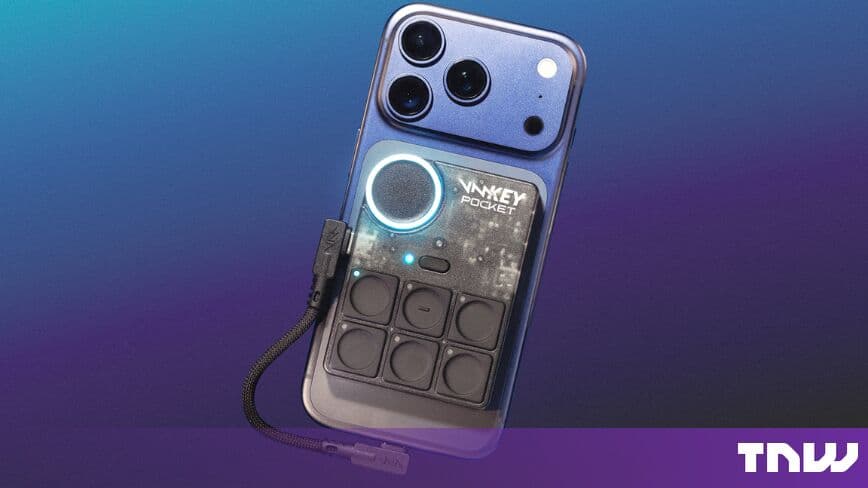
Voicemod has released Key Pocket, a MagSafe-compatible hardware device designed to enable real-time voice changing and soundboard functionality on mobile devices and gaming consoles. The launch occurs as the company faces compliance requirements under the EU AI Act, which mandates machine-readable labeling for synthetic audio.
This hardware release solves a persistent technical bottleneck where mobile operating systems block third-party apps from intercepting and modifying live microphone streams. By moving processing to an external MagSafe bridge, Voicemod enables desktop-grade audio identity tools for the mobile and console gaming markets. However, the launch coincides with new EU AI Act transparency obligations requiring synthetic audio to be detectable as artificially manipulated. As a Valencia-based firm, Voicemod's implementation of these machine-readable marks will serve as a regulatory bellwether for other AI audio providers. Watch for whether the European release date is delayed until the company clarifies its compliance with Article 50 labeling requirements.
Voicemod operates in a rapidly expanding market for real-time voice manipulation and AI-generated audio, where regulatory scrutiny is intensifying across Europe. The EU AI Act's Article 50 transparency obligations, which took effect in August 2026, require providers of AI systems generating synthetic audio to ensure outputs are marked in a machine-readable format detectable as artificially generated. The European Commission published implementation guidance in June 2026 clarifying that voice-changing and voice-cloning tools fall under the synthetic content labeling mandate, meaning any device or software that modifies a user's voice in real time must embed detectable metadata. Voicemod, headquartered in Valencia, Spain, is among the first consumer-facing audio companies to confront these requirements at the hardware level, where embedding compliance marks into a physical processing pipeline introduces engineering challenges distinct from software-only solutions.
On the competitive side, Voicemod faces pressure from both established audio hardware makers and AI-native startups racing to capture the creator economy's demand for voice identity tools. Krisp, a noise-canceling AI company, raised $25 million in early 2026 to expand into real-time voice transformation for enterprise and consumer use cases, signaling investor appetite for the same category Voicemod occupies. Meanwhile, ElevenLabs expanded its voice synthesis platform to include real-time voice conversion features in May 2026, targeting content creators and game streamers with cloud-based processing that competes directly with Voicemod's local-processing approach. The hardware form factor of Key Pocket differentiates Voicemod from these software-only rivals by sidestepping mobile OS sandboxing restrictions, but it also means compliance labeling must be implemented at the firmware level rather than through software updates.
Technical benchmarks for real-time voice processing on mobile hardware remain scarce in independent testing, but adjacent deployments offer reference points. Qualcomm's Snapdragon Sound platform demonstrated sub-10-millisecond audio processing latency on Snapdragon 8 Gen 3 devices in lab tests published by SoundGuys in April 2026, establishing a baseline for what mobile-adjacent hardware can achieve in real-time audio manipulation. Voicemod's Key Pocket, which connects via MagSafe and processes audio locally before passing it to the phone or console, must match or beat that latency threshold to remain imperceptible to users in live gaming and streaming scenarios. The device's ability to meet EU labeling requirements without introducing additional processing overhead will be a key indicator of whether hardware-based compliance is viable for the broader synthetic audio industry.
Voicemod has launched Key Pocket, a MagSafe-compatible hardware device that enables real-time voice changing on mobile and consoles. By processing audio locally, it bypasses mobile OS restrictions on microphone streams. The release is significant as it tests how hardware-based synthetic audio tools comply with new EU AI Act transparency requirements.
It is a MagSafe-compatible hardware bridge that allows users to perform real-time voice changing on mobile devices and gaming consoles by processing audio locally.
The device is compatible with PlayStation 5, Xbox Series X/S, and Meta Quest via controller headphone sockets, as well as mobile devices via MagSafe.
Article 50 of the EU AI Act requires that synthetic audio generated by systems like Voicemod must be labeled in a machine-readable format to ensure it is detectable as artificially manipulated.
Hardware processing allows the device to bypass mobile operating system sandboxing restrictions that typically prevent third-party apps from intercepting and modifying live microphone streams.
Add StreamingMeme as a preferred source on Google to see more of our streaming news at the top of your Search results.
Add as preferred source