

Ungrounded LLMs hallucinate show metadata at 80% to 90% rates
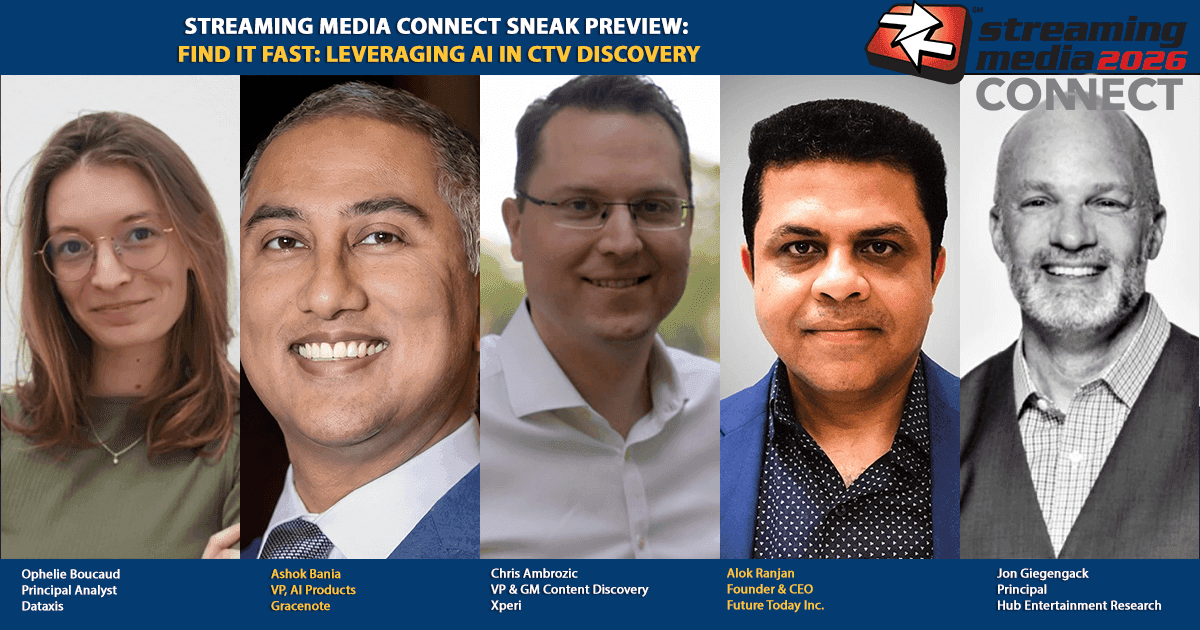
Executives from Gracenote, Hub Entertainment Research, Future Today, and Xperi will discuss AI-driven content discovery and metadata grounding at the upcoming Streaming Media Connect event. The panel will address current challenges in using LLMs for CTV, specifically the high rates of metadata hallucinations found in ungrounded models.
Key Takeaways
- Gracenote data shows ungrounded LLMs hallucinate at least one metadata attribute for up to 90% of TV and movie titles.
- A Hub Entertainment Research study found 49% of Gen Alpha now prefers AI chatbots over traditional program guides for recommendations.
- Conversational search shifts discovery from past behavior history to real-time intent, though ungrounded models risk 'confabulating' results.
- Industry experts suggest RAG (Retrieval-Augmented Generation) grounding is essential to bypass rigid EPG taxonomies without sacrificing accuracy.
Why It Matters
The streaming industry is moving toward conversational discovery to solve 'shelf space' and saturation issues, but metadata reliability is the primary bottleneck. If platforms deploy ungrounded LLMs, the 80% to 90% error rates found by Gracenote could lead to a massive erosion of user trust and increased churn as viewers act on false recommendations. To scale conversational search effectively, the technology stack must pivot from probabilistic generation to deterministic, grounded architectures. Watch for whether major EPG providers like TiVo or Google TV mandate source-connected data for third-party AI agents integrated into their operating systems.
Additional Context
In the months preceding this research, Gracenote has been documenting a widening trust gap despite rising AI adoption. Per Nielsen and Gracenote’s April 2026 'TV Search and Discovery in the AI Era' report, while 66% of Americans increased their chatbot usage over the prior 18 months, 75% of users still feel compelled to double-check results due to frequent inaccuracies. This skepticism is especially pronounced in specialized domains like entertainment, where users value direct answers but find that traditional search remains more accurate by a nearly two-to-one margin compared to ungrounded AI (46% versus 33%).
To combat these high hallucination rates, industry leaders are increasingly moving toward Retrieval-Augmented Generation (RAG) and specific data grounding. In February 2026, Gracenote announced an extension of its long-standing partnership with Google to use its structured metadata to power Gemini-led discovery across Google’s consumer platforms. This move follows a broader trend where ungrounded models, like the version of Claude Sonnet 4.0 tested in Gracenote's June 2026 study, entirely fabricated every single measured attribute for nearly 20% of the 2,600 titles tested. For the top 100 U.S. movies, actor accuracy in ungrounded models plummeted to just 53%.
Simultaneously, competitors are formalizing their AI discovery frameworks. Per Xperi’s January 2026 CES announcements, the TiVo OS has integrated a 'Conversation' module into its Personalized Content Discovery Platform, which uses natural language processing to reduce 'discovery fatigue' without moving entirely away from its verified content graph. Research from Hub Entertainment in January 2026 further confirms that while 72% of consumers are familiar with generative AI, their positive reception is strictly tied to discovery tools—not creative content—and remains contingent on full disclosure regarding AI use.
Read full article at streamingmedia.com
Enjoy our coverage?
Add StreamingMeme as a preferred source on Google to see more of our streaming news at the top of your Search results.
Add as preferred source