

Topaz Labs launches Project Starlight for AI-driven video upscaling
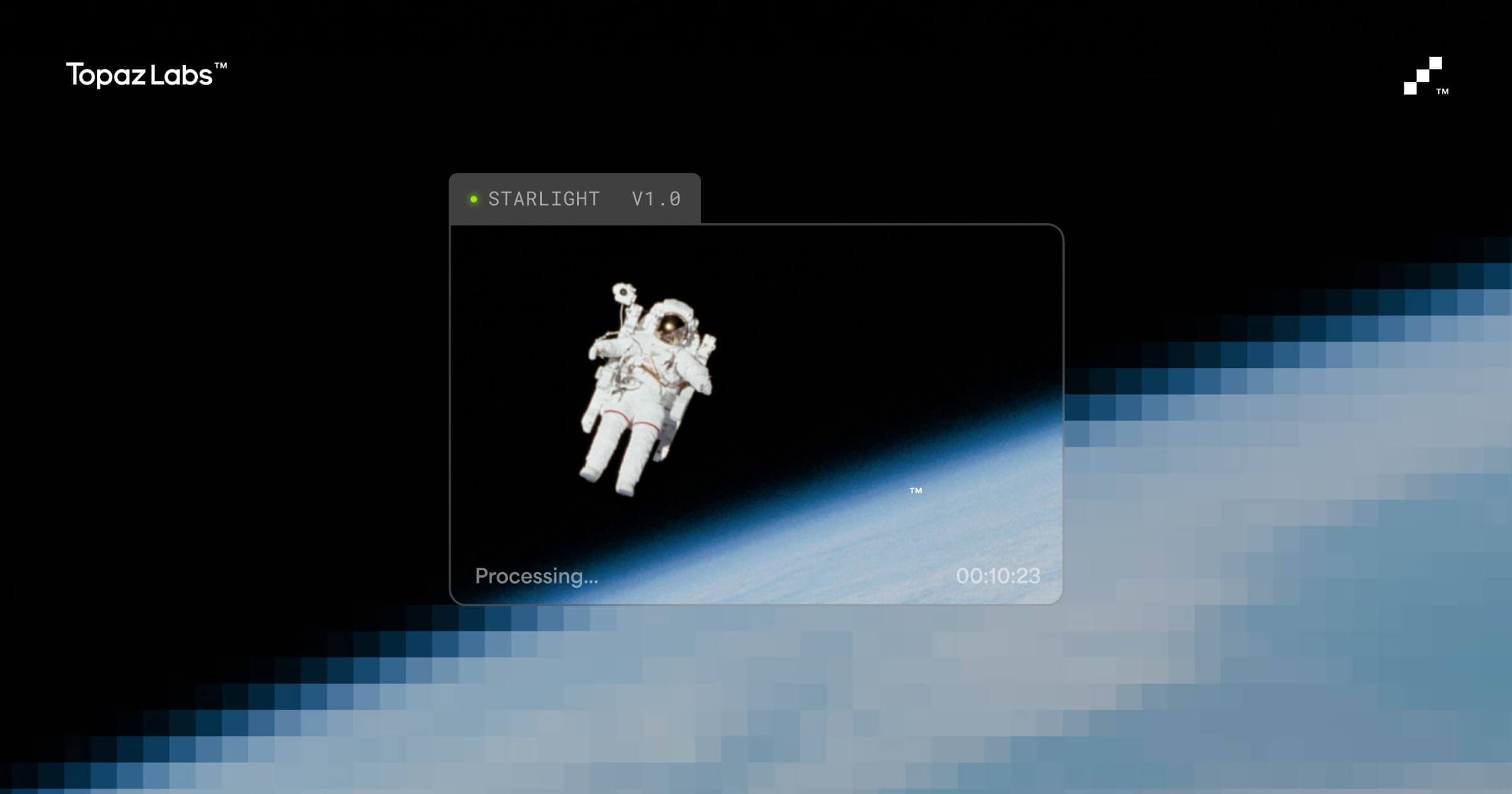
Topaz Labs has introduced Project Starlight, a diffusion-based artificial intelligence model designed for video upscaling and restoration. The tool aims to improve temporal consistency in enhancements and is currently available through the company's cloud rendering services.
Key Takeaways
- Uses diffusion technology rather than traditional GAN-based architectures to restore missing video details.
- Introduces temporal consistency by analyzing hundreds of surrounding frames to ensure smooth motion.
- Supports upscaling and enhancement to 4K resolution without manual slider adjustments.
- Currently restricted to cloud rendering due to the high computational size of the diffusion models.
Why It Matters
The shift from Generative Adversarial Networks (GANs) to diffusion models for upscaling represent a significant technical pivot toward realistic detail reconstruction. By prioritizing temporal consistency, Topaz Labs addresses a primary hurdle in AI-enhanced video: the 'shimmering' artifacts that typically plague upscaled content. This positions the technology as a critical bridge for studios bringing archival assets into UHD streaming environments. For broader industry context, the successful transition from cloud-only to local processing will be a key signal for the scalability of high-fidelity AI restoration in production-heavy B2B workflows. Watch for future updates regarding local rendering capabilities and increased export time limits beyond current research preview constraints.
Additional Context
The rollout of Project Starlight occurs during a period of rapid architectural transition at Topaz Labs. Following the initial research preview, the company released Starlight Precise 2.5 in March 2026, which upgraded the system to a 6-billion parameter architecture. This iteration explicitly targeted the 'plastic textures' often found in synthetic media, aiming to reconstruct realistic skin pores and film grain in video generated by platforms like OpenAI’s Sora or Google’s Veo. Per Topaz community updates from March 2026, the company concurrently launched a suite of related models including Starlight Fast 2 and Starlight HQ to offer tiered balances between rendering speed and visual fidelity.
Strategically, Topaz Labs is attempting to decentralize AI processing through its proprietary NeuroStream technology. Announced in March 2026, NeuroStream is a VRAM optimization system designed to allow large-scale diffusion models like Starlight to eventually run on consumer-grade hardware. According to PR Newswire reporting in May 2026, these technical improvements were integrated into a broader 'Expansion Update' that introduced a dedicated Adobe Premiere panel. This integration reflects a move toward standardizing AI upscaling directly within professional NLE (Non-Linear Editor) timelines, moving away from isolated standalone applications toward a cloud-hybrid enterprise ecosystem that currently serves over one million creative professionals across organizations like NASA and Netflix.
Read full article at topazlabs.com
Enjoy our coverage?
Add StreamingMeme as a preferred source on Google to see more of our streaming news at the top of your Search results.
Add as preferred source