
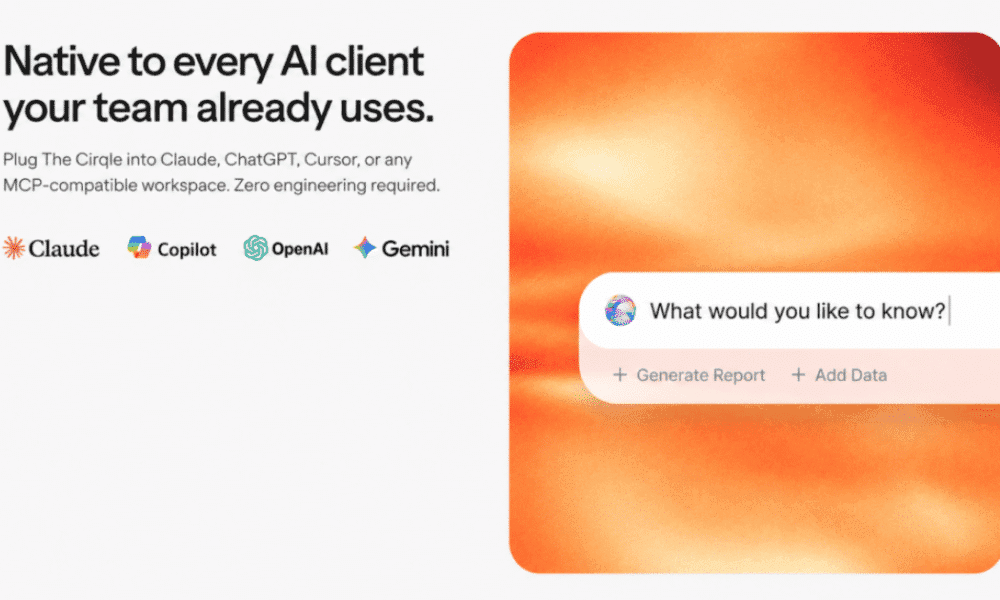
The Cirqle has launched an agentic influencer marketing platform that utilizes the Model Context Protocol (MCP) to automate budget allocation and creator selection based on performance data rather than follower counts. The system integrates with existing ad stacks to streamline workflows through natural language prompts for brands and agencies.
This shift moves creator marketing from a manual 'busywork' service to an automated financial decision engine. By leveraging MCP, The Cirqle allows fragmented marketing stacks to converge into a single agentic interface. This reflects a broader industry trend where creator spend is being treated as a high-frequency performance channel rather than a brand-building experiment. For the streaming ecosystem, this indicates that the next wave of ad-tech innovation will focus on automating the 'creative-as-media' layer, potentially siphoning more performance budget away from legacy search and social into creator-driven direct response. Watch for how many rival creator platforms adopt the Model Context Protocol as a standard for agentic interoperability.
The shift toward agentic automation in the creator economy comes as U.S. creator ad spend is projected to reach $43.9 billion in 2026, according to the IAB in April 2026. This growth is being fueled by a structural reallocation of funds, with CreatorIQ reporting in late 2025 that roughly two-thirds of new influencer spend is being moved directly from traditional paid media and linear TV budgets. Brands are increasingly demanding the same level of performance accountability for creators that they expect from programmatic display, leading to a surge in 'partnership ads' where organic creator content is scaled via paid amplification.
The adoption of the Model Context Protocol (MCP) is the technical catalyst for this transition. According to industry reports from Knak in April 2026, MCP SDK downloads surged to 97 million monthly by early 2026, a 970x increase since its 2024 debut. Major enterprise players including Salesforce, HubSpot, and Google have integrated the protocol to allow AI agents to move beyond simple text generation and into 'operator' roles where they can execute actions across different software stacks. For marketing teams, this standardizes the 'connective tissue' between reasoning models and performance data sources like Shopify or Meta Ads Manager.
This professionalization is also affecting creator demographics. While celebrity influencers governed early strategies, Impact.com noted in early 2026 that mid-tier creators with 100,000 to 500,000 followers are now the preferred 'sweet spot' for ROI. These creators typically maintain engagement rates up to four times higher than mega-influencers. As attribution tools from providers like Northbeam and Impact.com become more deeply embedded in agentic workflows, the market is moving toward an 'always-on' performance model where creators are evaluated as diversified media businesses rather than individual social accounts.
Add StreamingMeme as a preferred source on Google to see more of our streaming news at the top of your Search results.
Add as preferred source