

Telemundo scales IP-based ops in Mexico for Round of 16
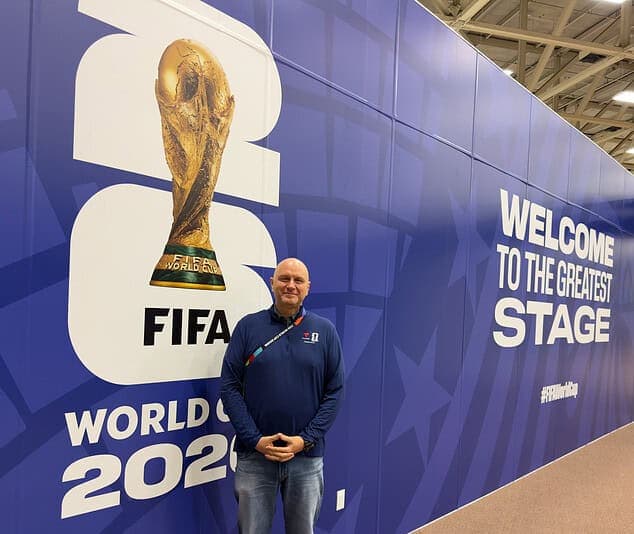
Telemundo is scaling its live production operations for the knockout rounds of the soccer tournament by deploying a fully IP-based production site in Mexico. The broadcaster is utilizing IP encoding at the venue while maintaining a slimmed-down quality-control hub in Dallas to monitor world-feed inputs.
Key Takeaways
- Mexico City exterior production site uses full IP encoding instead of bonded cellular
- International Broadcast Center (IBC) in Dallas serves as a pass-through hub for HBS world feeds
- Staffing strategy keeps personnel at specific stadiums to avoid travel-related logistical risks
- Network footprint for 2026 has expanded significantly compared to the Qatar 2022 tournament
Why It Matters
The shift toward venue-level IP encoding reflects a broader industry departure from traditional satellite and bonded cellular models for marquee live events. By decentralizing production and utilizing the Dallas IBC as a quality-control layer rather than a heavy processing center, Telemundo reduces local technical overhead while maintaining editorial flexibility across three countries. This infrastructure supports the high-bandwidth requirements of modern sports streaming, particularly for low-latency delivery of 48-team tournament coverage. Watch for how this distributed IP model handles peak concurrent traffic as the knockout stages progress, which will serve as a benchmark for future multi-country sporting events.
Additional Context
The 2026 FIFA World Cup broadcast infrastructure is anchored by the 45,000-square-meter International Broadcast Center (IBC) at the Kay Bailey Hutchison Convention Center in Dallas. Per TV Technology (June 2026), the facility is supported by Lenovo-deployed servers and AI-driven solutions designed to manage complex edge computing and reduce latency for 180 global media partners. This centralized hub houses the Host Broadcast Services (HBS) operations and the Video Assistant Referee (VAR) room, serving as the telecommunications nerve center for all 104 matches.
Technically, the tournament represents a massive leap in production standards. According to ISE Europe (June 2026), the underlying architecture is a fully converged SMPTE ST 2110 environment with stadiums connected via a 600Gbps contribution network. While primary program feeds are transported uncompressed in UHD, additional ISO cameras utilize JPEG XS compression at a 10:1 ratio. This enables remote operations, such as camera shading, to be performed from Dallas even while cameras are capturing native HDR on-site in Mexico or Canada.
On the consumer side, NBCUniversal has utilized the tournament to debut high-end streaming features. Per Forbes (June 2026), Telemundo’s coverage on Peacock marks the first live sporting event to offer Dolby Vision HDR and Dolby Atmos with Dolby AC-4. These innovations are paired with the 'Visión de Campo' mobile feature, which provides vertical-oriented viewing and team-specific ISO cameras. This multi-platform strategy follows a reported 277% increase in streaming audience compared to 2022, as tracked by Broadcast Beat (July 2026).
Read full article at sportsvideo.org
Enjoy our coverage?
Add StreamingMeme as a preferred source on Google to see more of our streaming news at the top of your Search results.
Add as preferred source