

Stellantis analyzes 13B impressions to validate attention metrics for programmatic advertising
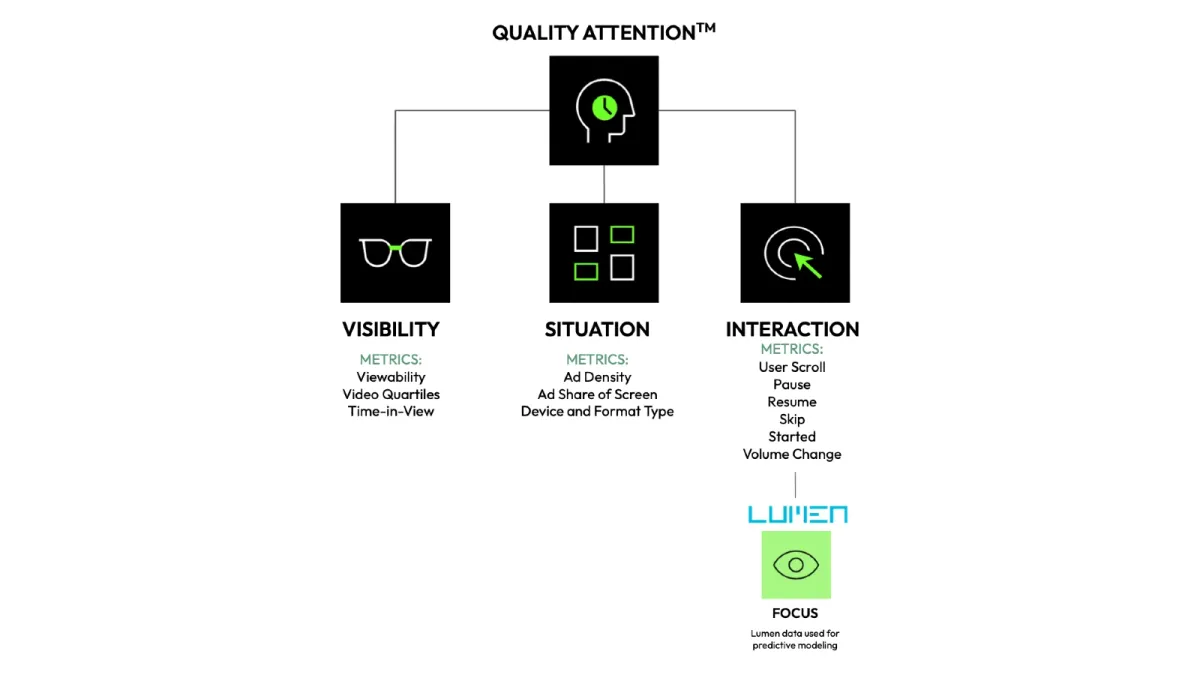
Stellantis, Publicis Media, and Integral Ad Science (IAS) completed a global attention measurement program, analyzing over 13 billion ad impressions across 19 countries. Utilizing IAS Quality Attention, the initiative led to a 165% increase in engagement and a 33% improvement in ad recall for key demographics. This case study demonstrates the efficacy of advanced attention metrics for optimizing programmatic ad campaigns.
Key Takeaways
- High-attention programmatic inventory generated 165% higher engagement and 29% better conversion rates than standard benchmarks.
- Localized analysis revealed that visibility drives attention in the U.S., while reduced clutter and screen-share dominate in European markets.
- Independent Dynata research confirmed a 33% improvement in ad recall and an 18% favorability lift for Stellantis among target males aged 18-44.
- The 18-month measurement program utilized IAS Quality Attention, combining eye-tracking data from Lumen Research with machine learning signals.
Why It Matters
The automotive sector's high-consideration purchase cycle requires moving beyond rudimentary viewability metrics to measure actual consumer focus. By scaling attention measurement across 13 billion impressions, Stellantis provides the industry with evidence that attention correlates directly with both brand lift and lower-funnel conversions. This shifts attention from a niche reporting experiment to an active planning input for large-scale programmatic buyers. As the IAB and MRC finalize formal attention guidelines, this dataset provides a competitive benchmark for automotive brands seeking to improve media efficiency in a fragmented streaming and display landscape. Watch for Stellantis to integrate these scores into pre-bid targeting layers to further reduce wasted spend in secondary markets.
Additional Context
The Stellantis program arrives as industry stakeholders formalize the 'attention economy' through new regulatory and financial frameworks. In September 2025, private equity firm Novacap acquired Integral Ad Science for approximately $1.9 billion in an all-cash take-private deal, a move intended to accelerate the company’s investment in AI-driven measurement. Following the acquisition, IAS earned Media Rating Council (MRC) accreditation in November 2025 for third-party Amazon DSP measurement, and the company has since expanded its 'Total TV' product to bring show-level transparency to connected television environments as of April 2026.
Simultaneously, the foundational standards for these metrics reached a milestone in late 2025. Per the Interactive Advertising Bureau (IAB), the finalized IAB and MRC Attention Measurement Guidelines were released in November 2025 following a public comment period across the summer. These guidelines define four distinct methodologies—including data signals and visual tracking—to provide a consistent roadmap for accreditation. By early 2026, IAB Europe also updated its commerce media standards to Version 2.0, reflecting a broader shift toward harmonizing measurement across digital retail and open web environments.
For Stellantis, this focus on efficiency coincides with significant corporate restructuring. Per company financial reports from February 2026, the automaker reported a net loss of €22.3 billion for the full year 2025, primarily due to charges from a strategic shift toward new customer preferences and regulatory compliance. Under the 'Dare Forward 2030' plan reiterated in early 2026, Stellantis aims to use more precise digital signals to support a €60 billion investment in new product waves, prioritizing heavy spenders like Jeep, RAM, and Peugeot.
Read full article at ppc.land
Enjoy our coverage?
Add StreamingMeme as a preferred source on Google to see more of our streaming news at the top of your Search results.
Add as preferred source