

Sony Cinema Line makes European live debut at Sagrada Família
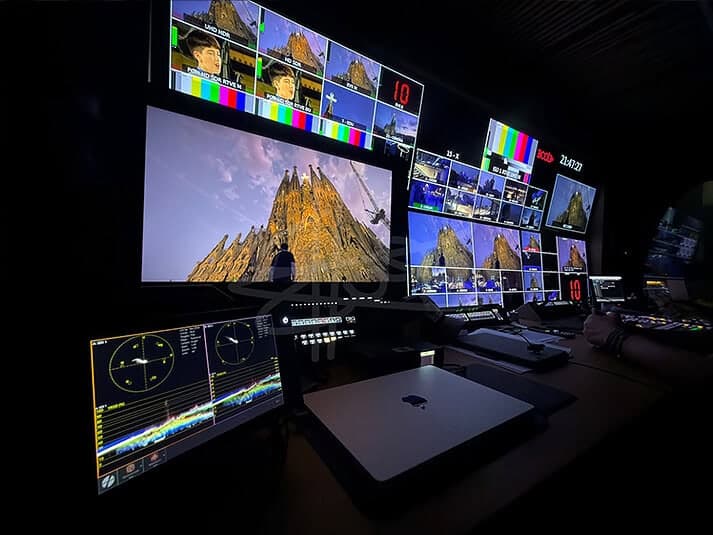
Catalan broadcaster 3Cat utilized Leader Electronics' PHABRIX Qx rasterizers and LPX500 monitors to manage UHD/HDR signal monitoring during the live broadcast of Pope Leo XIV's visit to the Sagrada Família. The production marked the European debut of Sony’s Cinema Line cameras in an international live UHD/HDR environment.
Key Takeaways
- Production featured 10 Sony Venice 2, seven FR7 robotic, and three FX6 cameras to achieve a cinematic aesthetic in a live environment.
- Engineers used the PHABRIX Qx rasterizer and LeaderPhabrix LPX500 to monitor 4x 12G-SDI signals across HDR and SDR sources.
- The broadcast marked the European debut of Sony’s Cinema Line in an international live UHD/HDR production context.
- Broadcaster 3Cat managed the high-complexity shoot within a strict two-day load-in window at the heritage site.
Why It Matters
This deployment signals a shift toward 'Cinematic Live' workflows for Tier One cultural and sporting events. By integrating digital cinema cameras into traditional broadcast footprints, producers can deliver high-dynamic-range content that meets archival quality requirements without sacrificing the mobility of live production. The successful use of portable T&M tools like the PHABRIX Qx in a physically constrained environment proves that high-end signal monitoring can be maintained outside of traditional OB trucks. Watch for more mid-tier broadcasters to adopt hybrid cinema-broadcast rigs as Sony continues to unify its firmware and control protocols across its camera lines.
Additional Context
The Sagrada Família production mirrors a broader industry trend toward merging cinematic language with live television, often referred to as 'cinematic live' production. Per TM Broadcast (July 2026), the 3Cat team utilized ten Sony Venice 2 cameras for primary acquisition alongside seven Sony FR7 robotic units and three FX6 cameras for dynamic tracking shots. This 20-camera array was unified by a shared color science, allowing the technical team to maintain visual consistency across the varying light levels found inside the basilica’s cavernous interior and its 172.5-meter exterior towers.
Technological barriers to these hybrid workflows have lessened following recent hardware and software updates. According to Sony Europe (January 2026), the manufacturer has been rolling out a unified 'Big 6' interface across its Venice, FX, and FR lines to standardize monitoring parameters like ISO, shutter, and white balance. This software alignment allows broadcast operators to transition between flagship cinema cameras and remote robotic units with significantly reduced operational friction.
Furthermore, the production relied on high-brightness mastering monitors to ensure the fidelity of the HLG (Hybrid Log-Gamma) signal distributed worldwide. Per Digital Media World (June 2026), 3Cat utilized Sony’s BVM-HX3110 4,000-nit monitors to manage peak brightness levels of up to 1,000 and 2,000 nits. This level of technical oversight is becoming the baseline for high-profile international events, as streaming platforms and broadcasters prioritize high-quality HDR assets for long-term archival and global syndication.
Read full article at sportsvideo.org
Enjoy our coverage?
Add StreamingMeme as a preferred source on Google to see more of our streaming news at the top of your Search results.
Add as preferred source