
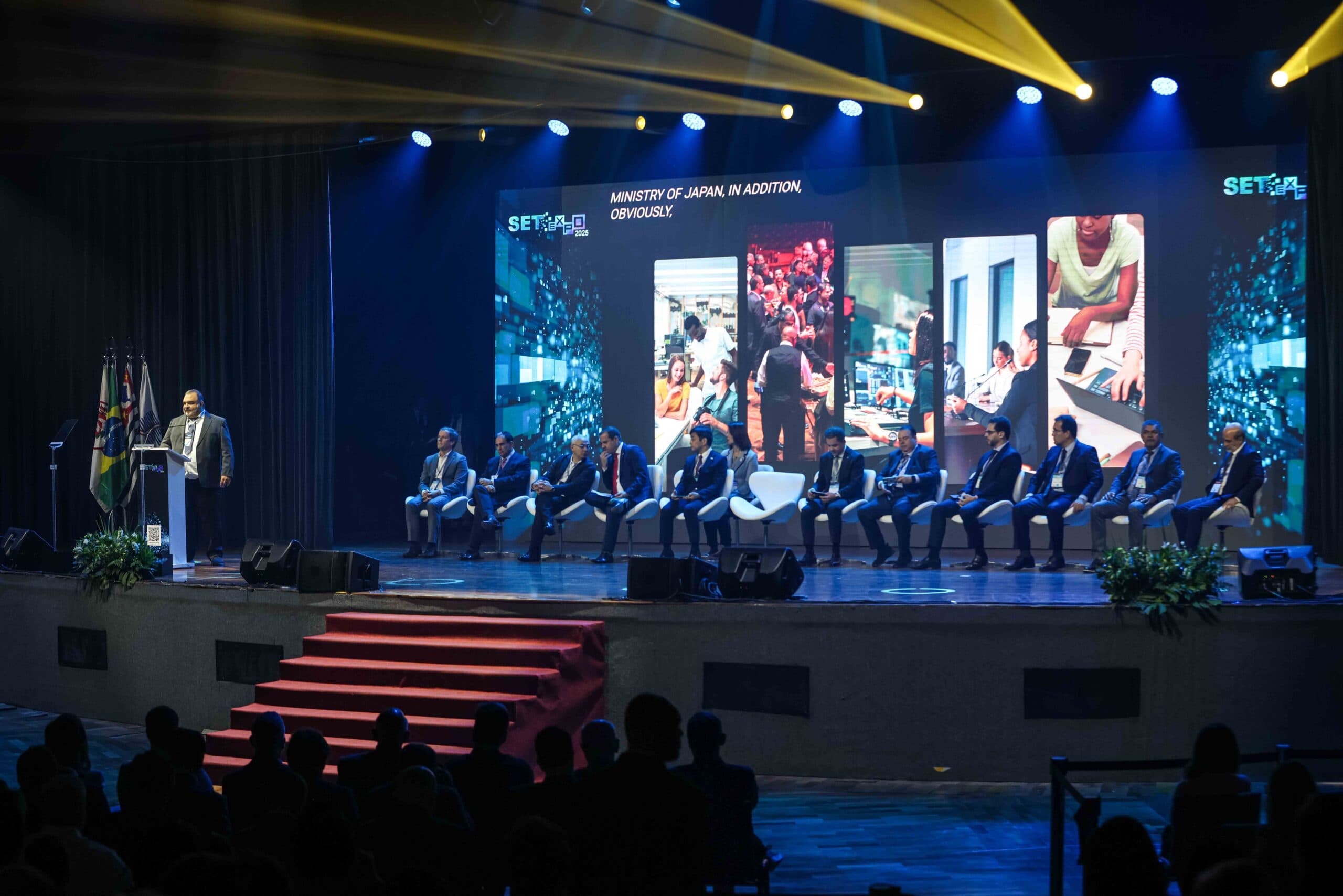
The SET EXPO 2026 conference in São Paulo will focus on the technical and operational convergence of broadcast and broadband, specifically highlighting TV 3.0, 5G Broadcast, and cloud-based infrastructure. The event gathers global industry leaders and government regulators to discuss the evolution of audiovisual technology and network architectures.
Brazil’s aggressive pursuit of the TV 3.0 standard represents a massive test case for the commercial viability of broadcast-broadband convergence at scale. By integrating ATSC 3.0 physical layers with 5G Broadcast capabilities, the Brazilian market is creating a blueprint for mobile-first linear delivery that bypasses traditional cellular data congestion. For the global ecosystem, this shifts the focus from simple UHD upgrades to a strategy where broadcasters compete directly with streamers via interactive, data-rich features and targeted advertising. Watch for the success of ongoing DTV+ trials in São Paulo and Rio de Janeiro as the primary indicator for 2026 World Cup readiness.
Brazil's transition to a next-generation broadcasting system, commercially branded as DTV+, achieved a significant milestone in August 2025 when President Luiz Inácio Lula da Silva signed a decree officially adopting ATSC 3.0 technologies for the standard's physical and transport layers. Per ATSC 3.0 international interoperability (August 2025), this decision makes Brazil one of the largest proponents of the standard globally, alongside South Korea and the United States. The move is strategically timed to enable advanced 4K and 8K transmissions in time for the 2026 FIFA World Cup.
Related to the mobile-first strategy, Rohde & Schwarz, Qualcomm, and Motorola previously demonstrated a 5G Broadcast proof of concept at SET EXPO 2025. According to RCR Wireless (January 2026), the demonstration successfully delivered live television content directly to Motorola smartphones without impacting traditional mobile cellular networks. This demonstration confirmed that 5G Broadcast could operate as a standalone or complementary platform to traditional 3GPP technologies. In July 2026, Rohde & Schwarz announced further live end-to-end transmissions would be displayed at SET EXPO 2026, including MIMO DTV+ setups using software-defined transmitters to show how multiple content feeds can be served through shared infrastructure.
While technical momentum is accelerating, the regulatory timeline has faced minor adjustments. Per CSI Magazine (March 2026), Brazil's Ministry of Communications completed the nationwide switch-off of analog television but extended the full implementation deadline for TV 3.0 to the end of 2027. This extension allows broadcasters and consumer electronics manufacturers additional time to finalize technical standardization and device development, ensuring that the 60% of Brazilians who rely on free-to-air TV are not excluded during the migration to more interactive, app-based channel navigation.
Add StreamingMeme as a preferred source on Google to see more of our streaming news at the top of your Search results.
Add as preferred source