
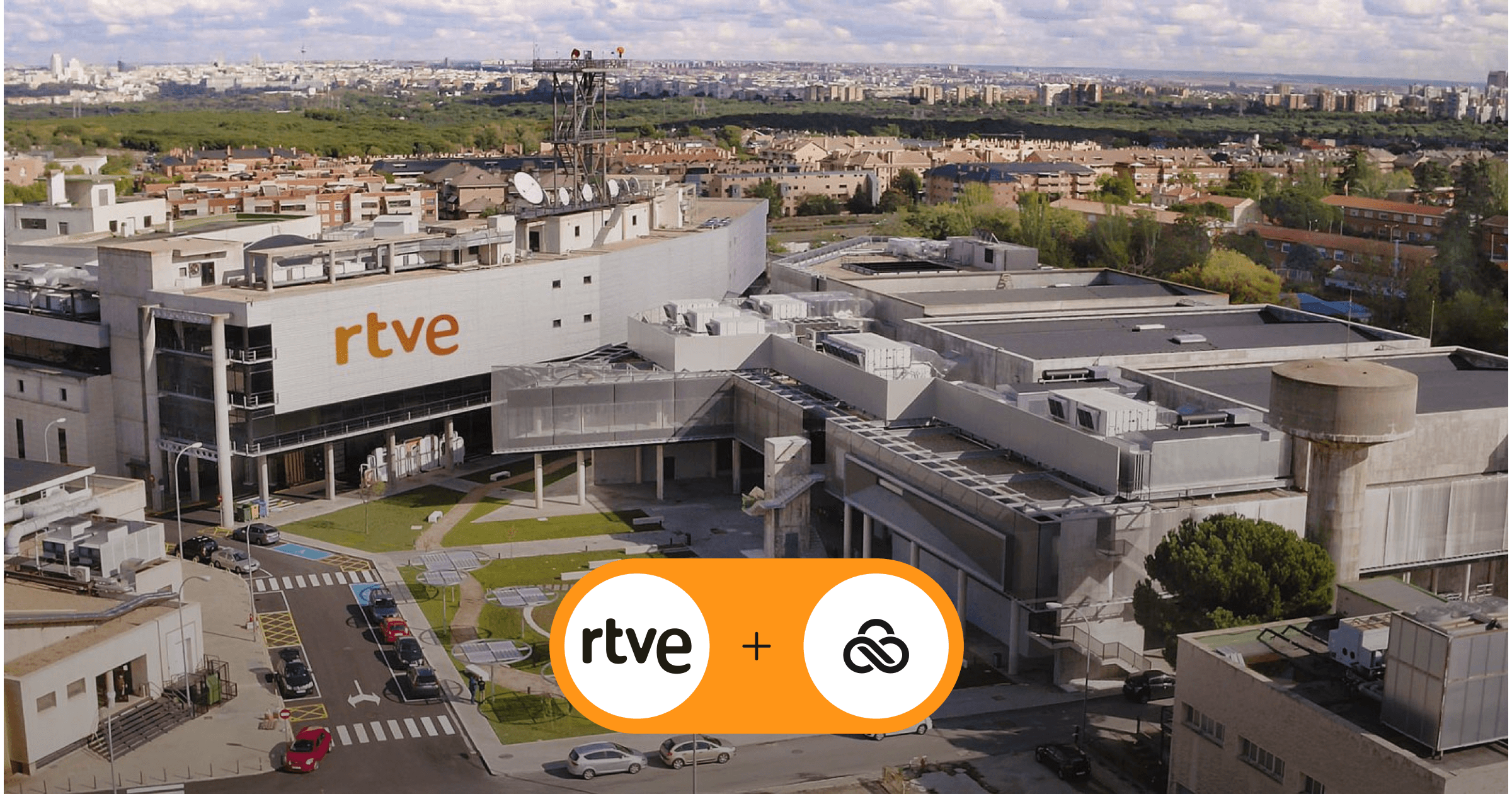
RTVE used LucidLink's cloud-based shared filespace to enable real-time collaboration on high-resolution footage from the San Sebastián International Film Festival, improving editing speed and remote teamwork.
RTVE's deployment demonstrates that cloud-based shared storage can handle the bandwidth and latency demands of real-time, multi-location video editing on high-resolution festival footage — a workload traditionally requiring on-premise SAN infrastructure. The integration with EVS XFile servers for immediate playback closes the loop from ingest to broadcast without physical media handling. For broadcasters, this validates a cloud-first editing model that reduces travel costs, infrastructure investment, and content turnaround time simultaneously. Watch whether LucidLink's recently announced TeamCache — which delivers LAN-class performance for on-site teams — accelerates similar deployments at other national broadcasters facing multi-location production challenges.
RTVE has been progressively modernizing its production infrastructure for major cultural events. The Spanish public broadcaster's use of LucidLink at San Sebastián follows a broader industry pattern of national broadcasters testing cloud-based file collaboration for live event coverage. LucidLink announced TeamCache in 2025, a feature designed to deliver LAN-class read and write performance for on-site teams while maintaining cloud synchronization for distributed collaborators, directly addressing the latency concerns that have historically kept broadcast editing on local storage. The San Sebastián deployment, which connected the Kursaal Congress Center, the San Sebastián Broadcast Center, and RTVE's Madrid headquarters, represents one of the first publicized uses of this capability in a European public broadcasting context.
The San Sebastián International Film Festival itself has grown into a significant production challenge for RTVE, which serves as the festival's official broadcast partner. The event generates hundreds of hours of high-resolution content across multiple venues over roughly ten days, creating compression on editorial turnaround that makes physical media transfers impractical. RTVE's decision to eliminate physical transfers aligns with a wider shift among European public broadcasters toward cloud-native production workflows, driven by the need to serve digital platforms alongside linear broadcast with the same source material.
LucidLink positions itself in the media and entertainment vertical alongside competitors such as Frame.io (now part of Adobe) and Signiant, though its shared filespace model differs from review-and-approval platforms by presenting cloud storage as a mounted drive rather than an upload-download pipeline. The integration with EVS XFile servers for immediate playback, as described in RTVE's deployment, suggests a workflow where ingest, editing, and playout operate on a common cloud-resident file layer, reducing the number of intermediate copies required between production stages.
Add StreamingMeme as a preferred source on Google to see more of our streaming news at the top of your Search results.
Add as preferred source