

Reference architecture for streaming recommenders adds layered LLM guardrails
Developer Lamhot Siagian has released an open-source reference architecture and interactive learning system for implementing recommendation models, featuring layered LLM guardrails for production environments. The project leverages FastAPI, LangGraph, and Ollama to provide a structured approach to RAG, MLOps, and automated audit trails for streaming recommendation engines.
Key Takeaways
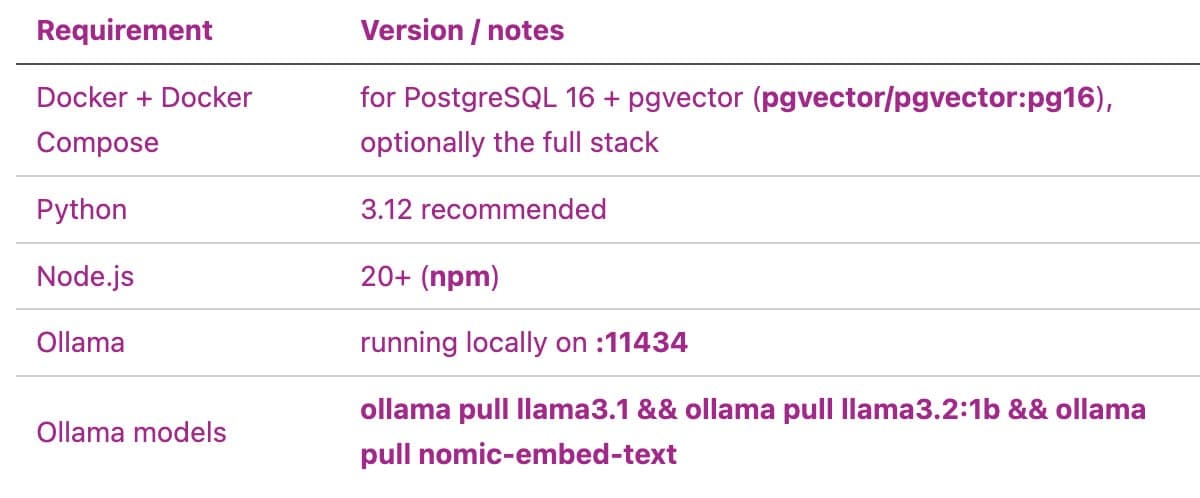
- Layered security pipeline utilizes llama3.2:1b for guard classification and llama3.1 for judge and chat functions.
- Integrated human-in-the-loop (HITL) gates intercept destructive commands and require manual confirmation for tool-argument execution.
- Reference implementation supports sequential, neural, and hybrid recommendation models with automated HNSW vs. brute-force retrieval benchmarks.
- System architecture includes non-deterministic scale generation and reversible data resets via source tracking tags for safe testing environments.
Why It Matters
This release provides a production-ready template for B2B streaming platforms to transition from simple recommendation filters to hardened, agentic systems. By embedding guardrails directly into the LangGraph orchestration layer, it addresses the risk of 'excessive agency' in autonomous agents—a critical vulnerability for platforms processing sensitive user intent. As the streaming market shifts toward agentic RAG for discovery, the ability to automate audit trails in PostgreSQL will be vital for meeting upcoming regulatory transparency requirements. The inclusion of local inference through Ollama also signals a pivot toward cost-efficient, low-latency infrastructure. Watch for adoption rates of LangGraph-based architectures by major streaming vendors seeking to reduce 'hallucinated' content suggestions.
Additional Context
The emphasis on 'agentic RAG'—where AI agents plan, retrieve, and critique their own outputs—reflects a broader industry shift toward self-correcting recommendation architectures. Per Search Engine Land (May 2026), the traditional single-shot RAG model is becoming obsolete in favor of iterative systems that use 'reflection' loops to grade their own first drafts. This is particularly relevant for streaming platforms where accurate content retrieval is a primary competitive advantage. By April 2026, industry reports from Atlan highlighted that enterprise RAG deployments are moving toward graph-grounded architectures that treat metadata and context as the primary investment, rather than just the underlying model weights.
Security and governance have become the dominant friction points in this transition. The open-source guardrail market has bifurcated into validator-centric frameworks like Guardrails AI for structured output and dialogue-centric tools like NVIDIA NeMo Guardrails. According to GenAI.qa (June 2026), production teams are increasingly stacking these frameworks to handle both input sanitization and conversational boundary control. This layering is essential to defend against indirect prompt injections, which occur when malicious instructions are embedded within the documents an agent retrieves.
Hardware optimization for these workloads is also accelerating. In late 2024, NVIDIA began accelerating Llama 3.2 models using TensorRT-LLM, specifically targeting small language models (SLMs) for edge and workstation deployment. Per Google Cloud (Sept 2024), the Llama 3.2 1B and 3B models were designed to preserve user privacy by enabling local agents to perform information retrieval without cloud dependency. As of 2026, leading companies like Uber and LinkedIn are reportedly utilizing LangGraph to build these reliable, multi-turn agent systems, proving that the move from research demos to production infrastructure depends heavily on robust state management and human-in-the-loop controls.
Read full article at aiengineeringinsider.substack.com
Enjoy our coverage?
Add StreamingMeme as a preferred source on Google to see more of our streaming news at the top of your Search results.
Add as preferred source