
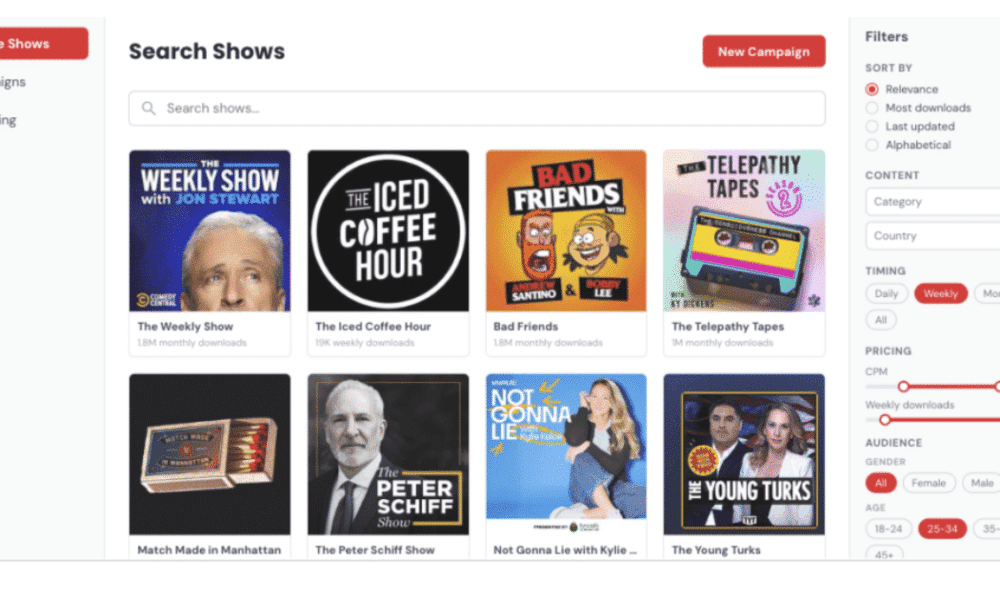
RedCircle has introduced an AI-powered compliance tool called Mic Check to automate the monitoring and validation of host-read podcast advertisements. Additionally, the company launched OpenRAP, a VAST-based integration that enables podcasters to access RedCircle's advertising demand without requiring a migration of their existing hosting provider.
The high operational overhead of host-read ads has historically restricted brand deals to top-tier celebrities. By automating compliance monitoring and removing hosting-locked barriers, RedCircle is lowering the entry threshold for mid-tier 'fat torso' podcasters to access premium ad spend. In a market where host-reads command significantly higher CPMs than programmatic audio, these tools provide the infrastructure to scale artisanal advertising without sacrificing the authenticity that drives listener engagement. Success here would solidify podcasting as a viable performance channel alongside connected TV, rather than just a brand awareness play. Watch the adoption rate of OpenRAP among independent podcasters to see if it triggers similar decoupling of advertising and hosting across the industry.
The push toward automated validation arrives as the podcast industry faces increased scrutiny over content authenticity. Per Music Business Worldwide in May 2026, AI-generated shows accounted for 35.4% of new podcast feeds, prompting platforms to implement more aggressive verification measures. Spotify launched its 'Verified by Spotify' badges in May 2026, focusing on authenticating identity and protecting against AI-generated voice cloning and bot-driven engagement. This technical shift aligns with broader market expectations; the IAB projected US podcast ad revenues to reach $2.6 billion by 2026, driven by a 12.4% year-over-year growth rate that continues to outpace traditional digital advertising.
Competitive activity in the automated ad space has also accelerated. In May 2026, Acast announced the launch of the first integrated video advertising campaigns on Apple Podcasts using HLS technology, enabling brands like State Farm and T-Mobile to synchronize audio and video creative in real-time. According to SiriusXM Media in June 2026, advertisers are increasingly prioritizing advanced contextual targeting and independent third-party verification to ensure brand suitability in open ecosystems. Furthermore, research from Acast in mid-2026 showed that 84% of podcast listeners take action after hearing a brand mentioned, highlighting why platforms are investing heavily in technologies that bridge the gap between manually produced creative and programmatic-scale reporting.
Add StreamingMeme as a preferred source on Google to see more of our streaming news at the top of your Search results.
Add as preferred source