

Qualcomm Reality Elite chipset targets Apple with 48 TOPS AI boost
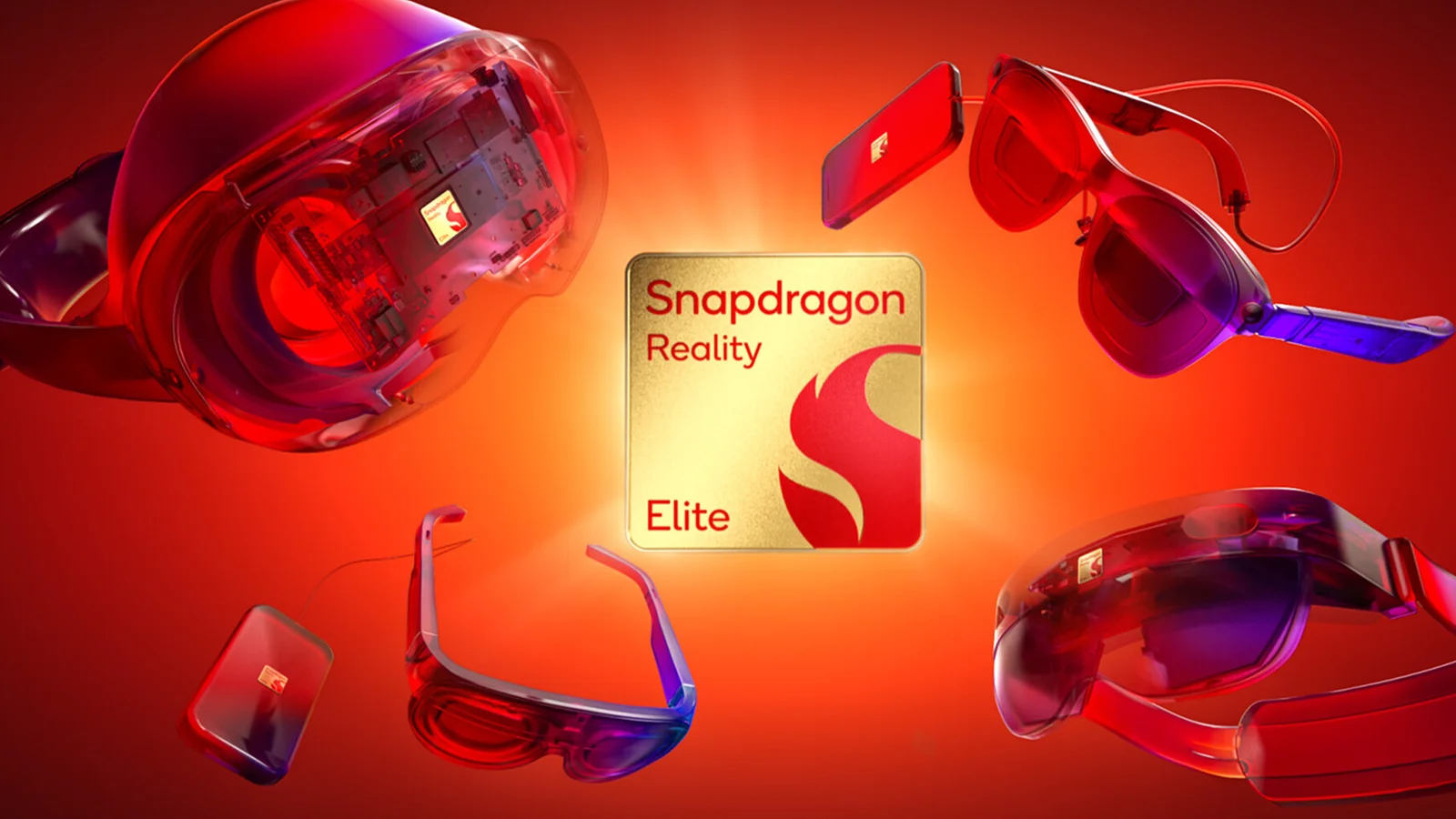
Qualcomm has announced the Snapdragon Reality Elite XR platform, featuring 48 TOPS of on-device AI performance and substantial improvements to GPU, CPU, and NPU processing. Designed to shift generative and perception workloads locally, the chip aims to reduce network latency and cloud dependence for immersive applications.
Key Takeaways
- Delivers 48 TOPS of on-device AI throughput, a 160% increase over the previous XR2+ Gen 2 generation
- Supports visuals up to 4.4K per-eye at 90Hz with integrated hardware-accelerated computer vision via a new EVA block
- Boasts 20% longer battery life and operational temperatures up to 12 degrees Celsius cooler under heavy workloads
- Scheduled to debut this fall in XREAL's Project Aura compute puck and upcoming Play for Dream premium headsets
- Introduces Snapdragon START toolkit to accelerate white-label development for smart glasses and personal AI devices
Why It Matters
The platform represents a strategic pivot toward localizing generative AI and high-fidelity vision processing, addressing the latency and privacy bottlenecks of cloud-dependent XR. By enabling on-device large vision models and photorealistic digital humans, Qualcomm is providing the hardware foundation for Android-based competitors to challenge Apple's Vision Pro on visual performance while optimizing for a lighter, more thermally efficient footprint. For the streaming industry, this suggests a maturing ecosystem for high-bandwidth immersive content and complex spatial advertising. Watch for XREAL's Project Aura launch this fall as the first benchmark for real-world thermal management and battery endurance on this silicon.
Additional Context
The launch of the Snapdragon Reality Elite marks a significant branding shift for Qualcomm, moving away from the incremental 'XR2' naming convention to align with the 'Elite' performance tier seen in its PC and mobile lines. This transition arrives precisely as the Android XR ecosystem accelerates, with XREAL's Project Aura—developed in collaboration with Google—positioning itself as a bridge between lightweight smart glasses and high-performance headsets. According to reporting from CNET and UploadVR in June 2026, the Reality Elite is expected to be the primary engine for devices running the newly refined Android XR operating system, delivering native support for Google Gemini AI assistance and spatial multitasking.
Competitive pressure remains high as Meta continues its high-volume strategy. While the Reality Elite targets premium hardware like the rumored $1,800 Samsung Galaxy XR, Meta and Qualcomm reaffirmed their long-term partnership in early 2025, according to VRDB and Qualcomm's own disclosures. Meta is expected to launch its Quest 4 lineup in late 2026, potentially utilizing a specialized version of this architecture to maintain its lead in the consumer segment. This creates a clear market bifurcation: premium 'Elite' devices focused on productivity and high-end visual fidelity versus the mass-market, budget-friendly Quest ecosystem.
Furthermore, the introduction of the Snapdragon START (Scalable Turnkey AI-Ready Toolkit) indicates Qualcomm's intent to standardize the 'personal AI' category beyond headsets. Per 91mobiles and Engadget (June 2026), eyewear company Inspecs has already joined the initiative as the first partner. By providing pre-built hardware modules and an AI-agnostic software stack, Qualcomm is effectively lowering the barrier for traditional eyewear brands to launch smart glasses equipped with environmental awareness and live translation capabilities, potentially expanding the spatial computing market into more wearable, every-day form factors.
Read full article at letsdatascience.com
Enjoy our coverage?
Add StreamingMeme as a preferred source on Google to see more of our streaming news at the top of your Search results.
Add as preferred source