
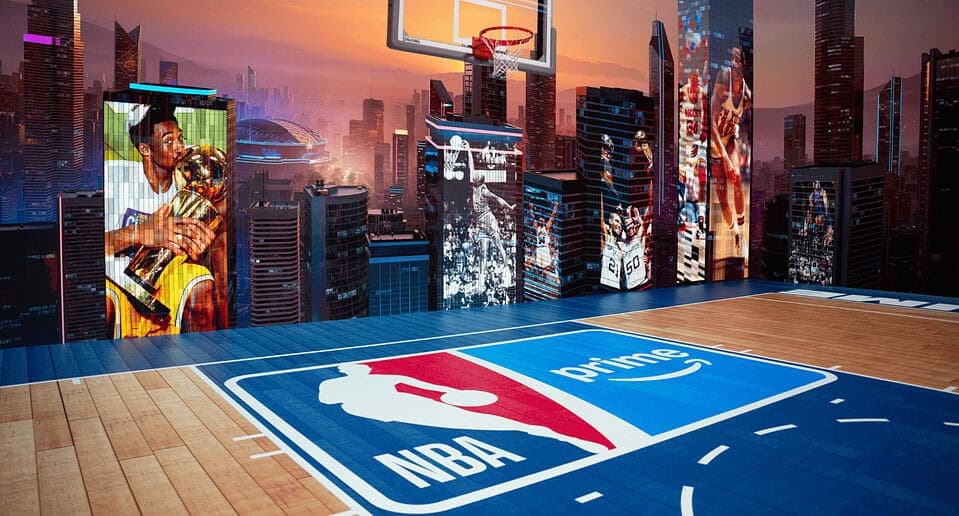
Prime Video has significantly expanded its in-house live sports production capabilities, now producing NBA, WNBA, NWSL, and NHL coverage using a private studio and mobile units. This strategy allows the streamer greater control over its content production ecosystem, moving away from third-party reliance. The move includes a sophisticated global distribution system to deliver games in 14 languages across over 220 territories.
Prime Video's deepening commitment to in-house sports production signifies a strategic shift toward controlling its content ecosystem, potentially reducing costs and enhancing customization for its global subscriber base. This direct control over production from studio to mobile units informs content strategy and allows for tailored, localized experiences across diverse markets. The industry should monitor how this model impacts production quality, cost efficiencies, and subscriber engagement, particularly as other pure-play streamers weigh similar vertical integration for high-value live sports rights.
Prime Video's in-house production push follows its initial foray with Thursday Night Football, leading to the development of its Culver City studio and bespoke mobile units 'Bird' and 'Magic' manufactured by Game Creek Video, as reported by Sports Video Group in December 2025. These mobile units are designed for quick deployment, addressing the logistical challenges of NBA schedules that often require setting up large shows in a single day (Sports Video Group, December 2025). The Culver City studio, encompassing 13,000 sq. ft., features a 64- x 42-ft. LED regulation half-court, making it the largest high-resolution studio floor in the U.S. per Sports Video Group, October 2025. This setup facilitates a consistent production aesthetic between remote games and studio programming, a strategy highlighted during the NBA Europe games in Berlin and London where NEP UK provided 'cloned' operational support to maintain production standards (SVG Europe, January 2026). The international distribution infrastructure, based in London, was tasked with delivering content in up to 14 languages to 220 countries for the NBA, with two control rooms handling multiple games concurrently during peak international windows (Sports Video Group, October 2025).
Add StreamingMeme as a preferred source on Google to see more of our streaming news at the top of your Search results.
Add as preferred source