

Higgsfield AI integrates third-party models as revenue run rate hits $300M
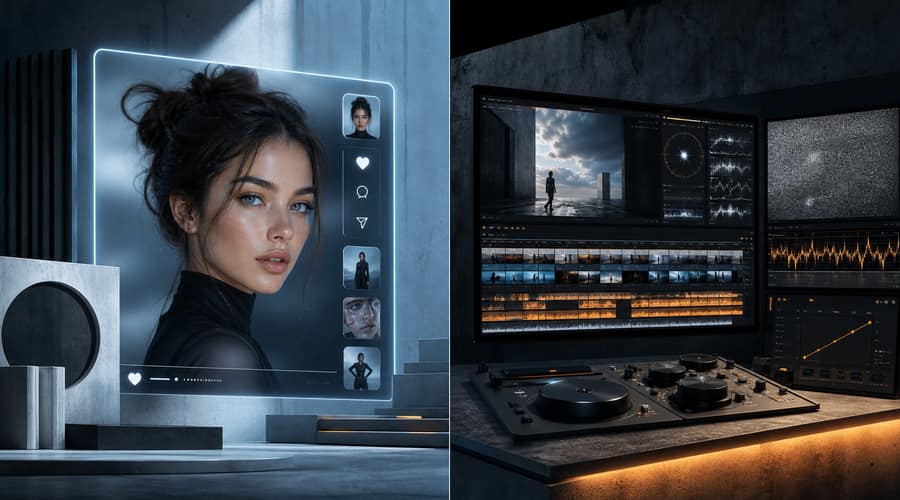
The generative video market is increasingly divided between platforms focused on high-volume, automated influencer creation and those providing professional-grade cinematic production tools. Higgsfield AI differentiates itself through multi-model support and granular camera controls, while Eromify targets social media automation workflows.
Key Takeaways
- Higgsfield AI now supports a model roster including Kling 3.0, Sora 2, Veo 3.1, and Wan 2.7.
- Cinema Studio 3.5 features modular granular controls for camera angles, lighting, and 'Soul ID' persistent characters.
- The platform reached a $300 million annual run rate in February 2026, roughly 11 months after launch.
- Eromify remains focused on social media automation, offering credit-based plans starting at $5 for 200 credits.
Why It Matters
The integration shift moves generative video from standalone model hubs to unified production environments that bridge the gap between AI generation and professional cinematography. By aggregating tier-one models like Kling 3.0 and Sora 2, Higgsfield is positioning itself as the 'Adobe Premiere' of the AI era, prioritizing continuity and camera control over one-off clip generation. This strategy forces a market split: high-volume influencer automation platforms will compete on CPM-friendly output, while production suites compete on technical filmmaking fidelity. Watch for enterprise adoption rates among traditional agencies as these tools incorporate more persistent identity features.
Additional Context
Higgsfield’s rapid ascent to a $300 million annual revenue run rate reflects a broader trend of professionalization in the generative video sector. Per Forbes (February 2026), the startup achieved this milestone in just 11 months, largely driven by its pivot from mobile-first social clips to a web-based professional toolkit. This growth coincides with a competitive surge in model capabilities; per Medium (March 2026), Kling 3.0 and Sora 2 were released within weeks of each other in early 2026, introducing native synchronized audio and multi-shot storyboarding that reduced the need for external post-production tools.
While Higgsfield’s financial momentum is significant—reaching a reported $1.3 billion valuation following a Series A extension in January 2026—the company has faced scrutiny over its aggressive growth tactics. Per Forbes (February 2026), the company drew backlash for misleading marketing and controversial promotional content, leading to the brief suspension of its X account for inauthentic behavior. Despite the controversy, internal data reported by PRNewswire (January 2026) suggests that 85% of usage now stems from social media marketers, with 80% of that group delivering commercial-grade work for brands.
In the wider ecosystem, the generative video market is becoming increasingly capital-intensive. Per GuruFocus (June 2026), Higgsfield entered discussions to raise an additional $300 million to $500 million at a targeted $5 billion valuation, eyeing an eventual $1 billion run rate. This follows a flurry of activity in the sector, including Google’s $75 million investment in A24 and significant funding rounds for rivals like Runway, as investors bet on platforms that can reliably replace traditional production pipelines.
Read full article at startupfortune.com
Enjoy our coverage?
Add StreamingMeme as a preferred source on Google to see more of our streaming news at the top of your Search results.
Add as preferred source