

Pixalate launches OpenEPG Index to solve streaming TV's measurement blind spot
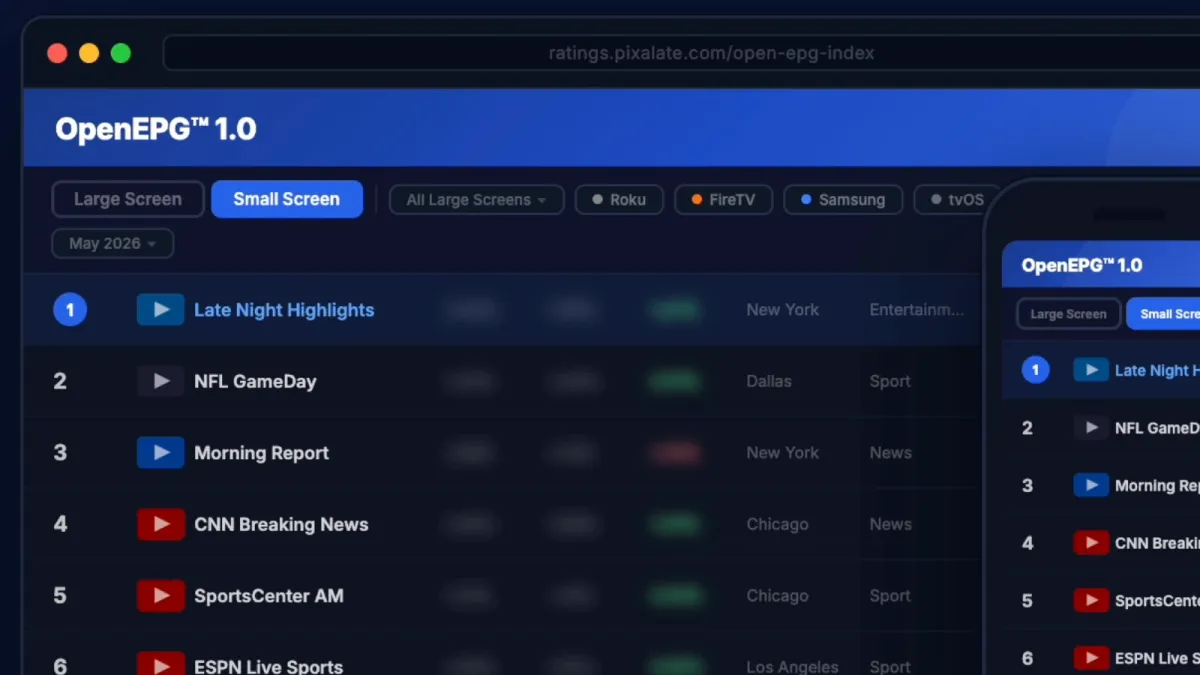
Pixalate has launched the OpenEPG Index 1.0, a monthly public ranking of streaming TV content based on open programmatic ad spend and consumer reach across mobile and CTV platforms. Powered by its new OpenEPG 1.0 Analytics suite, the solution maps standard bidstream Bundle IDs to provide granular show-level verification, audience reach, and invalid traffic (IVT) metrics without requiring publisher data agreements.
Key Takeaways
- Mobile streaming accounts for 69.5% of total audience reach in the open programmatic ecosystem, a segment largely unmeasured by legacy large-screen benchmarks.
- The inaugural index independently maps 12,875 unique television programs across 318 digital and FAST channels using standard CTV Bundle ID signals.
- Invalid traffic rates vary significantly by show, ranging from as low as 1% for Food Network hits to 14% for certain mobile sports content.
- Sports dominate small-screen reach at 46%, while reality programming leads large-screen CTV with 38% unique reach in May 2026 data.
Why It Matters
The immediate implication is a shift toward linear-style show-level verification for programmatic buyers, who can now optimize spend based on specific content rather than app-level averages. In the broader ecosystem, this transparency addresses the 'black box' of FAST and mobile streaming that has historically favored walled gardens. By sidestepping publisher opt-ins, Pixalate provides a neutral benchmark against self-reported platform data. Watch for whether Demand-Side Platforms integrate these show-level IVT scores into automated pre-bid filtering to reclaim the 15-25% of global ad spend lost to fraud.
Additional Context
The launch follows a series of industry efforts to bridge the gap between fragmented streaming signals and traditional measurement. Per MediaPost, Viant Technology acquired attention-measurement firm TVision for $40 million in April 2026 to integrate 'eyes-on-screen' technology into its AI-driven demand platform. This move mirrors a shift away from self-attribution as advertisers demand independent verification across both linear and digital environments. Meanwhile, Nielsen's Gracenote unit debuted its Content Connect platform in December 2025, providing standardized program-level metadata. However, unlike Pixalate’s bidstream-based approach, Gracenote’s system depends on participation from publishers and distributors.
The urgency for such data is underscored by a technical crisis in CTV. Per Pixalate's Q4 2025 research, nearly 69% of bundle IDs on Apple TV were found to be malformed or unidentified, a problem that often masks ad fraud. DoubleVerify also reported in May 2026 that CTV fraud schemes jumped 140% year-over-year, largely driven by AI-enabled bot attacks. These developments align with findings from Proximic by Comscore in January 2026, which noted that 87% of media buyers now consider cross-channel performance metrics critical for programmatic allocation.
Market pressures are also impacting pricing. DataBeat reported in May 2026 that U.S. programmatic CTV CPMs fell 25.8% year-over-year as buyers became more cautious about inventory transparency. By providing granular show-level invalid traffic (IVT) rates publicly, Pixalate aims to rebuild confidence in open-market inventory, which currently competes with the transparency offered by direct deals and premium subscription platforms like Netflix and Disney+.
Read full article at ppc.land
Enjoy our coverage?
Add StreamingMeme as a preferred source on Google to see more of our streaming news at the top of your Search results.
Add as preferred source