
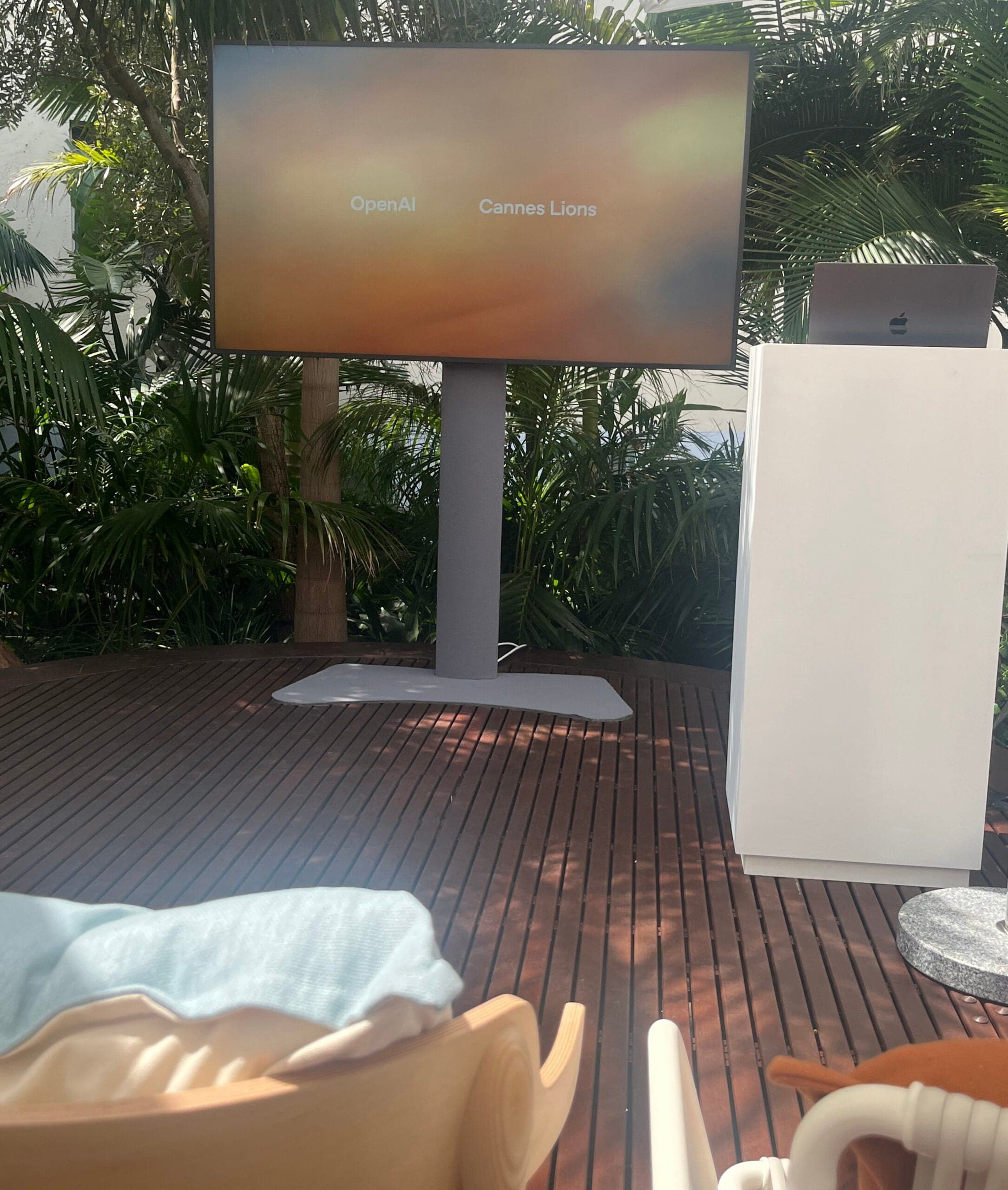
OpenAI formally announced its entry into the advertising market at Cannes Lions, detailing a new ad product and management toolset currently in a pilot testing phase. The company aims to monetize its AI platform while subsidizing access for free users, emphasizing intelligence-based targeting over traditional attention-based metrics.
The formalization of OpenAI’s ad business signals a fundamental shift from venture-backed research to a high-scale commercial competitor for Alphabet and Meta. By leveraging high-intent conversational data rather than passive scrolling, OpenAI is challenging the traditional search model while its automated creative tools lower barriers for performance marketers. This move accelerates the fragmentation of the digital ad stack as brands reallocate experimental budgets into conversational AI. Industry observers should monitor if OpenAI launches a standalone search engine to better capture bottom-funnel retail spend currently dominated by Google.
OpenAI's advertising ambitions are backed by aggressive financial projections shared with investors. In April 2026, Axios reported that OpenAI expects to generate $2.5 billion in ad revenue this year and $100 billion by 2030, with intermediate targets of $11 billion in 2027, $25 billion in 2028, and $53 billion by 2029. These projections assume OpenAI's products reach 2.75 billion weekly users by 2030 and capture a meaningful share of the global ad market currently dominated by Google, Meta, Amazon, and TikTok. The ad pilot generated $100 million in annual recurring revenue in under two months, though early pricing dynamics suggest the path to scale may be more complex than the headline numbers imply.
OpenAI's Cannes presentation revealed the operational mechanics of its advertising rollout. The Drum reported that the pilot has been running for just 19 weeks but is now expanding into its eighth and ninth countries, Mexico and Brazil, with early limiting factors like a $200,000 minimum spend removed. The company has shifted from CPM-only pricing to cost-per-click bidding, which now accounts for the majority of spend on the platform. OpenAI's head of ads, Shomair, positioned ChatGPT ads as occupying a distinct stage of the customer journey, arguing that users are in a consideration phase researching and comparing options rather than passively scrolling, which he described as neither social, display, nor search.
Early performance data suggests OpenAI's advertising economics are still stabilizing. The Next Web reported that OpenAI launched its ad pilot at a $60 CPM, which eroded to as low as $25 within ten weeks, prompting the shift to cost-per-click bidding with bids between $3 and $5. The self-serve ads manager opened on May 5 with no minimum spend, a move designed to scale advertiser volume but one that also signals the initial premium pricing was unsustainable. With fewer than 600 advertisers generating $100 million in annualized revenue, OpenAI faces the challenge of expanding its advertiser base while maintaining the high-intent positioning that differentiates its platform from traditional search and social advertising.
Add StreamingMeme as a preferred source on Google to see more of our streaming news at the top of your Search results.
Add as preferred source