

NVIDIA launches XR AI beta to power multimodal agents for AR
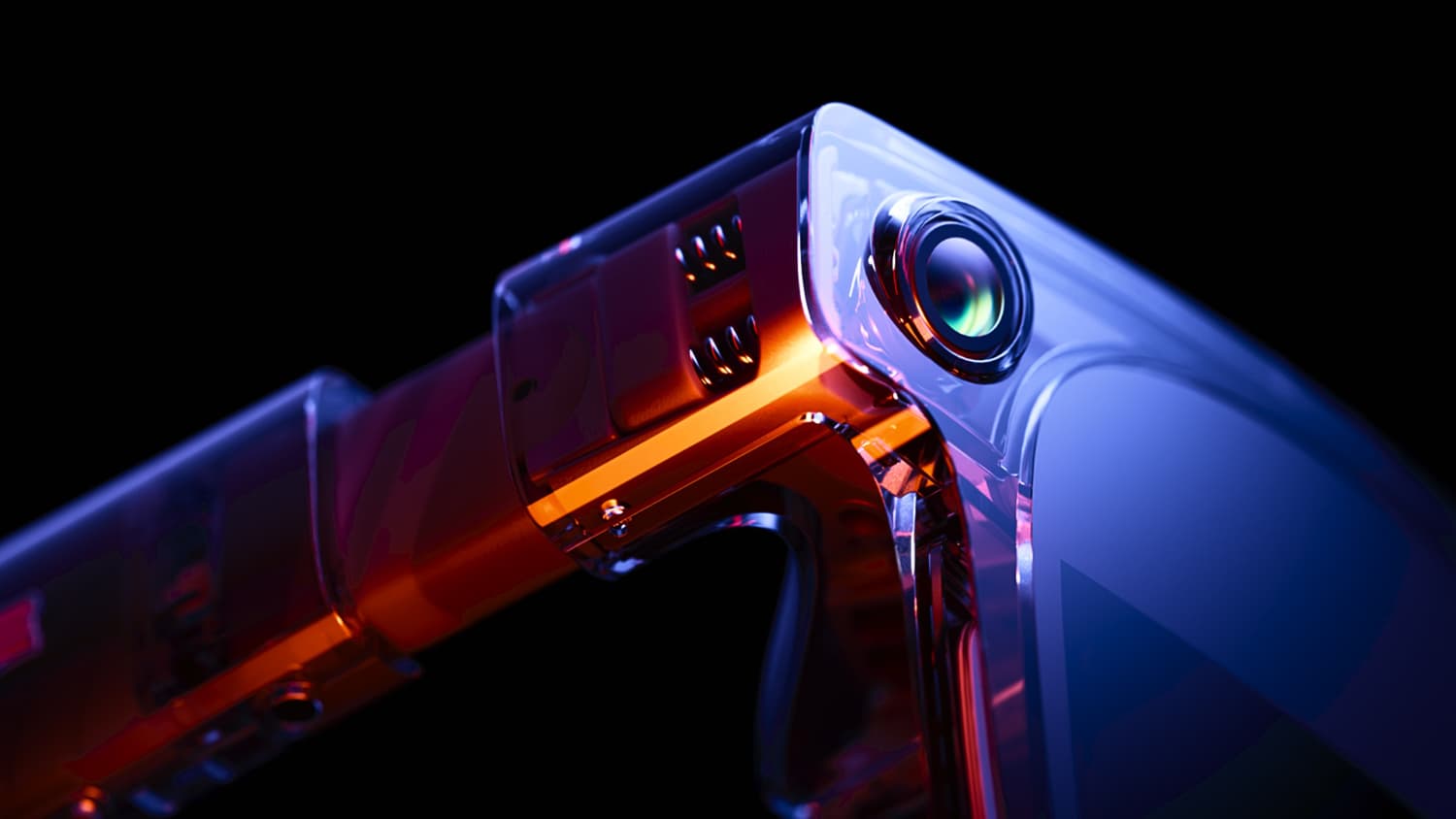
NVIDIA has launched a public beta of its XR AI developer library, designed to help developers build multimodal, agentic applications for AR and XR hardware. The platform integrates spatial intelligence with enterprise data and visual AI tools, with initial industrial and scientific research use cases currently in testing.
Key Takeaways
- NVIDIA XR AI supports multimodal sensor inputs including video, audio, depth, and pose data from devices like Meta, Rokid, and VITURE glasses.
- Initial industrial testing with Siemens uses DGX Spark to provide factory engineers with real-time maintenance guidance and digital twin connectivity.
- Integrated visual AI services include NVIDIA Metropolis for video search and summarization and NeMo Retriever for enterprise knowledge retrieval.
- Scientific research firm Rana is deploying its LabOS system on the platform to provide hands-free guidance for stem cell and gene-editing workflows.
- The library utilizes reasoning models like NVIDIA Cosmos Reason and Nemotron to move agent orchestration from prototype to production.
Why It Matters
NVIDIA is positioning itself as the foundational software layer for the industrial metaverse by bridging the gap between wearable hardware and high-end enterprise compute. For the streaming ecosystem, this indicates a shift toward 'active' spatial video where real-time analysis of a wearer's FOV (Field of View) triggers low-latency data overlays and AI reasoning. By integrating libraries like Metropolis directly into specialized AR workflows, NVIDIA is forcing a convergence between enterprise video infrastructure and agentic AI. Success here would cement the role of GPUs as the necessary backend for the next generation of 'hands-free' productivity interfaces. Watch for adoption rates among device manufacturers like VITURE as a proxy for ecosystem fragmentation.
Additional Context
The public beta launch of NVIDIA XR AI follows a series of strategic physical AI moves earlier in 2026. Per NVIDIA reporting from January 2026, the company expanded its partnership with Siemens to develop a comprehensive 'Industrial AI Operating System.' This initiative aims to deploy the world’s first fully AI-driven adaptive manufacturing sites, starting with the Siemens Electronics Factory in Erlangen, Germany. This partnership specifically uses NVIDIA Omniverse and CUDA-X libraries to turn passive digital twins into active, queryable environments for factory floor staff.
Hardware manufacturers are already aligning behind this stack. Per Android Central in June 2026, VITURE announced its 'Helix' smart safety eyewear, the first wearable terminal purpose-built for the NVIDIA XR AI solution. The glasses, priced at $600 with a Q1 2027 shipping window, feature a 12MP first-person camera and a four-microphone array designed to stream a wearer's perspective to a multimodal AI in real time. This standalone approach reduces reliance on smartphone tethering, a key technical hurdle for enterprise AR adoption.
On the software side, the XR AI library relies heavily on the Cosmos 2 family of foundation models. Per IT Brief US in July 2026, these models are designed for physical AI reasoning and world generation, allowing agents to predict how a robot or human should interact with objects in unmodeled environments. By integrating these reasoning capabilities with NeMo Retriever, NVIDIA is attempting to provide a full-stack solution that handles the heavy lifting of multi-sensor data fusion, which remains the primary bottleneck for competing AR platforms.
Read full article at develop3d.com
Enjoy our coverage?
Add StreamingMeme as a preferred source on Google to see more of our streaming news at the top of your Search results.
Add as preferred source