

NextGen TV DRM debate prolongs transition, risks economic viability
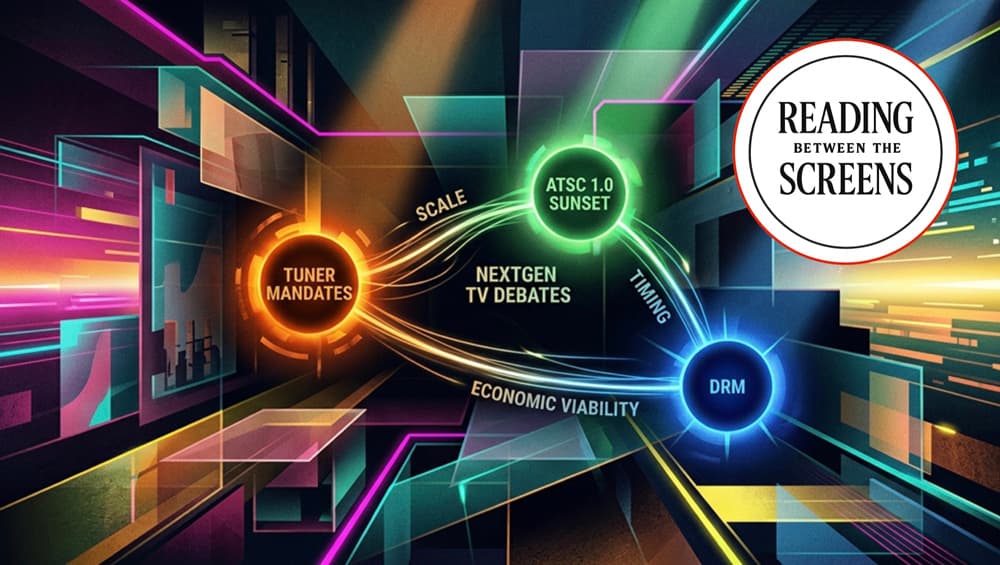
The broadcast industry's ongoing debates regarding NextGen TV's DRM, tuner mandates, and ATSC 1.0 sunset are risking its adoption and economic viability. Rights holders increasingly demand robust DRM for premium content, while audience behavior shifts towards streaming platforms. The article highlights the tension between consumer simplicity, rights holder protection, OEM interoperability, and broadcaster economic sustainability.
Key Takeaways
- NextGen TV adoption is hindered by unresolved issues around DRM, tuner mandates, and the ATSC 1.0 sunset.
- Rights holders, including sports leagues and studios, increasingly view robust DRM as a baseline requirement for premium content distribution.
- The U.S. Trade Representative's 'Notorious Markets Report' highlighted significant value loss from livestream piracy, especially for sports programming.
- Device manufacturers (CTA) and MVPDs resist mandates due to perceived anti-consumer or commercially burdensome implications.
- Broadcasters need alignment on transparent DRM implementation, predictable certification standards, and better smart-TV discoverability.
Why It Matters
The unresolved NextGen TV debates are creating continued uncertainty, potentially forcing broadcasters to maintain parallel infrastructures without guaranteed distribution. This delay pushes more audiences to platform-controlled streaming ecosystems, further eroding broadcast's competitive position for premium live content. An economic imperative for strong DRM clashes with historical broadcast simplicity, requiring the industry to find a compromise between rights holder protection and consumer experience. Industry stakeholders need to watch for concrete proposals and timelines for transparent DRM implementation and certification standards to emerge from ongoing discussions, as waiting too long risks irreversible market shifts.
Read full article at tvnewscheck.com
Enjoy our coverage?
Add StreamingMeme as a preferred source on Google to see more of our streaming news at the top of your Search results.
Add as preferred source