
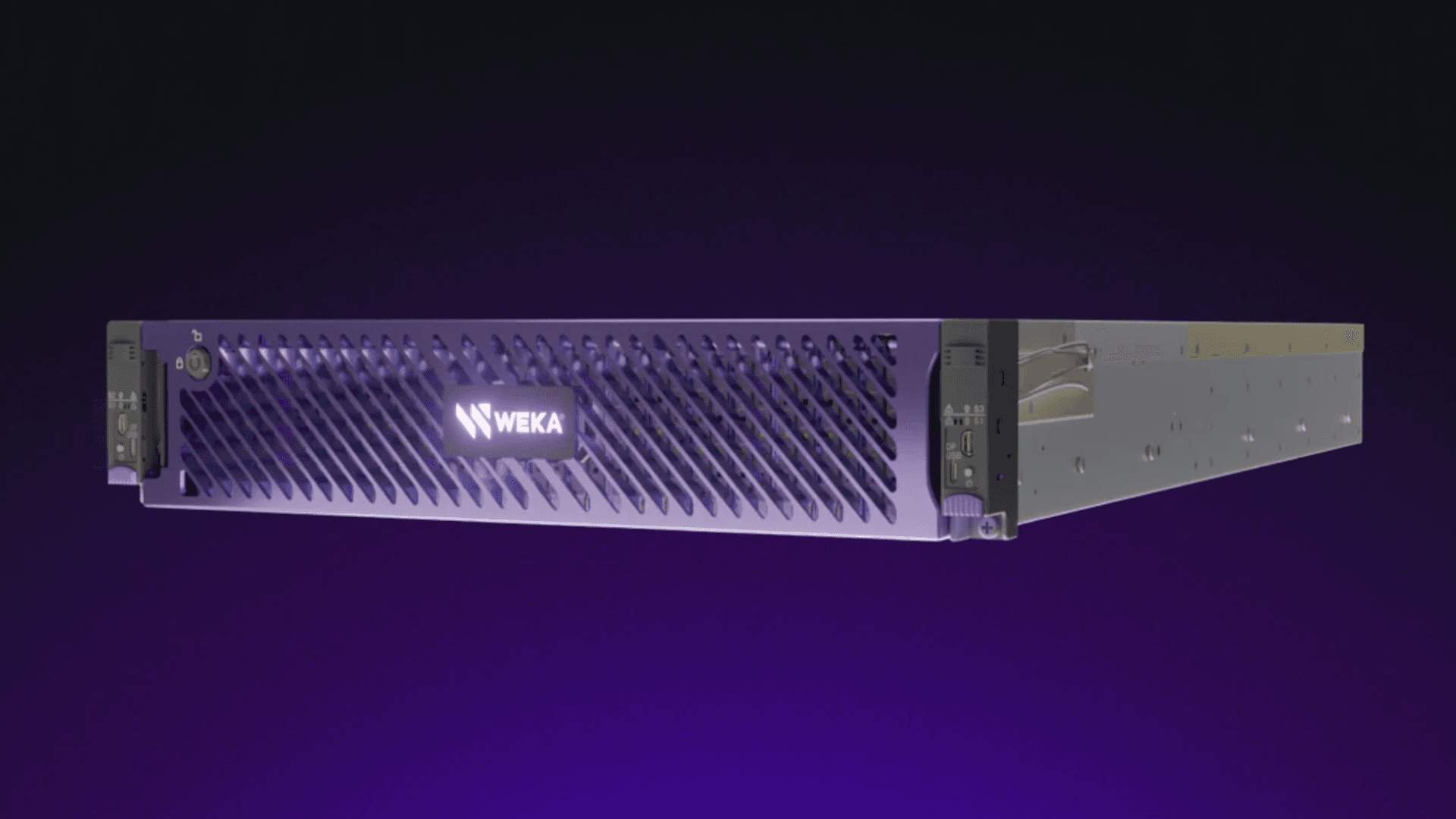
Weka has unveiled the WEKApod 3, an AI-native storage appliance capable of reaching 1 exabyte of capacity per 56U rack by utilizing high-density Micron NVMe SSDs and integrated data-reduction software. The system is designed to provide 500GB/s of throughput, targeting high-concurrency demands for generative AI, large language model training, and inference pipelines.
The WEKApod 3 addresses the mounting infrastructure crisis where AI data growth outpaces data center floor space and power availability. By consolidating an exabyte of storage into a single rack footprint, Weka enables streaming platforms and AI model builders to maximize GPU utilization without expanding physical real estate. This move shifts the competitive landscape toward density-optimized, vertically integrated hardware that pairs with software-driven compression. For the broader ecosystem, it signals a transition from general-purpose enterprise storage to specialized AI-native rigs capable of handling the massive data lakes required for real-time generative video and hyper-personalized content recommendations. Watch for the fall 2026 delivery window to see if competitors like VAST Data respond with similar hardware-software bundles.
The launch of WEKApod 3 coincides with a broader industry shift toward ultra-dense flash storage as AI workloads transition from training to large-scale production inference. Per TechTarget in July 2026, the transition is fueled by the unpredictability of inference workloads, which demand higher token throughput and lower latency than traditional enterprise storage can provide. Micron, a key partner in the WEKApod rollout, began high-volume production of its 245.76TB 6600 ION SSDs in May 2026 to address this specific surge. These drives consume roughly 30 watts at peak power, which Micron claims offers an 82% reduction in rack footprint compared to equivalent hard-disk drive deployments.
Weka is also moving away from its historical reliance on third-party OEM chassis, opting instead for a vertically integrated hardware strategy. Per Omdia analyst reports from July 2026, this shift allows Weka to mitigate global supply chain constraints and deliver systems within weeks rather than the four-to-six-month lead times currently common in the storage market. This hardware is paired with the newly released NeuralMesh 6 software, which introduces always-on data reduction and a unified NVMe-to-S3 protocol stack. According to Weka, this software-hardware symmetry is critical for preventing the "sustained-write cliff" during model checkpointing, a common performance bottleneck where GPUs sit idle while data is committed to storage.
Simultaneously, the competitive field is reacting to these density gains. Per Futurum Group in July 2026, traditional vendors like Dell and Pure Storage are increasingly being pressured to match the per-rack-unit economics of integrated AI appliances. As power availability becomes the primary constraint for scaling AI factories, the industry is moving toward benchmarks that measure effective capacity and IOPS density per kilowatt rather than just raw petabytes.
Add StreamingMeme as a preferred source on Google to see more of our streaming news at the top of your Search results.
Add as preferred source