
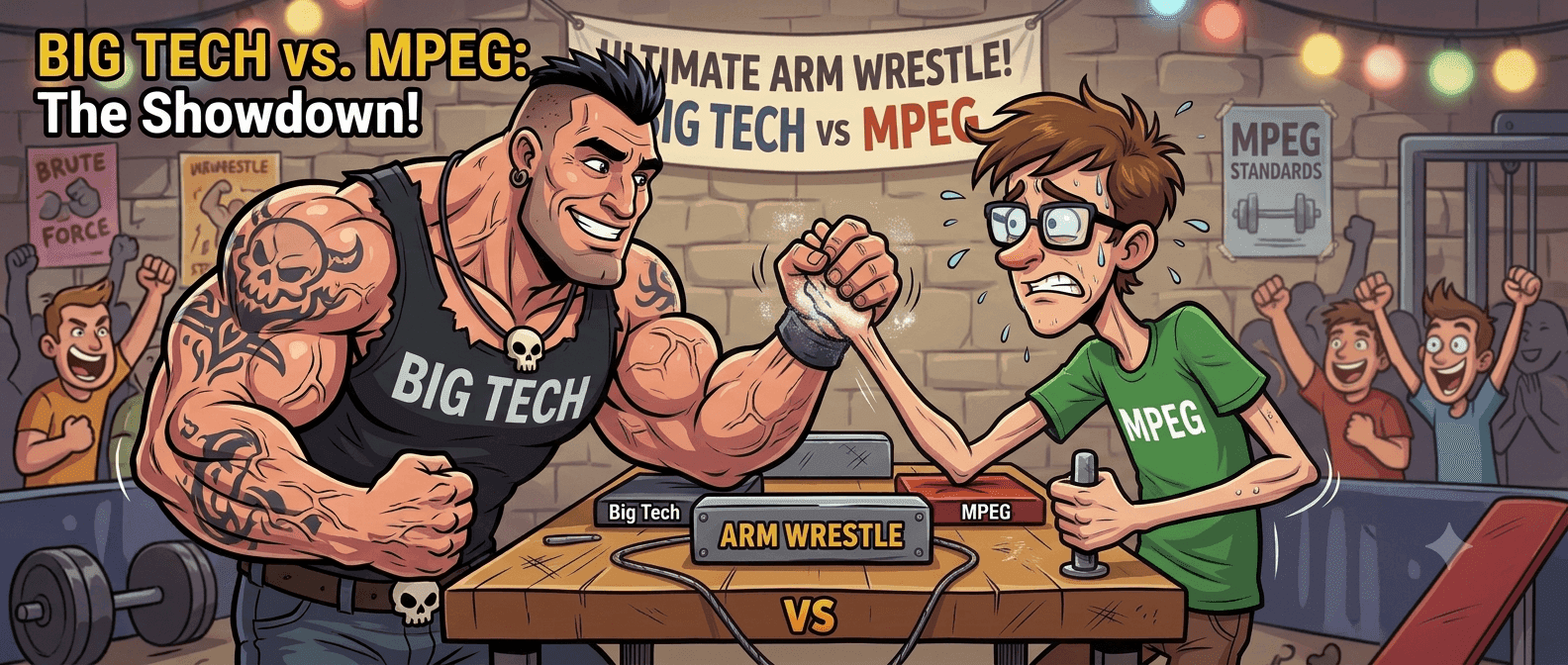
This article examines the tension between the Alliance for Open Media's royalty-free licensing model for the AV1 codec and the established F/RAND licensing framework managed by international standards bodies like MPEG. The piece highlights concerns from stakeholders regarding how the shift toward royalty-free standards impacts R&D incentives and the intellectual property ecosystem for video compression technologies.
The transition from international standards bodies to private consortia shifts control over video technology from technical committees to platform gatekeepers. This move threatens the economic viability of upstream patent holders who lack the diversified revenue streams of Amazon or Google. For the ecosystem, this ensures lower entry costs for streaming implementers but risks a long-term slowdown in fundamental compression engineering as licensing revenues dry up. Watch for upcoming competition reviews by European regulators regarding AOM’s patent-sharing mandates.
The debate over video standards has reached critical mass as AV1 adoption accelerates across major platforms. Per Free-Codecs, by January 2026, Netflix reported that AV1 accounted for 30% of its global streaming traffic and was integrated into 88% of large-screen devices submitted for certification. The codec's momentum was bolstered by Apple, which added hardware-accelerated AV1 decoding in its M3 and A17 Pro chips, removing a significant hurdle for high-end mobile and desktop playback. Meanwhile, AOMedia announced the year-end 2025 release of the AV2 specification, targeting a further 30% reduction in bitrates to enable 8K and immersive media applications.
Regulatory pressure remains a persistent backdrop to these technical gains. In May 2023, the European Commission closed a preliminary antitrust investigation into AOM’s licensing policies for 'priority reasons,' per Reuters, but clarified that it would continue monitoring the impact of royalty-free mandates on the intellectual property market. Simultaneously, the DVB Project updated its broadcast specifications to include both AV1 and MPEG’s Versatile Video Coding (VVC), though actual deployment of the latter has lagged due to toolchain immaturity. Industry reporting from Streaming Media in March 2026 noted that while 57% of organizations planned to deploy AV1 by year-end, VVC production usage remained stagnant at just 4%.
Legal complications have also challenged the 'royalty-free' narrative surrounding AOM projects. In July 2025, Sisvel announced that its AV1 patent pool had successfully licensed roughly 50% of the hardware device market, asserting that the codec still involves third-party intellectual property not covered by the AOM license. Furthermore, Access Advance launched its Video Distribution Patent (VDP) Pool in early 2025, attempting to collect royalties based on active monthly users across multiple codecs, including AV1 and HEVC. These developments indicate that while Big Tech promotes a royalty-free future, the underlying legal landscape for video standard patents remains highly contested and fragmented.
Add StreamingMeme as a preferred source on Google to see more of our streaming news at the top of your Search results.
Add as preferred source