
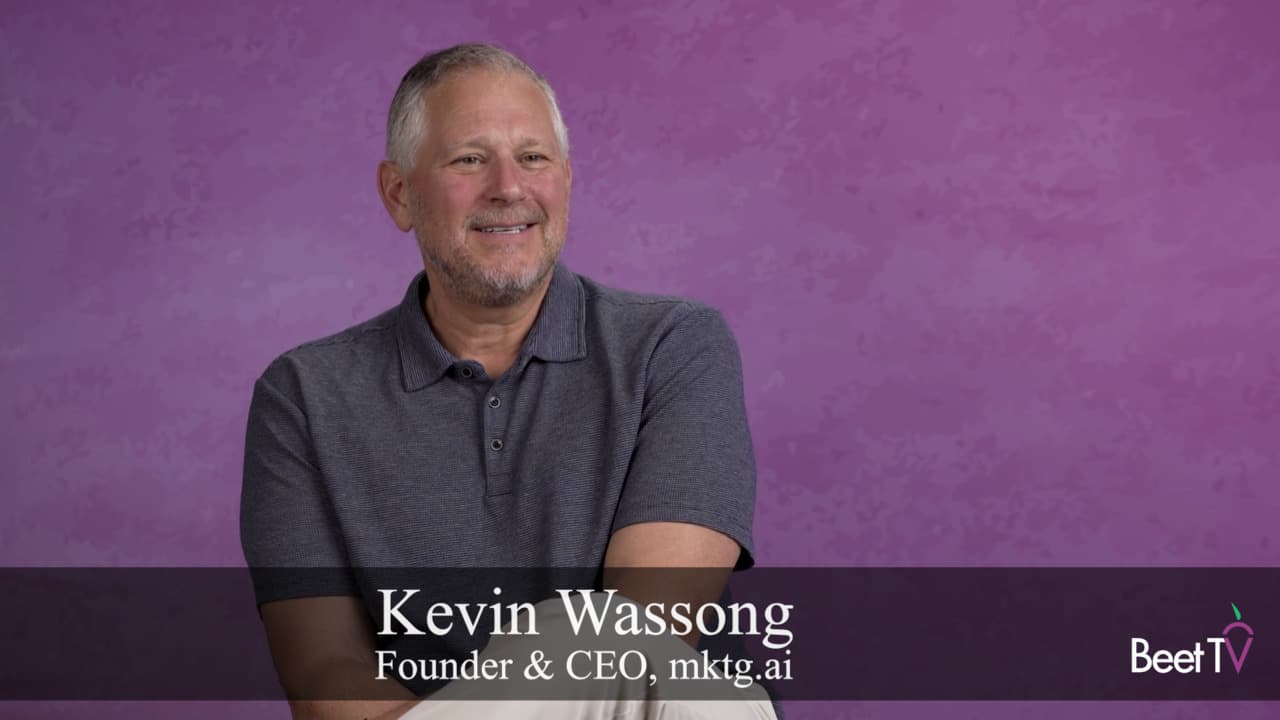
Kevin Wassong, CEO of mktg.ai, has launched a platform designed to centralize fragmented marketing creative assets and performance data into a single decision-support interface. The product addresses the gap between increasing AI budget allocations and the lack of mature AI-readiness infrastructure within marketing organizations.
The launch addresses a persistent structural deficit where disparate creative workflows and siloed data streams prevent CMOs from achieving a holistic view of campaign ROI. For the streaming ecosystem, which increasingly relies on high-volume dynamic creative and targeted ad placements, the ability to unify performance metrics with actual creative output is essential for optimizing spend across fragmented CTV environments. By positioning the tool as a decision-support system rather than a standard dashboard, the platform aims to increase the velocity of budget reallocations. Watch for whether mktg.ai can secure proprietary data partnerships to mimic the 'moat' of the Bloomberg Terminal model it seeks to emulate.
The push for centralized marketing intelligence reflects a broader trend of 'tech stack consolidation' as CFOs scrutinize fragmented SaaS expenditures. Per Forrester, June 2026, enterprise brands are reducing the number of point solutions in their marketing stacks by 22% compared to two years ago, favoring unified platforms that integrate generative AI directly into the workflow. This shift is driven by the realization that silos are the primary inhibitor of AI efficiency; without a centralized data lake for creative and performance metrics, large language models cannot accurately predict campaign outcomes or automate asset iteration.
Relatedly, the CTV space is seeing a surge in 'clean room' integrations to bridge the same data gaps mktg.ai targets. Per AdExchanger, May 2026, NBCUniversal and Disney have expanded their interoperable data offerings to allow advertisers to see cross-platform frequency and reach within a single interface. While mktg.ai focuses on the marketer’s internal workflow and creative audit, these publisher-side moves highlight a universal industry demand for transparency. Furthermore, Gartner’s May 2026 data indicates that while AI interest is at an all-time high, the 'productivity paradox' remains a risk, as companies spend on tools without restructuring the underlying data architecture needed to support them.
Add StreamingMeme as a preferred source on Google to see more of our streaming news at the top of your Search results.
Add as preferred source