
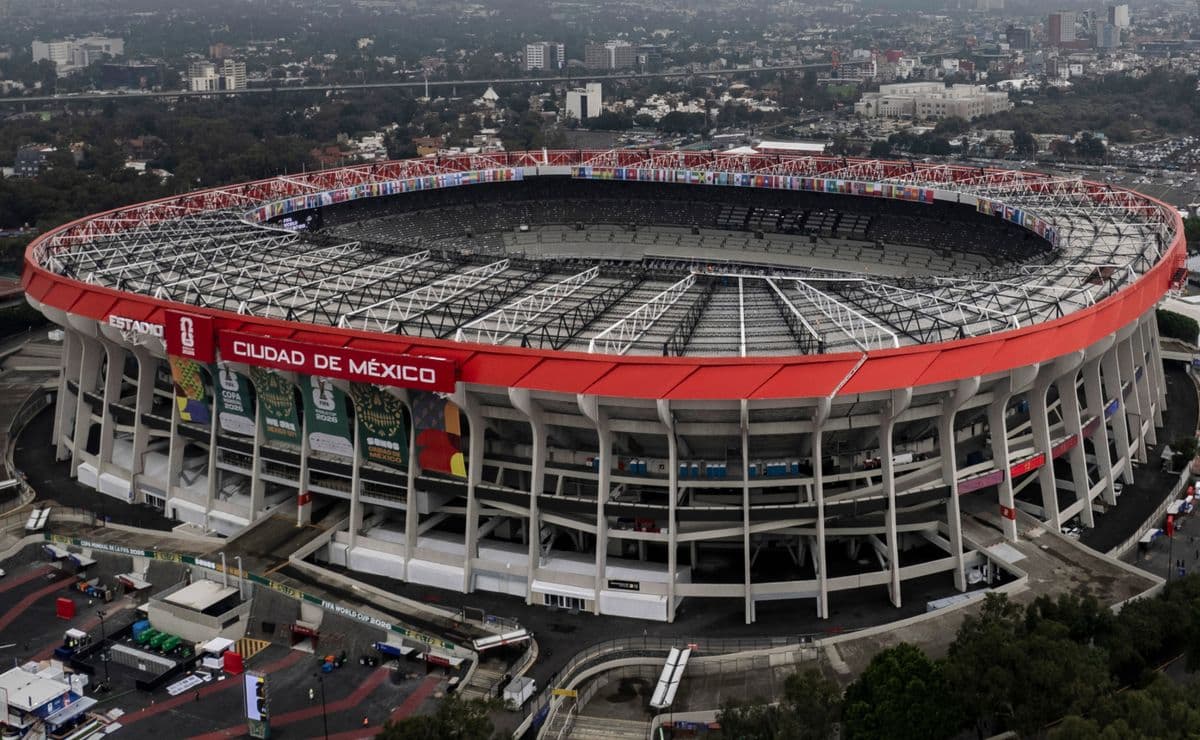
Estadio Azteca, rebranded as Mexico City Stadium for the 2026 FIFA World Cup, underwent extensive modernizations including replacing all seats for an 87,000 capacity, installing a state-of-the-art hybrid playing field, and integrating over 21,500 square feet of LED screens. These upgrades also feature a new LED lighting system for 4K/8K broadcasts and a stadium-wide Wi-Fi system, elevating the matchday experience and broadcast capabilities.
The renovation highlights the extreme infrastructure demands required for modern global streaming events. By prioritizing 4K and 8K broadcast standards alongside localized Wi-Fi and hybrid pitch tech, the venue aims to minimize latency and technical failures for both on-site and remote audiences. This sets a high-spec benchmark for stadiums in North America, where aging venues often struggle to integrate the high-density power and data requirements of live HDR sports production. Watch for whether the stadium-wide Wi-Fi system can maintain stability under peak load during the inaugural match on June 11.
The technological upgrades at Mexico City Stadium are part of a broader push to make the 2026 World Cup the most digitally advanced in history. Per FIFA, June 2026, the International Broadcast Centre (IBC) in Dallas now serves as the tournament's 45,000-square-meter mission control, utilizing Lenovo ThinkSystem servers to manage live IPTV feeds to over 1,000 screens across all venues. This infrastructure is designed to keep latency under five seconds for real-time match action of all 104 games. These back-end systems support AI-driven innovations like 3D player avatars and semi-automated offside technology being deployed for the first time at this scale.
While the stadiums provide the raw signal, the downstream ecosystem is equally fragmented. Per TechRadar, June 2026, streaming platforms like Peacock are using the tournament to debut the Dolby AC-4 codec for Spanish-language coverage, aiming to deliver 4K HDR quality at lower bitrates. Simultaneously, other broadcasters such as Germany's MagentaTV have committed to full Dolby Vision and Dolby Atmos streaming for every match, per Broadband TV News, June 2026. This contrast in delivery — from 8K-ready stadium lighting to mobile-optimized AC-4 streams — underscores the complex negotiation between ultra-high-definition capture and the bandwidth constraints of global distribution.
Add StreamingMeme as a preferred source on Google to see more of our streaming news at the top of your Search results.
Add as preferred source