
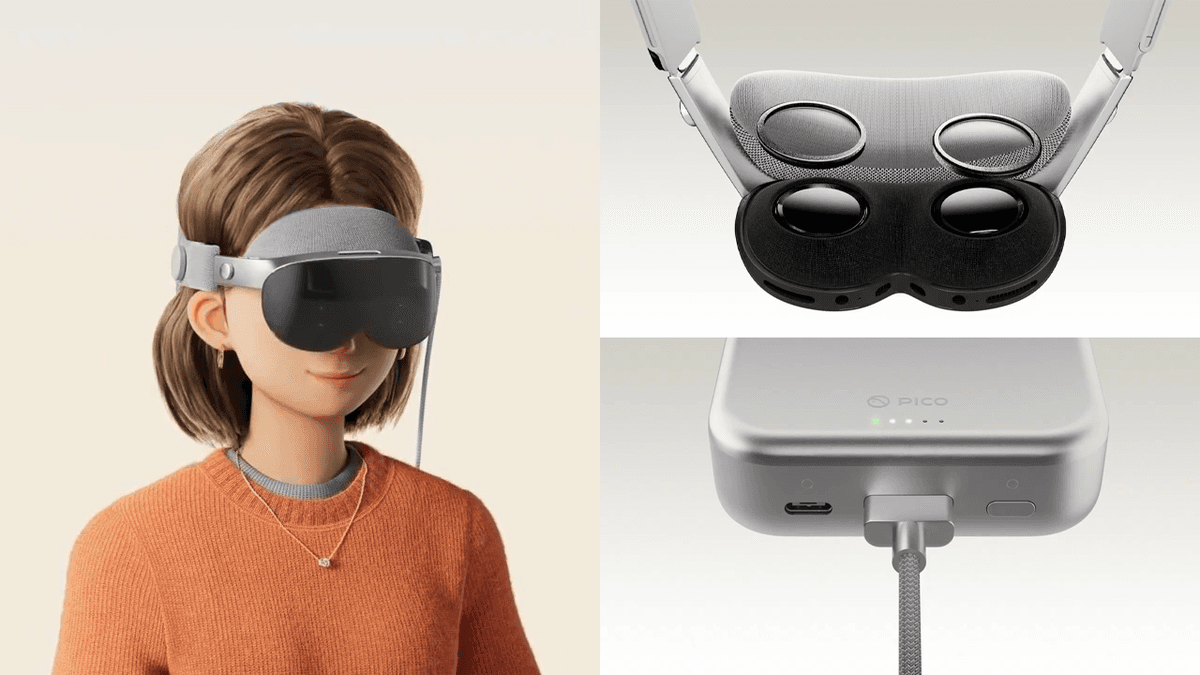
Pico's upcoming 'Project Swan' headset design has been leaked via public SDK videos, showcasing a blend of Apple Vision Pro and Samsung Galaxy XR aesthetics. The leaks suggest Pico, owned by ByteDance, is positioning this device to compete in the high-end XR market with advanced micro-OLED panels and a dual-chip architecture. This development indicates a significant push in the XR hardware space, which has implications for how content will be consumed and delivered.
The leak confirms ByteDance is abandoning the low-margin Quest competition to challenge the $1,500+ premium tier occupied by Apple and Samsung. By deploying 4,000 PPI displays and a proprietary vision co-processor, Pico aims to solve the passthrough latency and visual fidelity issues that have limited enterprise adoption. For the broader ecosystem, this creates a three-way high-end platform war between visionOS, Android XR, and Pico’s revamped OS 6. Watch for Pico's GDC session next week for first live demonstrations of the Spatial Engine and its multitasking capabilities.
Pico's Project Swan leak arrives after years of strategic retrenchment at ByteDance's VR division. In November 2023, ByteDance overhauled Pico with significant job cuts as global VR demand declined, with hundreds of staff affected and the company's focus narrowing to hardware and core technologies. Pico CEO Zhou Hongwei told staff that earlier market growth estimates had been too optimistic, and the restructuring folded Pico's mobile OS team back into ByteDance's central engineering platform while slashing marketing, studios, video, and platform business units.
The restructuring marked a decisive pivot away from the consumer volume strategy that had positioned Pico as a Meta Quest competitor. TechCrunch reported that Pico's workforce fell to under 2,000 after the cuts, with the company halting aggressive expansion that had followed its 2021 acquisition by ByteDance. China's VR shipments had shrunk 56% year-over-year in the first half of 2023 according to Counterpoint Research, underscoring the market headwinds that forced the retrenchment. The Swan's premium positioning, with micro-OLED panels and a dual-chip architecture, represents the hardware-first direction Pico's leadership committed to during that restructuring.
The competitive field Pico is now targeting has consolidated around a small number of premium platforms. Road to VR reported that Tencent, another major Chinese tech company, scrapped its own VR headset plans around the same period, leaving Pico as the only Chinese manufacturer with an active high-end XR hardware program. That consolidation means Project Swan, if it ships at the specifications suggested by the SDK leak, would face direct competition primarily from Apple Vision Pro and Samsung Galaxy XR rather than from a broader field of Asian hardware makers.
Add StreamingMeme as a preferred source on Google to see more of our streaming news at the top of your Search results.
Add as preferred source