

ITU Standardizes Embodied AI to Bridge Multimedia and Physical Robotics
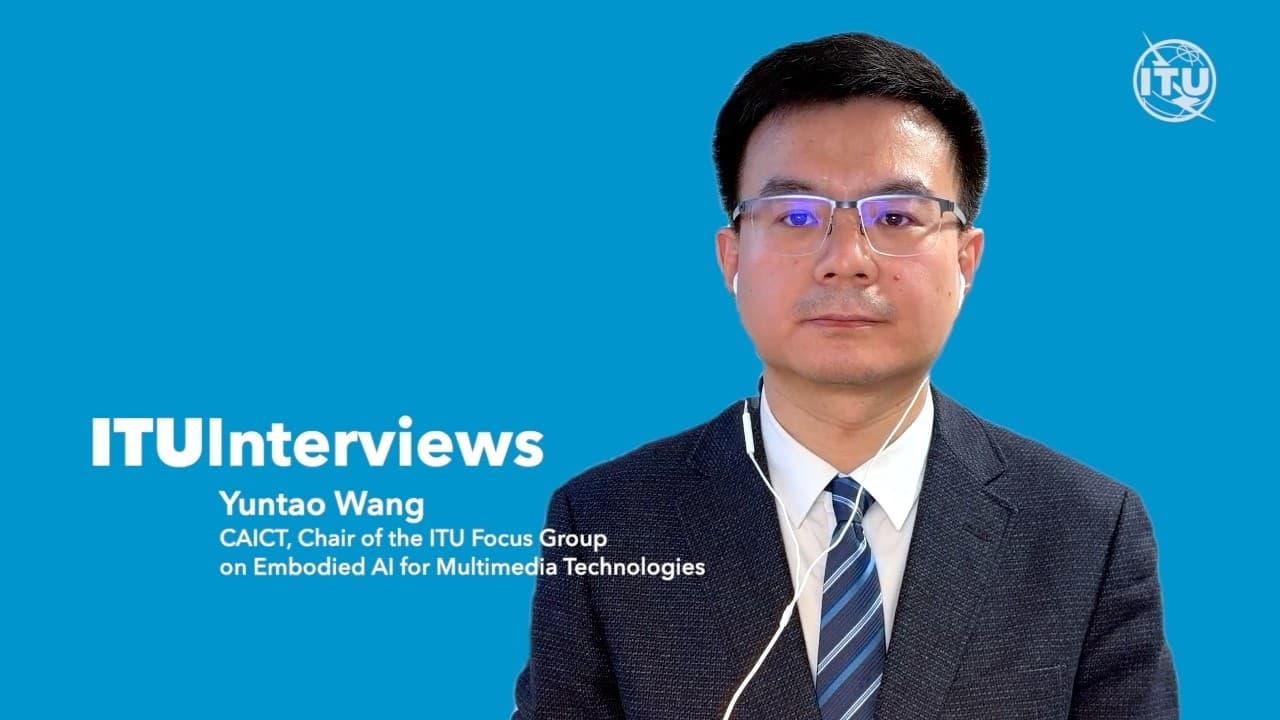
The ITU has established Recommendation F.748.66 to provide a formal definition and framework for Embodied AI, aiming to standardize interoperability across vision-language-action models in physical systems. The initiative focuses on creating unified terminology, reference architectures, and safety benchmarks to facilitate industrial deployment of integrated multimedia and robotic systems.
Key Takeaways
- Recommendation F.748.66 codifies Embodied AI as physical systems that perception-decide-act autonomously via integrated multimedia constructs.
- The ITU Focus Group identifies current vendor-specific data silos and incompatible interfaces as the primary barriers to industrial robotics deployment.
- Industrial target sectors include healthcare, mobility, and logistics, specifically addressing labor shortages and aging populations.
- The initiative establishes safety benchmarks and human-AI alignment metrics necessary for mass deployment in shared human-robot workplaces.
- Market projections cited by the CAICT chair suggest a $38 billion valuation by 2035 with 1 billion units in use by 2050.
Why It Matters
This standard signals a pivot from isolated robotics to integrated multimedia systems where video, audio, and tactile data are fused into a single actuation layer. For the streaming and computer vision ecosystem, it transforms passive perception into 'Physical AI,' moving intelligence from screens into autonomous agents. By formalizing VLA model architectures, the ITU is attempting to prevent the proprietary fragmentation seen in early OTT protocols. Success here would enable a hardware-agnostic 'portability of skills,' allowing models trained on one platform to operate across diverse robotic bodies. Watch for the first conformant reference architectures to emerge from the vertical task groups in logistics and healthcare by late 2026.
Additional Context
The ratification of F.748.66 comes as the humanoid market shifts from research to pilot-scale commercialization. According to Goldman Sachs in February 2024, the total addressable market for humanoid robots is projected to reach $38 billion by 2035, a sixfold increase from previous estimates, driven largely by advancements in robotic Large Language Models (LLMs). This growth is already visible in shipment data; per Visual Capitalist, global humanoid shipments surpassed 14,500 units in 2025, with Chinese manufacturers such as Unitree and AgiBot accounting for nearly 90% of those early deployments. In contrast, U.S. leaders like Tesla and Figure AI shipped roughly 150 units each in the same period.
Technically, the industry is converging on Vision-Language-Action (VLA) policies as the core paradigm for bridging digital intelligence and physical movement. Per IEEE Transactions in May 2026, VLAs function as multimodal decoders that translate visual and linguistic prompts into low-level motor control. However, new 'world models' are emerging to address the high uncertainty of physical environments. Companies like NVIDIA are currently advancing stacks such as the GR00T foundation model to enable cross-platform portability. This technical shift explains the ITU’s urgency in defining shared terminology through Study Group 21, which was recently formed to consolidate multimedia coding and autonomous system standards through 2028.
Read full article at youtube.com
Enjoy our coverage?
Add StreamingMeme as a preferred source on Google to see more of our streaming news at the top of your Search results.
Add as preferred source