

Indian CTV Ads Battle Second Screens; Coordinated Campaigns Key to Engagement
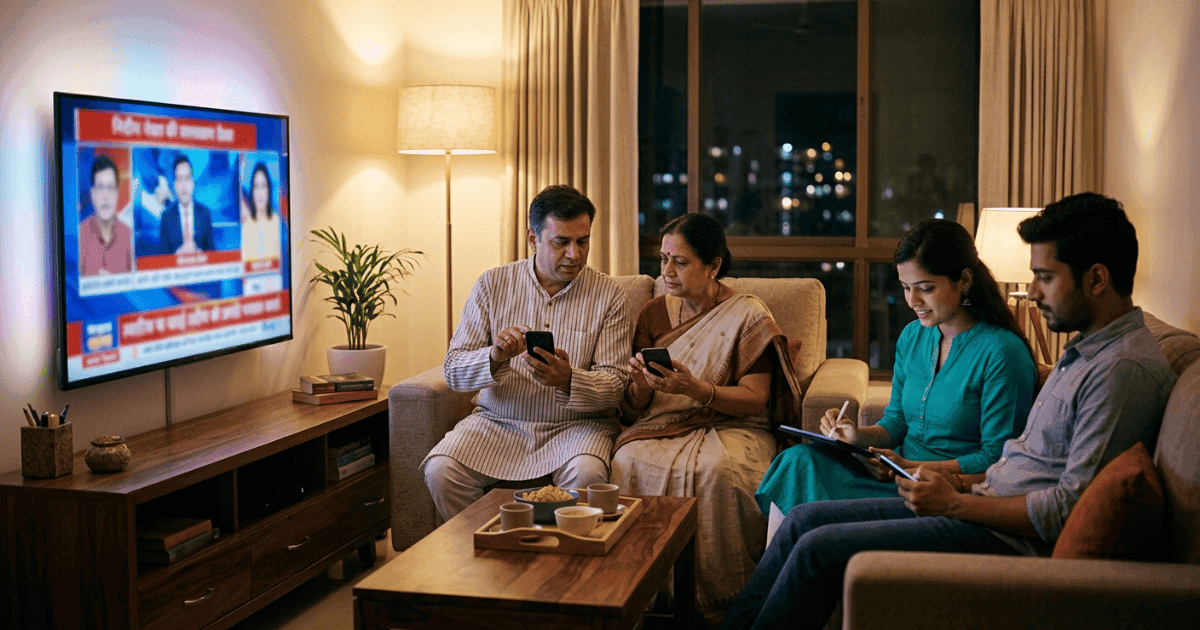
Connected TV advertisers in India are facing a 'second-screen' challenge, with viewers frequently engaging with smartphones during ad breaks, which necessitates new cross-screen strategies. This behavior offers an opportunity for advertisers to leverage household-level data for targeted, coordinated cross-screen campaigns. The article emphasizes that effective CTV ad strategies must adapt to fragmented attention, proposing shorter formats and integrated mobile campaigns.
Key Takeaways
- Indian viewers use secondary screens most intensely during CTV ad breaks, impacting traditional ad recall.
- Affordable data and increased smartphone penetration have accelerated dynamic second-screen behavior in India.
- Advertisers can use household-level data to implement targeted, coordinated cross-screen campaigns.
- Effective CTV ad strategies in India require shorter formats and integrated mobile campaigns.
- The fragmentation of viewer attention means ad strategies must adapt to meet viewers on multiple screens.
Additional Context
The second-screen phenomenon in Indian CTV is part of a broader "streaming paradox" where rapid growth in connected TV is accompanied by challenges in maintaining precision and efficiency for advertisers (Pitchonnet, April 2026). India's active CTV user base surpassed 129 million in 2025 across 60-70 million households, with viewers spending approximately 2.8 hours daily on OTT and linear TV (Social Samosa, December 2025). This growth is attracting significant ad spend, projected to reach 2,300-3,000 crore INR by the end of 2025, growing at up to 40% annually (Pitchonnet, April 2026). However, advertisers face issues like impression duplication, with some campaigns reaching only a limited portion of households while delivering high frequency (Pitchonnet, April 2026). Measurement remains a core challenge, as walled gardens provide accuracy but lack cross-platform comparability, hindering a unified view of audience reach and engagement (Pitchonnet, April 2026). Despite these hurdles, 91% of Indians engage with ads while watching content, often taking immediate second-screen actions such as browsing or shopping, making India one of the most ad-responsive video markets globally (Social Samosa, December 2025). Marketers are responding by shifting towards audience-first strategies that prioritize identity and cross-platform visibility, utilizing tools for consistent messaging and disciplined frequency management across fragmented ecosystems (Pitchonnet, April 2026).
Read full article at agencyreporter.com
Enjoy our coverage?
Add StreamingMeme as a preferred source on Google to see more of our streaming news at the top of your Search results.
Add as preferred source