

HP Z4 G6i workstation targets enterprise AI with Blackwell GPU integration
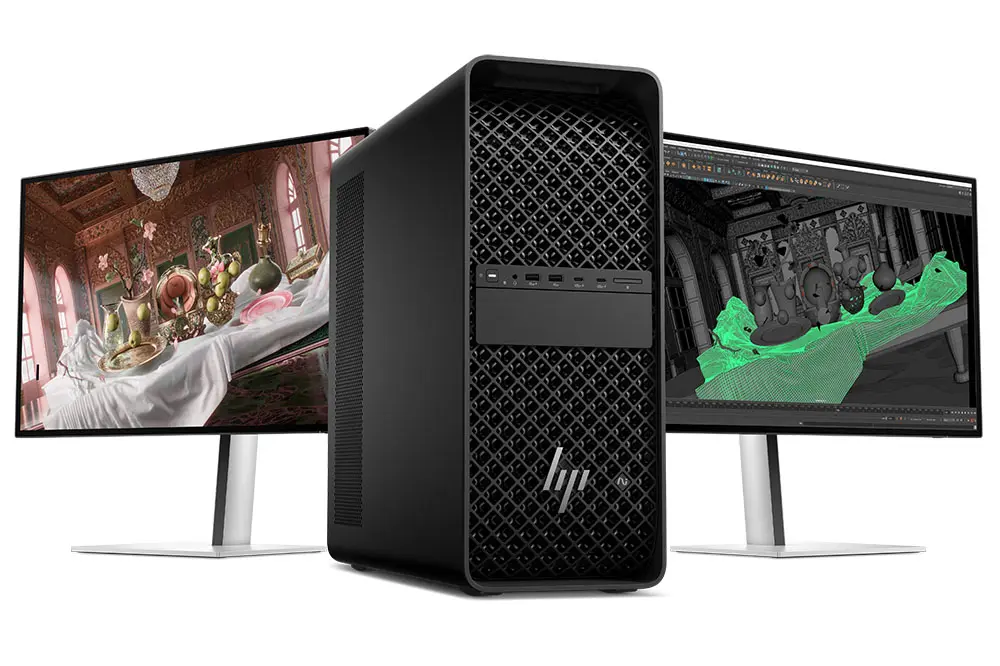
HP has introduced the Z4 G6i workstation, a high-performance hardware system powered by Intel Xeon 678X processors and Nvidia RTX Pro 6000 Blackwell GPUs. The system is designed for enterprise-level video editing and AI workflows, featuring ISV certifications for major creative applications and proprietary GPU resource-pooling technology.
Key Takeaways
- Equipped with 96GB Nvidia RTX Pro 6000 Blackwell GPUs and 48-core Intel Xeon 678X processors (up to 4.9GHz).
- DaVinci Resolve Magic Mask 2 benchmarks reached 28fps for 4K ARRI and Sony a7siii RAW clips.
- Integrated HP Z Boost technology allows organizations to pool and share idle GPUs across the enterprise network.
- Hardware is ISV-certified for professional creative suites including Adobe Premiere Pro 2026 and DaVinci Resolve Studio 20.
- Redesigned rack-ready 4U chassis supports an optional Max Side Panel for improved thermals and 600W GPU clearance.
Why It Matters
The Z4 G6i signals a shift toward specialized 'AI workstations' as production houses move away from general-purpose hardware toward Blackwell-era architectures capable of local LLM fine-tuning and complex neural masking. For the streaming ecosystem, this local compute power reduces reliance on costly cloud-based GPU instances for daily post-production and metadata tagging. By integrating resource-pooling, HP is addressing the inefficiency of underutilized expensive silicon in fragmented workflows. Watch for whether rivals Dell and Lenovo respond with similar on-premise 'GPU-as-a-Service' software to maintain workstation market share in late 2026.
Additional Context
The launch of the Z4 G6i coincides with a period of significant volatility in the professional hardware market. Per Omdia (July 2026), PC shipments in the U.S. fell 7% year-over-year in the first quarter of 2026, with HP experiencing a 21.6% decline in total shipments. Despite this contraction, the commercial and workstation segments remain resilient as enterprises prioritize Windows 11 migrations and local AI acceleration to bypass rising cloud costs. Dell recently overtook HP as the leading U.S. vendor, holding a 25% market share compared to HP's 20.5%.
Technological pressure is also mounting as Nvidia accelerates its architectural cadence. According to Nvidia (June 2026), the Blackwell architecture is currently the enterprise standard, but the upcoming 'Rubin' (R100) architecture is expected to begin mass availability in the second half of 2026. This transition will introduce HBM4 memory and 3nm manufacturing nodes, promising a 3.5x improvement in training performance over current systems. Consequently, hardware providers like HP are focusing on modular designs, such as the Z4's tool-less chassis and flexible side panels, to ensure systems remain compatible with these rapidly evolving electrical and thermal requirements.
Further market reports from Mordor Intelligence (July 2026) indicate that the global workstation market is projected to reach $2.8 billion by 2032, driven by a 5.6% CAGR. This growth is largely fueled by digital transformation spending that is expected to exceed $3.4 trillion by the end of this year. As production scales toward 8K and real-time generative AI video workflows, the demand for enterprise-grade components like ECC memory and high-wattage GPUs continues to push entry-level prices for flagship workstations toward the $40,000 threshold seen in HP’s latest release.
Read full article at postperspective.com
Enjoy our coverage?
Add StreamingMeme as a preferred source on Google to see more of our streaming news at the top of your Search results.
Add as preferred source