

Hollyland launches $1,999 Astra P1 PTZ with NDI HX3 and AI auto-tracking
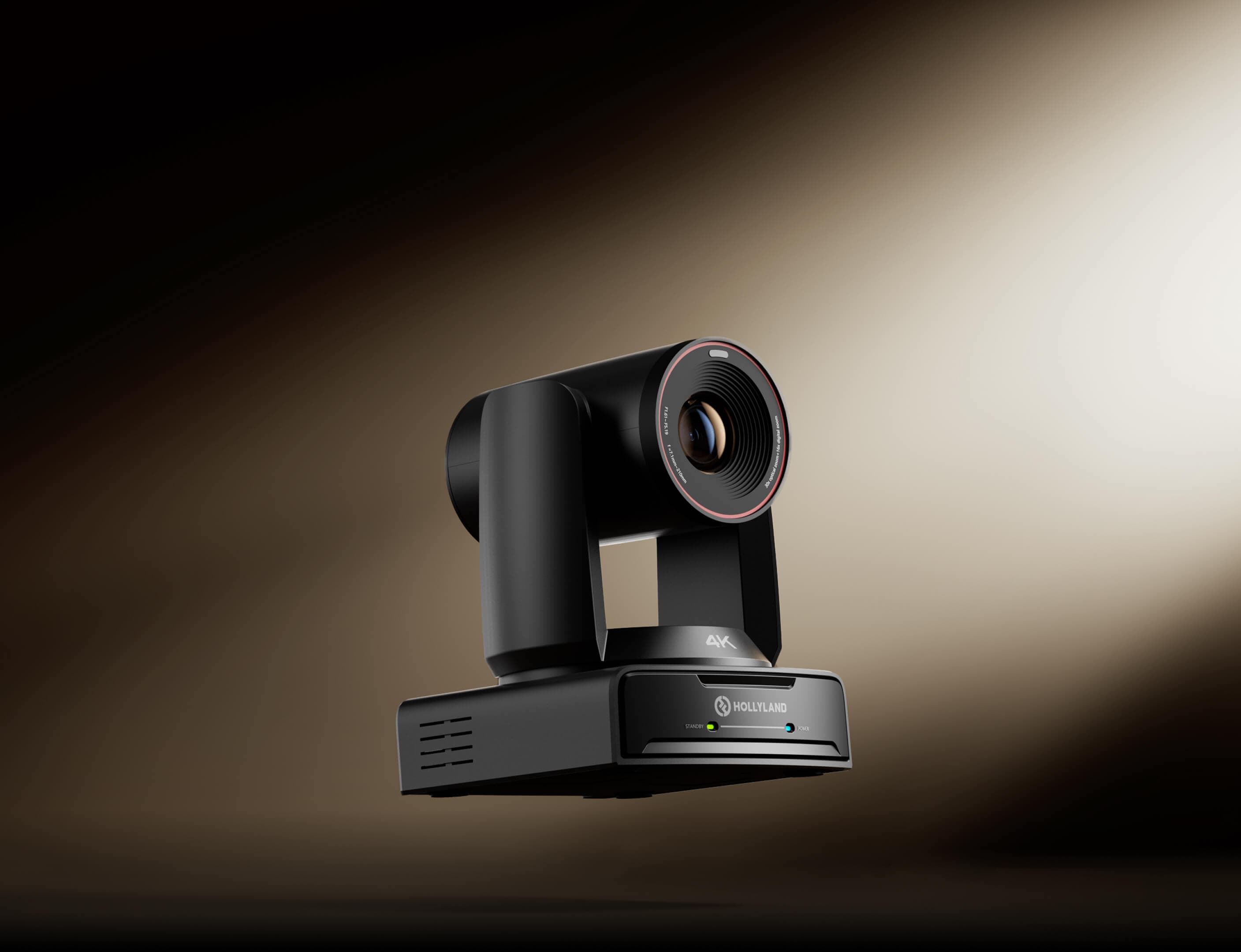
Hollyland has launched its new Astra P1 4K PTZ camera, featuring a 1/1.8-inch CMOS sensor, 30x optical zoom, and 4K/60 fps video capture. The camera includes AI auto-tracking modes (presenter and zone tracking) and built-in NDI HX3 support for professional live streaming and recording environments. It is designed to integrate with NDI workflows and is compatible with systems like OBX and vMix.
Key Takeaways
- Equipped with a 1/1.8-inch CMOS sensor capable of 4K/60 fps video at light levels as low as 0.5 lux.
- Features 30x optical and 16x digital zoom, tailored for long-range capture in auditoriums and concert halls.
- Built-in NDI HX3 support removes licensing friction, enabling high-quality, low-latency video over standard 1Gb networks.
- Integrated AI tracking includes 'Presenter' mode for subject following and 'Zone' mode for transitioning between four preset areas.
- Extensive hardware I/O includes HDMI 2.0, 3G-SDI, USB-B 3.0, and RJ45 with Power over Ethernet (PoE) support.
Why It Matters
The Astra P1 launch signals an aggressive move into the professional PTZ space, packaging premium NDI HX3 and AI automation at a sub-$2k price point. By bundling the NDI license and simplifying tracking workflows, Hollyland is lowering the technical and financial barrier for corporate, education, and religious organizations and enabling more sophisticated multi-camera setups with fewer personnel. This pressures legacy broadcast incumbents to accelerate the inclusion of AI and IP features in their mid-tier offerings. Watch for adoption rates among vMix and OBS users, which will indicate how well this hardware competes against established players like Panasonic and Sony in the growing IP-native production ecosystem.
Additional Context
The PTZ market is currently undergoing a structural shift toward IP-native workflows and AI-driven automation to offset rising labor costs. Per Market Report Analytics (May 2026), the global PTZ camera market for broadcasting is projected to reach $2.28 billion in 2026, growing at an 8.5% CAGR as institutions transition away from traditional SDI infrastructure. This growth is increasingly concentrated in 'operator-efficient' solutions that rely on AI to manage framing and focus without a dedicated camera technician for every lens.
Competitors are rapidly deploying similar technology. Per NewscastStudio (June 2026), Telycam recently announced its Explore series, which also features 4K/60 fps over NDI HX3 and brushless DC motors for smoother robotic movement. Meanwhile, established players like Sony and Panasonic are leveraging larger 1-inch sensors to defend their high-end positions in the broadcast segment. Per Key Code Media (2026), Sony's latest AI-assisted tracking is being positioned as a standard for high-stakes environments where reliability and skin-tone accuracy are paramount.
The adoption of NDI HX3 is a critical catalyst in this expansion. Unlike Full NDI, which requires roughly 250 Mbps for 4K video, HX3 delivers near-lossless 4K over standard 1Gb networks at approximately 80 Mbps. Per Z Systems (2026), this protocol allows facilities to utilize existing IT infrastructure for professional-grade video, effectively turning any network switch into a video router. This trend toward interoperable, software-defined production is expected to reach a tipping point in late 2026 as aging hardware forces late adopters to commit to IP transitions.
Read full article at notebookcheck.net
Enjoy our coverage?
Add StreamingMeme as a preferred source on Google to see more of our streaming news at the top of your Search results.
Add as preferred source