

HBS CEO on 2026 World Cup: IP workflows matured, host broadcaster role expanded
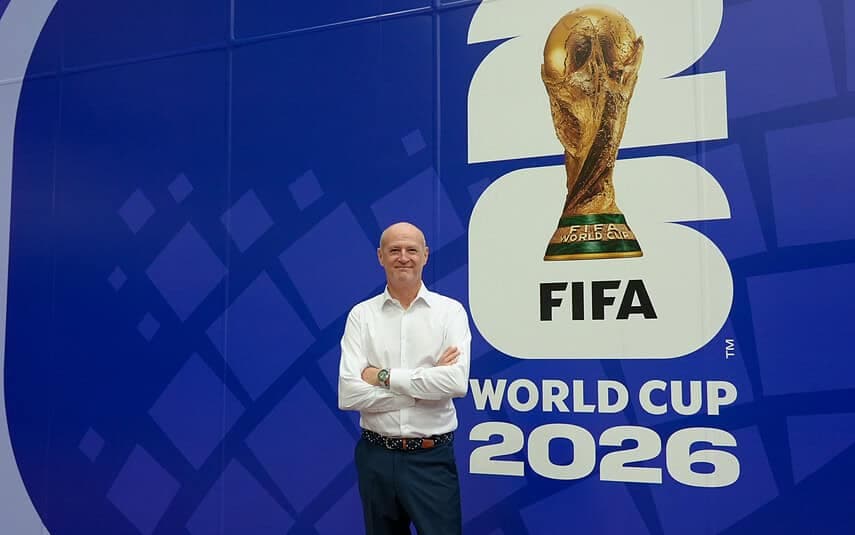
HBS CEO Dan Miowdownik details the operational scale of producing the 2026 FIFA World Cup across three countries, noting the maturation of IP-based production workflows and a shift from technology-driven to market-driven format decisions. The interview covers centralized replay and audio control, the 5,000-person production team, and the growing role of the host broadcaster relative to rightsholders.
Key Takeaways
- ~5,000 production personnel: 400+ at the London hub, 100+ per venue, plus IBC staff — running near 24/7 across 104 matches with 27 consecutive days of coverage
- Replay, shading, and audio control centralized at the Dallas IBC rather than staffed at 16 separate venues, driven by the difficulty of finding 16 consistent teams
- IP-based production workflows are 'significantly more mature' than in 2022, with every supplier now 'super-comfortable' with the orchestration and ownership model
- Format decisions have shifted from technology-driven (HD, 3D, 4K, VR) to market-driven — Miowdownik notes even Super Bowls are produced in 1080p and upconverted
- Host broadcaster footprint now exceeds rightsholders' at the IBC — a reversal from past World Cups — as FIFA, VAR, and digital content demands expand the multilateral operation
Why It Matters
The 2026 World Cup is the largest live sports production ever attempted, and HBS's centralized model — replay, shading, audio, and graphics operated from Dallas rather than 16 venue teams — validates decentralized production at unprecedented scale. The shift from technology-driven to market-driven format decisions signals the format wars are effectively over; practical delivery needs now drive engineering choices. Watch whether this centralization template carries into HBS's upcoming US Open work with USTA, and whether other mega-event host broadcasters adopt the same model.
Additional Context
Per SVG (June 2026), the Dallas IBC at the Kay Bailey Hutchison Convention Center houses 12,000 square meters of multilateral production area, with six control rooms dedicated to centralized replay, graphics, shading, and audio operations. The contribution network provides approximately 600 Gbps of capacity per venue via Verizon, FIFA's official telecommunications partner, with signals transported across a fully converged SMPTE ST-2110 environment spanning all 16 venues, the Dallas IBC, and a non-live post-production hub in London.
Per TVBEurope (2026), HBS is using JPEG XS compression for non-primary camera feeds at approximately 10:1 ratios, while the main Extended Stadium Feed travels uncompressed in UHD. Audio mixing — including immersive, 5.1, and stereo mixes — is fully centralized at the IBC, with local stadium mixes retained as backup. The architecture relies on approximately 60 high-performance COTS servers functioning as a private cloud, running software-defined processing for multiviewers, compression/decompression, and HDR/SDR conversion.
Per SportsPro (2026), nearly 200 broadcasters will use the IBC to produce programming and edit highlights, and the tournament is expected to generate close to 9,000 hours of content. Fox is broadcasting all 104 matches across its linear networks and the recently launched Fox One DTC platform, with selected games on Tubi. Per StreamingMedia (2026), FIFA president Gianni Infantino has compared the undertaking to '104 Super Bowls,' with a predicted global audience of six billion.
Read full article at sportsvideo.org
Enjoy our coverage?
Add StreamingMeme as a preferred source on Google to see more of our streaming news at the top of your Search results.
Add as preferred source