

Google Veo 3.1 tops AI video rankings as OpenAI exits Sora
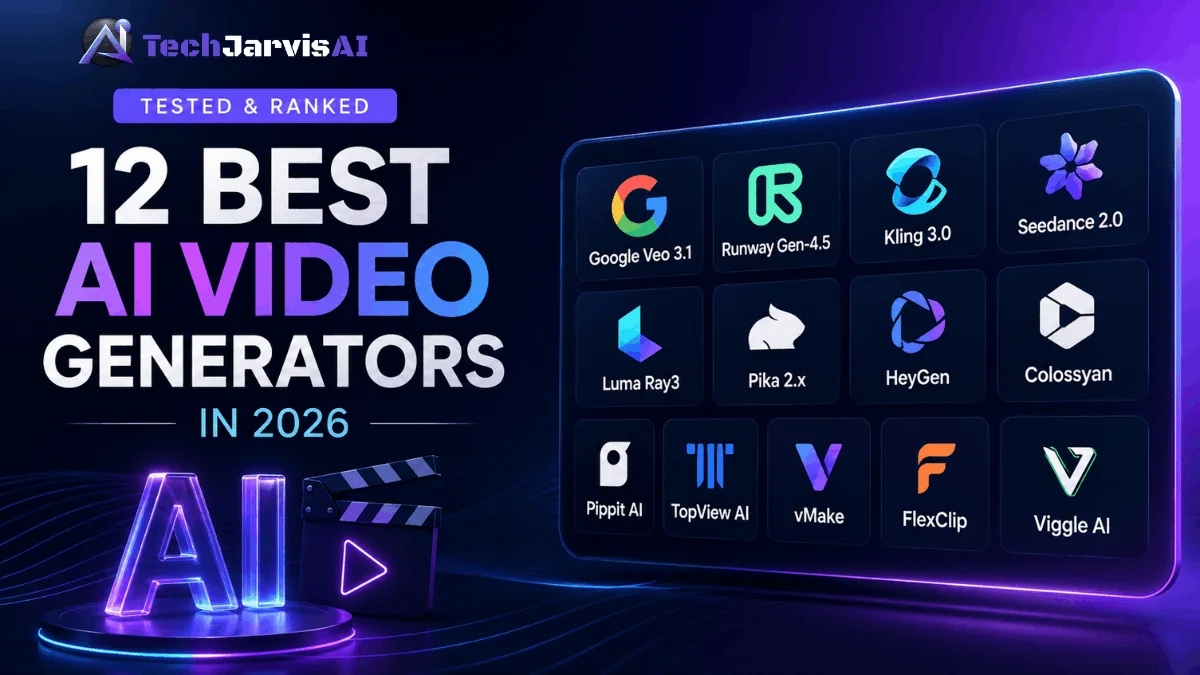
Google Veo 3.1 leads a ranking of AI video generators tested in 2026, while OpenAI discontinues its Sora model due to high operational costs and a failed Disney licensing deal. The article evaluates 12 tools based on realism, motion, audio, and pricing, noting a shift toward specialized creative, avatar, and social media workflows.
Key Takeaways
- Google Veo 3.1 ranked best overall, producing native audio (dialogue, sound effects, ambient sound) in one pass with output up to 4K at ~$19.99/month via Google AI Pro
- OpenAI discontinued Sora on April 26, 2026 (web/app), with API closing September 24, 2026; Sora reportedly cost ~$1 million/day to run while earning a fraction of that
- Runway Gen-4.5 won for creative control at ~$15/month, topping the Artificial Analysis text-to-video benchmark at launch with Motion Brush and Act-One performance capture tools
- ByteDance's Seedance 2.0 leads image-to-video, accepting up to 9 images, 3 videos, and 3 audio clips as references in a single generation
- Kling 3.0 from Kuaishou offers native 4K, clips up to 15 seconds, multi-shot storyboards, and multilingual lip-sync with a generous free tier
Why It Matters
Sora's shutdown removes OpenAI from the AI video generation race entirely, leaving Google, Runway, and Chinese players like Kuaishou and ByteDance to absorb its former user base. The rankings reveal a market that has fragmented by use case — cinematic generation, avatar-based business video, and short-form social content each demand different tools, with no single model dominating all three. For streaming and content teams evaluating AI video, the practical signal to watch is whether Google's Veo maintains its native audio lead as Runway and Kling add sound capabilities in upcoming releases.
Additional Context
OpenAI's decision to discontinue Sora came amid mounting financial pressure. Bloomberg reported on March 24, 2026 that the Disney partnership — originally announced as a three-year licensing deal — included a planned $1 billion equity investment in OpenAI, structured entirely in stock warrants rather than cash. Disney told the BBC on March 25, 2026 that it would "engage with AI platforms to find new ways to meet fans where they are" and responsibly embrace new technologies. Sora generated just $1.4 million in global net in-app revenue since launch, compared to $1.9 billion for ChatGPT over the same period, according to Sensor Tower data cited by the BBC. Forrester analyst Thomas Husson called the platform "a resource black hole with limited monetisation."
The broader AI video market is growing rapidly despite Sora's exit. Fortune Business Insights projects the global AI video generator market at $847 million in 2026, growing at an 18.8% CAGR toward $3.35 billion by 2034. Grand View Research puts the 2026 figure higher at $946 million. Per Wyzowl's 2026 State of Video Marketing survey, 63% of video marketers now use AI tools to create or edit video, up from 51% a year earlier — the sharpest single-year jump in the survey's 12-year history.
Competition among surviving platforms is intensifying. Runway closed a $315 million Series E at a $5.3 billion valuation in February 2026, per TechCrunch and Crunchbase. Kling AI, developed by Kuaishou, reported 22 million users and a $240 million annualized revenue run rate as of December 2025. The Verge reported on March 28, 2026 that Sora's downloads had fallen from 4.8 million in October 2025 to 1.1 million month-to-date in March, declining even as OpenAI expanded into new geographic markets — a signal that the model had lost its competitive edge well before the shutdown was announced.
Read full article at techjarvisai.com
Enjoy our coverage?
Add StreamingMeme as a preferred source on Google to see more of our streaming news at the top of your Search results.
Add as preferred source