
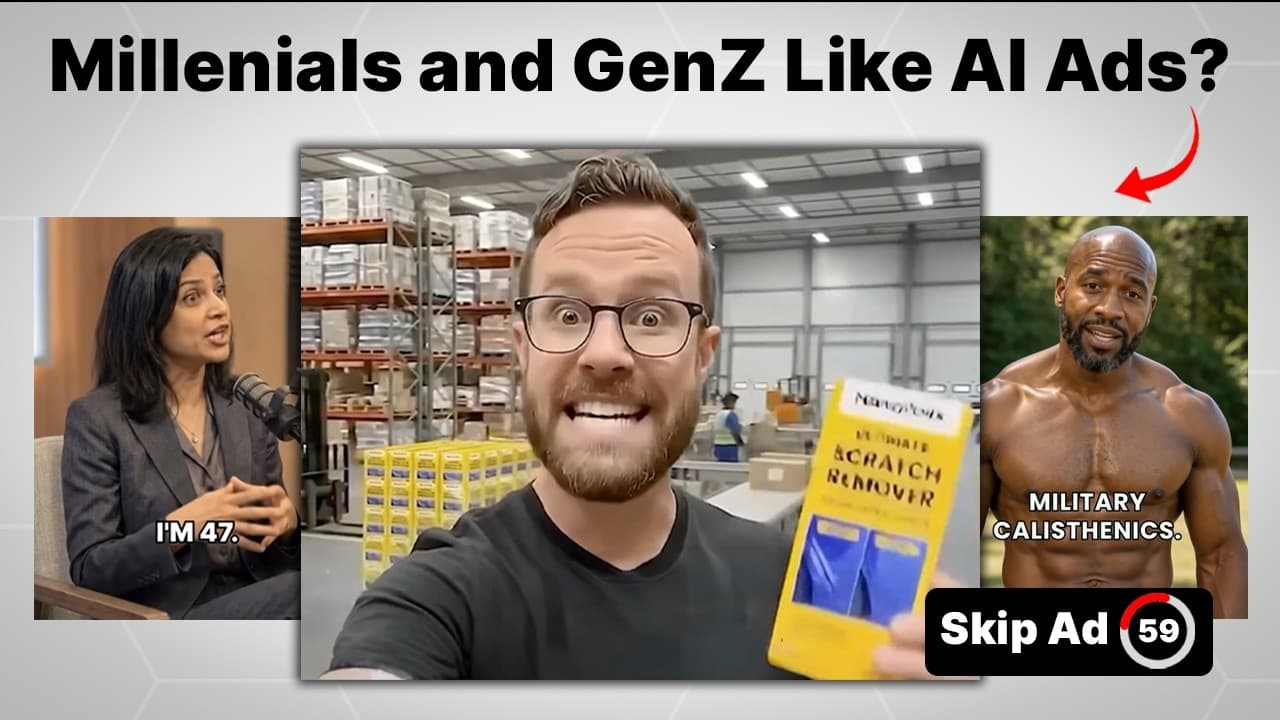
Google is increasingly integrating generative AI tools into YouTube Asset Studio to streamline ad creation by synthesizing actors and scripts for advertisers. While industry executives view this as a way to engage younger audiences, the proliferation of AI-generated creative has triggered viewer backlash regarding ad quality and concerns over potential scams.
The immediate implication is a widening disconnect between automated ad production and viewer sentiment, potentially eroding brand trust for advertisers who over-rely on synthetic creative. Within the broader ecosystem, this marks a shift where platforms like YouTube prioritize lowering the barrier for creative entry, even at the risk of content quality. For strategists, the result is a paradoxical 'enforcement gap' where Google claims to fight content 'slop' while simultaneously fueling its production through automated tools. Watch for a plateau in ad engagement rates or a sharp uptick in Premium conversion as users seek to avoid low-quality synthetic media.
The tension between AI efficiency and viewer trust comes as YouTube navigates significant policy shifts. Per Google in July 2026, the company introduced new labeling requirements that allow or automatically apply disclosures to AI-generated or modified creatives. This move aims to help advertisers comply with emerging transparency regulations in the EU, India, and New York. Additionally, per IBTimes in July 2026, YouTube confirmed updated Partner Program guidelines that strip monetization from channels mass-producing 'AI slop'—content that lacks narrative structure or uses digital twins to offer sensitive medical or financial advice. Research indicates this platform-level cleanup may struggle to keep pace with advertiser adoption. Per Digiday in August 2025, IAB estimates suggested that by 2026, 39% of all digital video ads would be created using generative AI tools, up from just 22% in late 2024. This growth is driven largely by the 86% of ad executives who have embraced the technology for audience customization and cost reduction. However, a significant perception gap remains; per IAB and Sonata Insights in January 2026, only 45% of Gen Z and millennial consumers actually feel positively about AI ads, despite the high executive confidence in the format. Financial data reflects a diverging performance between YouTube’s two primary models. Per Alphabet’s Q2 2026 earnings report in July 2026, the company’s subscription business—driven by YouTube Music and Premium—is growing faster than its advertising revenue. While ad sales rose 13% year-over-year to $11.06 billion, the 'Subscriptions, Platforms and Devices' segment grew 15% to $12.9 billion. This suggests that as AI complicates auctions and increases ad frequency and potentially fatigues viewers, more users are opting into the ad-free ecosystem, which reached an estimated 125 million subscribers by early 2026.
Add StreamingMeme as a preferred source on Google to see more of our streaming news at the top of your Search results.
Add as preferred source