

Google Gemma 4 12B enables local multimodal AI on 16GB laptops
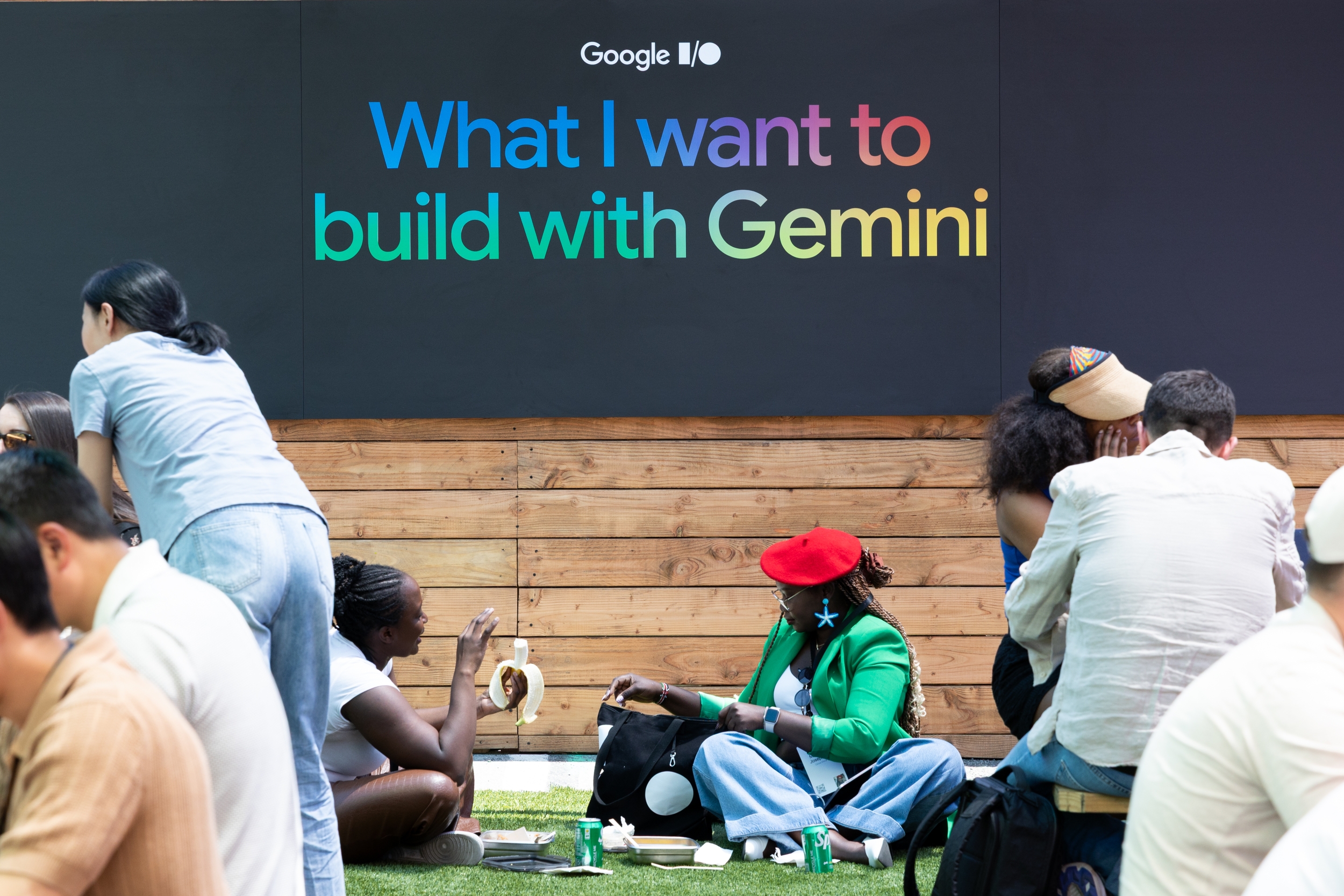
Google has launched Gemma 4 12B, a 12-billion-parameter open-weight multimodal AI model designed to run on 16GB RAM devices under an Apache 2.0 license. This model features an encoder-free architecture that directly processes text, images, audio, and video inputs, enhancing efficiency and reducing memory footprint and latency for local AI applications. Its unified design simplifies fine-tuning across modalities, making it suitable for on-device streaming-related AI workflows.
Key Takeaways
- Unified encoder-free design replaces heavy vision and audio subsystems with lightweight projection layers, reducing VRAM footprint.
- Native 256,000-token context window supports long-form document analysis and multi-hour audio processing locally.
- Apache 2.0 licensing removes previous commercial restrictions, facilitating unrestricted enterprise deployment and modification.
- Integrated Multi-Token Prediction (MTP) and stateless prefix caching through LiteRT-LM optimize inference throughput on consumer hardware.
- Quantized 4-bit versions permit execution on 8GB RAM machines, including M-series MacBook Pro and gaming laptop configurations.
Why It Matters
Gemma 4 12B shifts the economics of multimodal AI by moving computationally expensive workflows—like scene-aware video analysis and real-time audio transcription—from cloud APIs to local workstations. By eliminating separate encoders, Google has simplified fine-tuning into a single-pass operation, enabling developers to adapt models to specific streaming use cases without managing complex optimizer loops. This release forces a competitive response from proprietary providers as high-quality, multimodal reasoning becomes a zero-marginal-cost local utility. Industry observers should track independent latency benchmarks on consumer-grade silicon to see if local execution can truly match cloud performance for real-time video metadata generation.
Additional Context
The launch of Gemma 4 12B arrives as the industry consolidates around localized, privacy-first AI development. Per Google and external reports from June 2026, the Gemma family has surpassed 400 million total downloads since its inception, with the 31B variant currently ranked as the #3 open-weight model on the Arena AI leaderboard. This release bridges a critical hardware gap between mobile-focused edge models like the Gemma E4B and the high-end 26B Mixture-of-Experts (MoE) variant, which typically targets dedicated GPU workstations. Competitive pressure remains high in the open-weight landscape. According to reports from May 2026, Meta's Llama 4 family—including the Scout and Maverick models—implemented similar natively multimodal 'early fusion' architectures earlier in the year to compete with Chinese open-source leaders like DeepSeek. However, Gemma 4 12B is the first in its class to integrate native audio support at this parameter scale, a capability previously restricted to smaller edge architectures. Hardware manufacturers are simultaneously optimizing for these local workloads. Per NVIDIA and HP announcements in April 2026, the industry is standardizing 16GB VRAM as the floor for 'comfortable' local AI execution on Windows laptops, specifically targeting models in the 10B-14B parameter range. For macOS users, Google's concurrent release of the AI Edge Gallery and Eloquent desktop applications provides a streamlined, sandboxed environment for running Gemma 4 12B natively on Apple Silicon, bypassing the setup complexity typically associated with local LLM deployment.
Read full article at techtimes.com
Get this in your inbox → Subscribe
Enjoy our coverage?
Add StreamingMeme as a preferred source on Google to see more of our streaming news at the top of your Search results.
Add as preferred source