

Google Explores End-to-End AI and Explainability in 3D Computer Vision
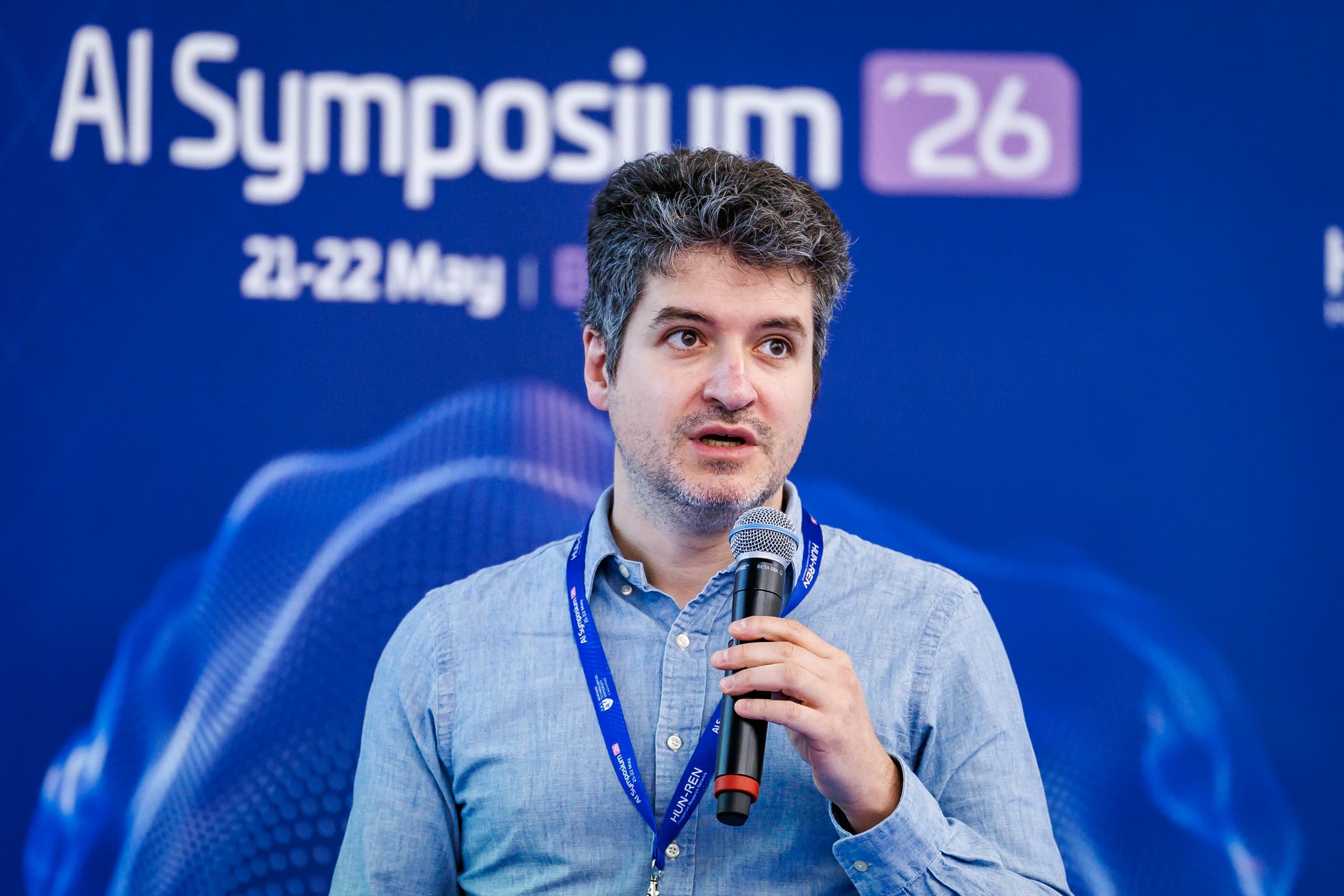
Federico Tombari, Director of Research at Google Zurich, discussed the growing importance of end-to-end generalist AI models in 3D computer vision and the need for explainability at the AI Symposium 2026. He highlighted spatial AI's role in creating geometrically faithful immersive environments for gaming, mixed reality, and autonomous systems, emphasizing policies for AI-generated content and data traceability. Tombari also touched on the shift in AI research balance between academia and industry, and the challenges and opportunities for broader adoption of XR and spatial computing.
Key Takeaways
- AI breakthroughs around 2021, particularly in large language models, significantly impacted 3D computer vision.
- There is a growing trend to replace multi-algorithm pipelines with single, end-to-end generalist AI models.
- Explainability in AI is increasingly critical for real-world applications where models make decisions, such as autonomous driving, to understand and fix failures.
- Policies are needed for AI-generated content and data traceability, including watermarking, to address challenges like deepfakes and copyrighted material.
- The balance of AI research innovation is rebalancing, with industry playing a larger role due to access to vast data and compute resources.
Why It Matters
The progression towards end-to-end AI models in 3D computer vision, while offering efficiency, introduces challenges in model transparency, directly impacting applications ranging from immersive media to autonomous systems. Industry's increasing lead in AI research due to resource demands signals a shift in innovation dynamics. Going forward, watch for industry and academic collaborations as a key indicator of how foundational AI research will be developed and deployed in practical, verifiable applications.
Additional Context
Recent research continues to push the boundaries of spatial AI and 3D reconstruction from video. "Spatia: Video Generation with Updatable Spatial Memory" (CVPR 2026) introduces a framework for long-horizon, consistent video generation by maintaining an explicit 3D scene point cloud as persistent spatial memory, allowing for explicit camera control and 3D-aware interactive editing (openaccess.thecvf.com). In parallel, "LongSpace: Exploring Long-Horizon Spatial Memory from Perception to Recall in Video" (arXiv, June 2026) proposes a memory framework that incorporates 3D structural cues to improve spatial understanding in long videos, essential for tasks like autonomous driving and robotic navigation (arxiv.org). Addressing real-world applications, "Room360: Video-to-3D Spatial Reconstruction Platform" (Hugging Face, June 2026) demonstrated an AI-powered platform converting smartphone videos into interactive 3D environments for real estate, interior design, and virtual tours, suggesting a democratized approach to 3D content creation (huggingface.co/blog). Furthermore, "RAYNOVA: 4D world foundation modeling" (Applied Intuition, May 2026) details a model unifying space and time in ray space for multiview, long-horizon video generation without explicit 3D reconstruction, emphasizing its applicability in simulating evolving, multi-camera real-world scenarios for autonomous systems (appliedintuition.com). These developments collectively highlight the industry's focus on creating more coherent, explainable, and accessible spatial AI technologies, moving beyond basic visual recognition towards robust 3D scene understanding and generation.
Read full article at hun-ren.hu
Enjoy our coverage?
Add StreamingMeme as a preferred source on Google to see more of our streaming news at the top of your Search results.
Add as preferred source