

Google automates Performance Max video ads with AI-generated voice-overs
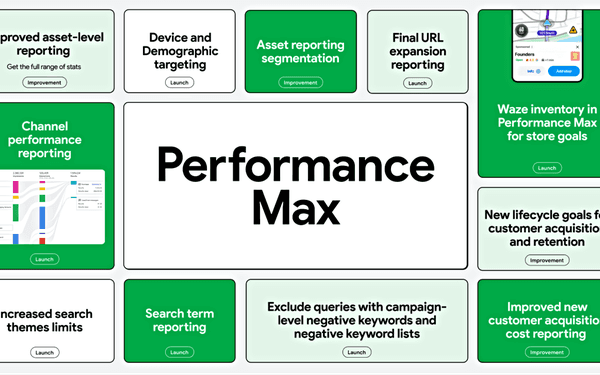
Google will integrate AI-generated voice-overs into its Performance Max video ads, utilizing advertiser headlines and descriptions for silent or music-only videos. This automated feature aims to increase creative testing volume for advertisers, with an opt-out option available. The technology uses Google's latest large language models and generative AI to create realistic spoken audio tracks.
Key Takeaways
- AI voice-overs generate automatically for video ads that lack existing voice tracks, human narrators, or branded audio.
- Advertisers have until March 20, 2026, to opt out of these automatic video enhancement controls at the campaign level.
- The technology utilizes Google's latest large language models and speech synthesis to create realistic spoken audio tracks from ad text.
- Google allows advertisers to set up to five specific start-times for voice-over messages within a single automated video asset.
- Performance Max now budgets across Search, YouTube, Display, Discover, Maps, and Gmail using these enhanced assets.
Why It Matters
This move signals Google’s commitment to hyper-automation within Performance Max, removing one of the last manual barriers to cross-channel video scaling: audio production. For the streaming and CTV ecosystem, this lowers the entry cost for smaller brands to run narrated video but risks creative homogenization if multiple advertisers utilize the same synthesized voice profiles. The pivot toward opt-out rather than opt-in automation reflects a broader industry shift where platforms prioritize inventory fill rates and 'creative diversity' over absolute brand control. Watch for shifts in Performance Max CPA and conversion volume as these narrated assets begin competing for YouTube and Discover placements alongside high-production human narrations.
Additional Context
The rollout of AI-generated audio follows a broader regulatory and policy push for transparency in AI-driven advertising. Per Google’s policy updates in March 2026, all ads incorporating AI-generated voices, images, or text must now carry a visible 'AI Generated' label to comply with misrepresentation frameworks. This mandate matches similar requirements at Meta, where advertisers must disclose AI-modified content to avoid ad rejection, as reported by Admove.ai in April 2026. These transparency measures are designed to mitigate deepfake-style content while allowing for the creative efficiency that generative tools provide.
Competition in the automated creative space has intensified as Meta and Google converge on similar feature sets. While Google defaults to automated narration from ad copy, Meta’s Advantage+ Creative suite emphasizes 'AI Dubbing' and persona-based generation. Per DigitalApplied in January 2026, Meta’s dubbing engine now replicates an original speaker's tone and pacing across languages like Spanish, Hindi, and Portuguese, aiming for natural-sounding international scaling. In contrast, Google's current implementation remains focused on converting static text assets into speech to fill performance gaps in silent video.
Market data underscores why platforms are aggressive with these automations. In Q1 2026, Google reported that Performance Max campaigns manage over 80% of total ad spend for median enterprise accounts, yielding 35% more conversions at a 20% lower CPA than manual alternatives. However, as the U.K. Competition and Markets Authority (CMA) recently highlighted in June 2026, the reliance on opt-out defaults—rather than opt-in choices—remains a point of contention for publishers and brands concerned about maintaining control over how their data and brand identity are utilized within AI training and execution loops.
Read full article at mediapost.com
Enjoy our coverage?
Add StreamingMeme as a preferred source on Google to see more of our streaming news at the top of your Search results.
Add as preferred source