
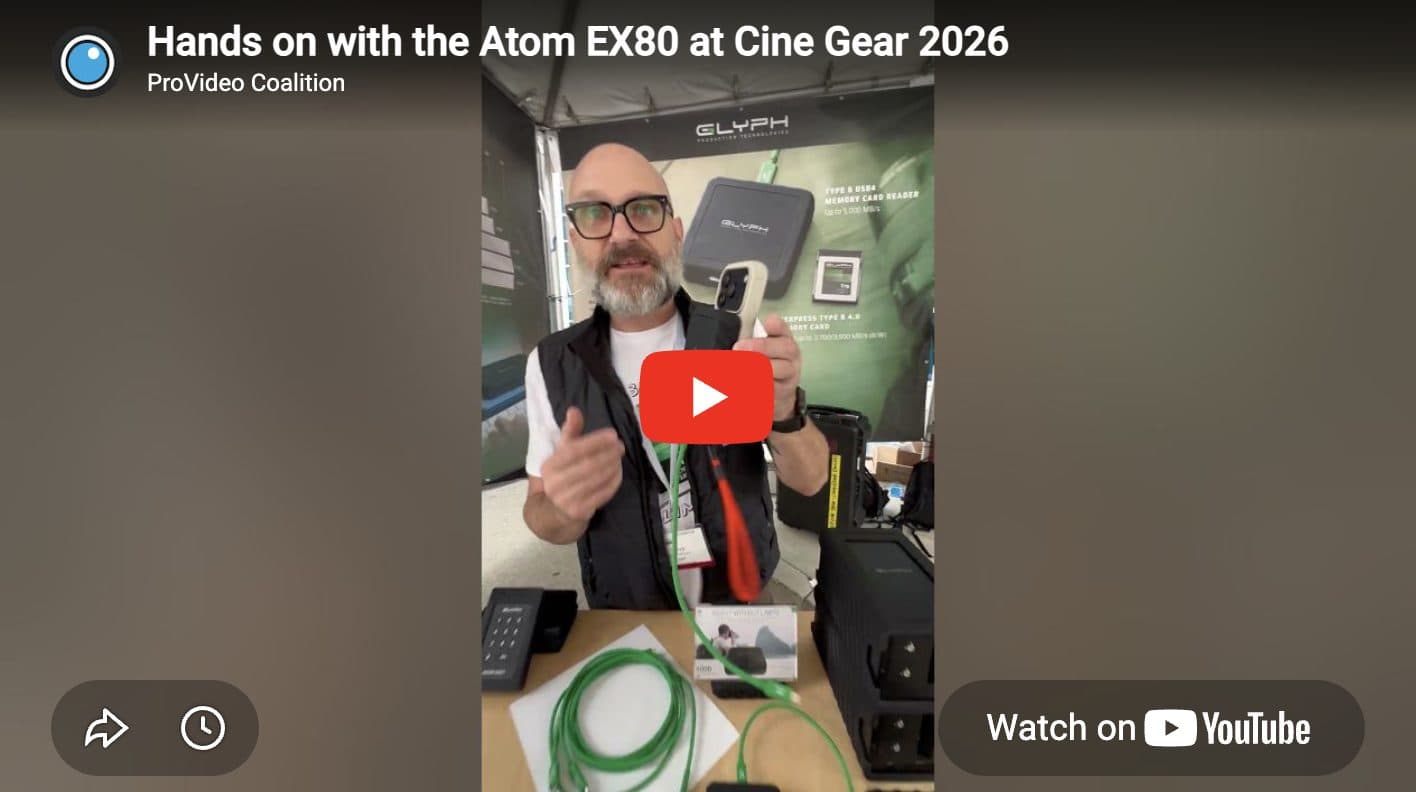
Glyph Production Technologies unveiled the Atom EX80, a portable NVMe SSD, at Cine Gear Expo 2026. This new device offers read/write speeds of up to 7,000 MB/s and includes Apple's "Find My" compatibility for tracking. It is designed to meet the high-performance storage needs of on-set DITs and creative professionals working with 8K/12K and RAW workflows.
At Cine Gear Expo 2026, Glyph’s launch coincided with a broader industry push toward Thunderbolt 5 and higher-capacity portable solutions. Competitor Other World Computing (OWC) also showcased its Thunderbolt 5 lineup, including the Envoy Ultra portable SSD which offers capacities up to 8TB, as reported by ascdi.com in May 2026. This reflects a significant leap in the portable SSD market, where benchmarks from early 2026 previously placed top consumer drives like the Samsung T9 at approximately 2,000 MB/s over USB 3.2 Gen 2x2. Per RedShark News in June 2026, the shift to 80Gbps USB4 and Thunderbolt 5 is essential for new high-resolution equipment like the Atomos Ninja TX and Sumo PRO-19, which now support up to 8K ProRes RAW recording.
The integration of tracking technology also mirrors a larger trend of hardware manufacturers leveraging Apple’s MFi (Made for iPhone) program to embed location services directly into professional tools. According to PetaPixel's June 2026 reporting, the Atom EX80 was specifically designed to handle the transfer of a full terabyte of data in under three minutes, a critical metric for DITs managing high-frame-rate or multi-cam projects. Pricing for the EX80 reflects this professional positioning, with the 8TB variant retailing for $2,199.99, underscoring the high cost of persistent high-speed NVMe storage in the current market.
Add StreamingMeme as a preferred source on Google to see more of our streaming news at the top of your Search results.
Add as preferred source