
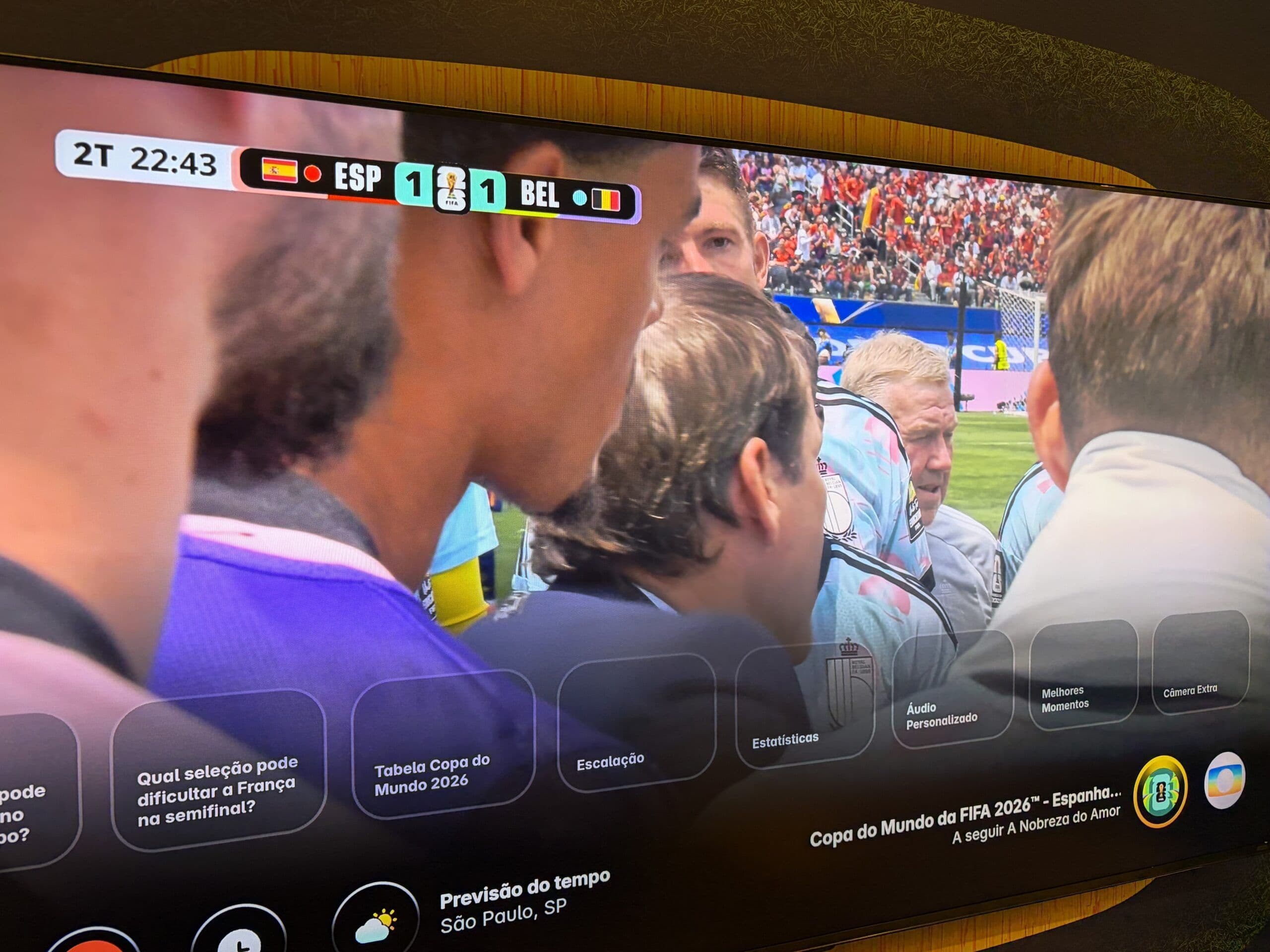
Brazilian broadcaster Globo is conducting early-stage field tests of its TV 3.0 (DTV+) implementation in São Paulo and Rio de Janeiro, focusing on 4K broadcast-broadband hybrid interactivity. Technical teams have reported challenges with synchronization latency between broadcast and IP-delivered signal components during live sports events.
The pilot signals the shift toward a hybrid broadcast-broadband model in Latin America's largest media market. By integrating 4K terrestrial signals with IP-driven personalization, Globo is attempting to reclaim the interactivity and measurement advantages lost to pure-play OTT services. However, the identified synchronization lag between broadcast and broadband streams remains a technical hurdle for features like alternative camera angles, which require precise temporal alignment. Solving these latency issues is essential for the planned commercial rollout targeting major sporting events. The success of this implementation will serve as a technical blueprint for regional broadcasters navigating the transition to IP-based terrestrial standards.
The DTV+ standard, formally adopted by a Brazilian presidential decree in August 2025, represents a significant departure from the legacy ISDB-T system. According to the SBTVD Forum (March 2026), the official commercial launch is now expected to accelerate throughout 2027, following a revised timeline intended to allow for the maturation of the device ecosystem. The standard incorporates several global technologies, including the ATSC 3.0 physical layer and the MPEG-H audio system, the latter of which provides the immersive and personalized sound capabilities demonstrated in Globo's recent tests.
To support the infrastructure transition, Globo partnered with Rohde & Schwarz in February 2026 to procure the first commercial-grade DTV+ transmitters for metropolitan Rio de Janeiro and São Paulo. These units utilize software-defined technology to handle advanced compression like VVC (Versatile Video Coding). While the transmit infrastructure is scaling, market entry for consumers remains dependent on hardware availability. Industry reporting from Dataxis (July 2026) suggests that first-generation set-top boxes are currently retailing between $130 and $175, a price point that must drop significantly to reach Brazil's roughly 70 million TV households.
Beyond resolution gains, the strategic goal for Brazilian broadcasters is the 'app-centric' nature of TV 3.0. As noted by ATSC leadership and Brazilian officials during the 2025 SET Expo, a unified standard across the Americas could drive economies of scale for vendors. For Globo, this allows for integrated shopping, targeted advertising, and direct audience measurement tools that function similarly to HbbTV in Europe. The broadcaster has emphasized that this hybrid approach is critical for maintaining the relevance of free-to-air television against rising competition from global streaming platforms.
Add StreamingMeme as a preferred source on Google to see more of our streaming news at the top of your Search results.
Add as preferred source