

Agora outlines real-time speech-to-text use cases for video apps
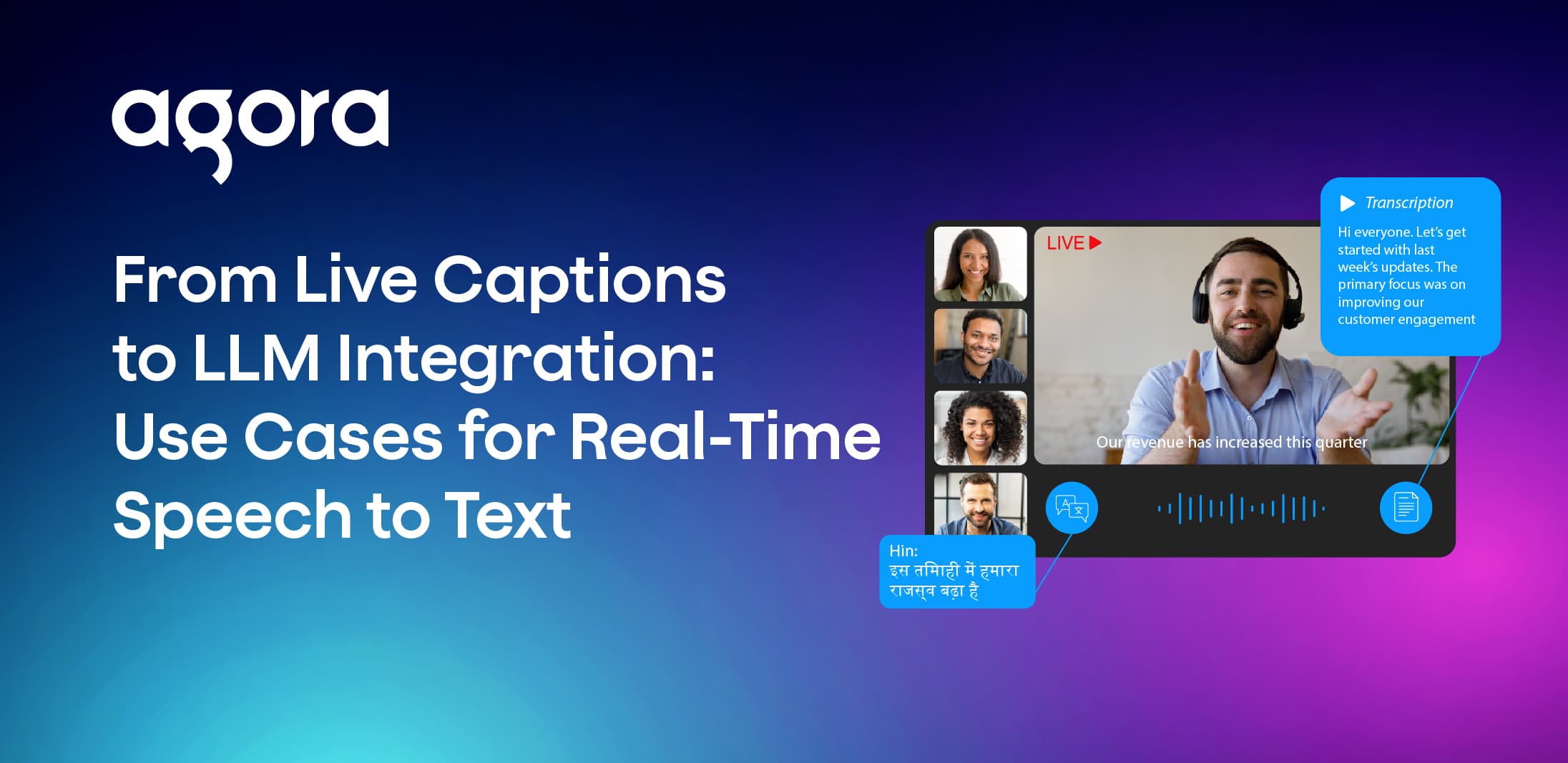
The article discusses how AI-powered speech-to-text technology is evolving, highlighting applications ranging from real-time transcription and live captions to call summarization and AI-powered responses. It focuses on the transformative impact of AI in communication. The article serves as an overview of various use cases for this technology.
Key Takeaways
- Real-time speech-to-text is positioned for live captions and real-time transcription in video applications.
- The article includes call summarization as a distinct use case for AI-powered speech-to-text.
- Agora also points to AI-powered responses as an extension of speech-to-text output.
- The source frames LLM integration as part of the same real-time speech pipeline.
Why It Matters
The immediate implication is that real-time speech-to-text is no longer just about captions; in Agora’s framing, it can also supply transcription, summarization, and AI-powered responses from the same live audio stream. That broadens the feature set video applications can build on top of speech data. For the streaming stack, the key shift is less about a single transcription layer and more about how speech output feeds downstream LLM integration. Watch for which of these uses — live captions, call summarization, or AI responses — shows up first in production video products.
Read full article at prod.agora.io
Enjoy our coverage?
Add StreamingMeme as a preferred source on Google to see more of our streaming news at the top of your Search results.
Add as preferred source