
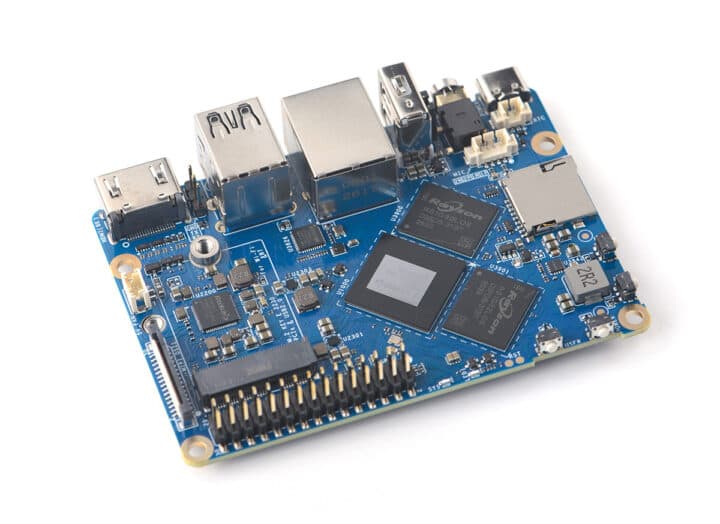
FriendlyELEC has updated its NanoPi M6V2 single-board computer, adding a 4-pin dual analog microphone connector and fixing RAM at 8GB LPDDR5. The device's Rockchip RK3588S SoC supports 8Kp60 video decoding for codecs like AV1, H.265, and VP9, making it suitable for edge video processing applications.
The addition of dual analog mic support signals a pivot toward sophisticated audio-visual edge processing, such as voice-controlled interfaces and acoustic monitoring. By fixing RAM at 8GB, FriendlyELEC is streamlining its supply chain during a period of rising component costs, though the significant price hike may alienate budget-conscious hobbyists. This move reflects a broader industry trend where high-performance ARM boards are maturing into specialized industrial tools rather than general-purpose consumer electronics. Watch for whether third-party accessory kits emerge to simplify wiring for the proprietary 4-pin audio connector.
The launch of the NanoPi M6V2 arrives as the single-board computer (SBC) market shifts toward 'Physical AI' and edge-native processing. Per industry reports from May 2026, the demand for on-device intelligence—driven by leaders like NVIDIA and Qualcomm—has moved beyond raw compute toward specialized I/O for vision and audio sensors. While the RK3588S chip at the heart of the M6V2 remains a staple for 8K multimedia, newer competitors like the Radxa Rock 5C and Orange Pi 5 Plus have saturated the mid-range market, leading manufacturers to differentiate through specific hardware features like the dual analog microphone input seen here.
Cost pressures also continue to reshape the landscape. While FriendlyELEC has increased the base price of the M6 series, other vendors are exploring cost-optimized variants. For instance, per Notebookcheck in March 2026, FriendlyELEC itself recently released the $25 NanoPi Neo3 Plus using the lower-tier RK3528A chipset to address the entry-level segment. This bifurcation suggests a market split: high-end RK3588S boards are becoming dedicated edge servers, while a new class of sub-$50 boards handles basic IoT tasks.
Software support remains the primary differentiator for ARM-based hardware in 2026. FriendlyELEC’s reliance on the Linux 6.1 LTS kernel and its collaboration with the Armbian community aligns with a broader push for 'Platinum support' levels in the developer ecosystem. As high-performance SBCs increasingly compete with mini-PCs, a robust software stack that supports diverse workloads—ranging from Android 14 tablets to Proxmox virtualization—is now as critical as the underlying silicon performance.
Add StreamingMeme as a preferred source on Google to see more of our streaming news at the top of your Search results.
Add as preferred source