
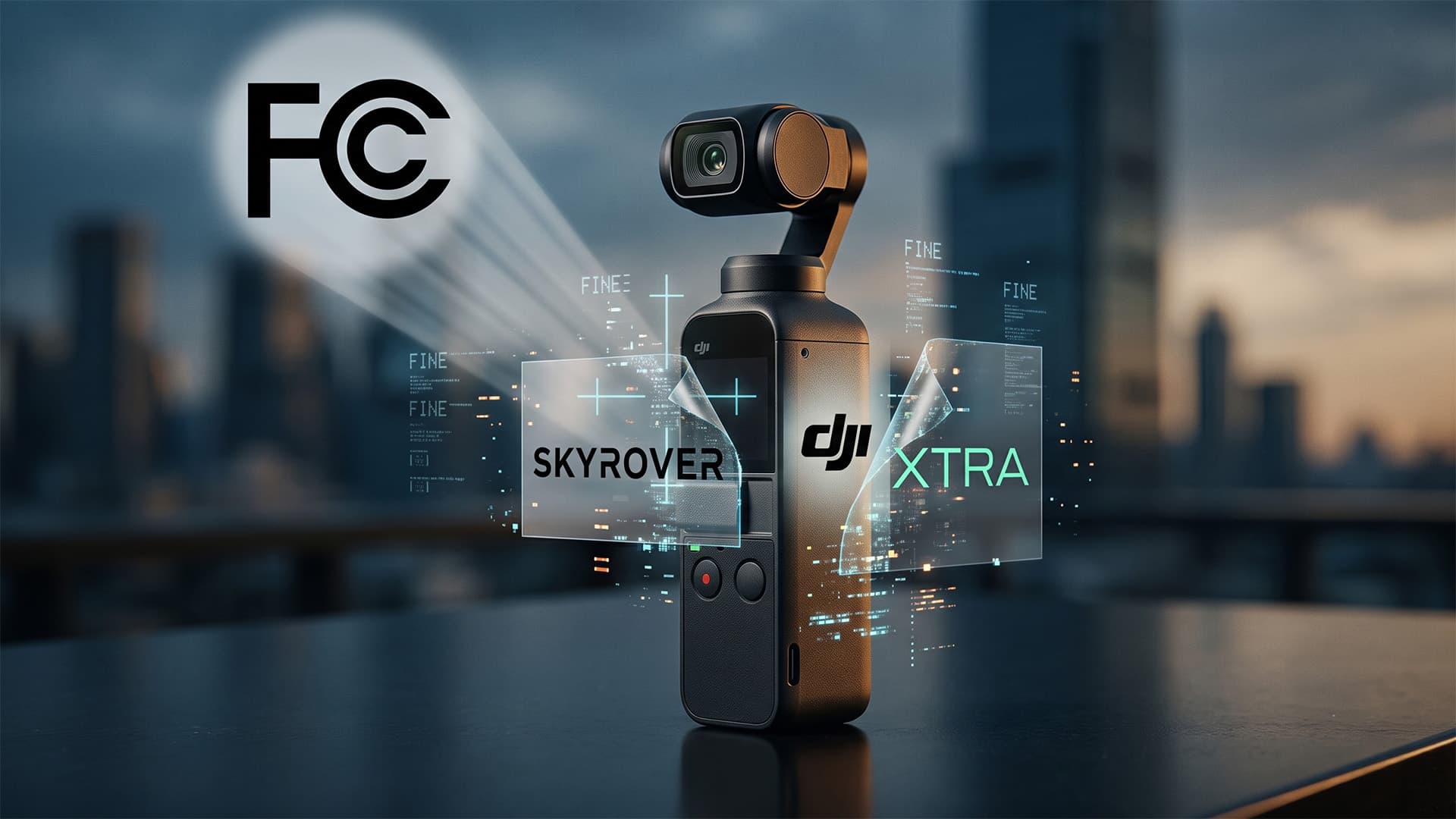
The FCC has issued $25,000 fines to eight companies alleged to be front organizations for DJI as part of an enforcement action regarding equipment on the agency's Covered List. The regulator is also moving to revoke testing lab accreditations, potentially complicating the supply chain for hardware containing DJI radio components.
Federal regulators are shifting from broad policy to tactical enforcement, specifically targeting the hardware supply chain workarounds that allowed DJI-linked technology to remain on U.S. shelves. By revoking testing lab accreditations and fining brand-name shells, the FCC is effectively closing the "component part loophole" that previously spared non-drone hardware containing DJI radios. Pro-sumer creators and streaming production houses must now account for a sudden contraction in the availability of mid-tier gimbal and action cameras. We are watching for a potential July 22, 2026, FCC vote that could formally finalize rules banning any device containing logic-bearing components from Covered List entities.
The FCC’s July 2026 enforcement follows a year of intensifying pressure on Chinese hardware. In December 2025, the agency officially added foreign-made drones to its Covered List, preventing new equipment authorizations for DJI and Autel Robotics. While this 'soft ban' grandfathered in existing models like the Mavic series, it effectively blocked the launch of future iterations in the U.S. market unless manufacturers could prove the technology was produced outside of restricted jurisdictions, per UAV Coach (June 2026).
Separately, the FCC voted unanimously on April 30, 2026, to ban all Chinese and Hong Kong-based laboratories from certifying radio-frequency devices destined for the United States. This move, reported by Tech Radar (May 2026), threatens to disrupt up to 75% of the consumer electronics supply chain, as manufacturers must now seek testing in alternative locations to maintain U.S. market access. The crackdown on SZ Knowact and WaveGo Tech—firms linked by researchers to DJI's 'FlySafe' infrastructure—is the first major application of these rules against the drone ecosystem.
Further legislative and regulatory triggers are looming for the end of the year. Per DroneXL (July 2026), several conditional approvals for uncrewed aircraft systems (UAS) are set to expire on December 31, 2026. Commissioner Brendan Carr has also proposed new transparency requirements for online marketplaces like Amazon, which would require the display of FCC IDs at the point of sale to prevent the distribution of unauthorized or rebranded 'covered' hardware.
Add StreamingMeme as a preferred source on Google to see more of our streaming news at the top of your Search results.
Add as preferred source