
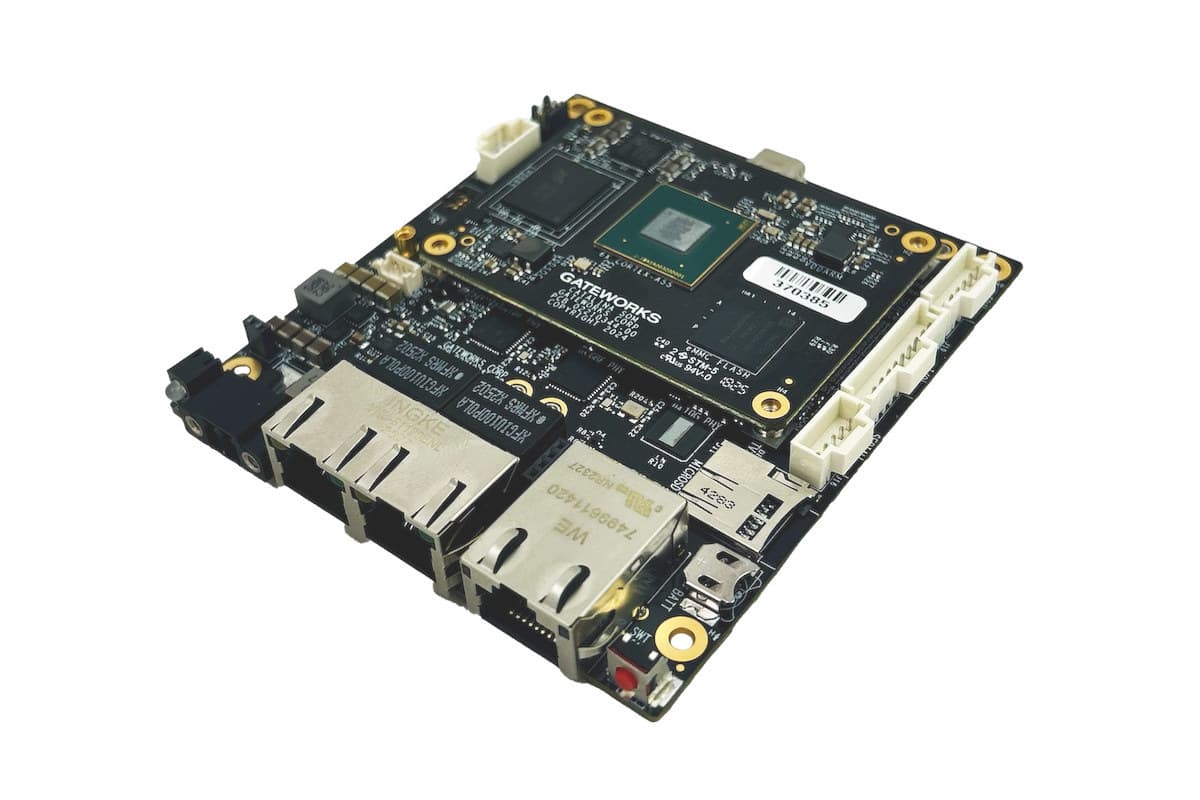
Ezurio has acquired Gateworks, adding the Catalina GW9200 SBC with the NXP i.MX 95 SoC to its embedded compute portfolio. This new single-board computer features a VPU supporting 1080p60/4Kp30 H.265 and H.264 encode/decode, and an NPU for Edge AI applications, offering flexible expansion via Flexible Socket Adapter sockets.
The industrial shift toward localized processing is driving demand for hardware that handles concurrent 4K streaming and AI metadata extraction. By acquiring Gateworks, Ezurio secures a 'Made in America' hardware stack for regulated sectors like defense and aerospace where security and local sourcing are paramount. For the streaming ecosystem, this indicates a trend where edge devices are no longer just encoders but integrated analytics hubs capable of running vision-language models locally. Watch for the mid-2024 launch of the larger GW6400 board, which will expand expansion capacity to four modular sockets.
The acquisition, finalized in June 2026, positions Ezurio—formerly known as Laird Connectivity—to capture the rapidly expanding edge AI video analytics market. Per Intel Market Research (May 2026), the global AI video analytics sector is projected to reach $21.45 billion by 2034, driven by the proliferation of high-resolution surveillance and localized processing requirements that bypass cloud latency bottlenecks. Ezurio CEO Mark Pugerude stated that the move expands the company's presence into mission-critical aerospace and defense platforms requiring long-lifecycle support (per Ezurio, June 2026).
Technically, the NXP i.MX 95 platform at the heart of the Catalina series represents a significant leap over previous generations like the i.MX 8M Plus. While it maintains a comparable 2 TOPS rating, NXP’s own internal benchmarks from 2026 show the eIQ Neutron NPU achieving up to 3x higher real-world throughput in object detection workloads due to its dedicated data-reuse architecture. This efficiency is critical for modern 'Vision-Language-Action' models (VLMs) which analysts per YouTube (November 2025) predict will dominate half of all industrial edge workloads by late 2026.
The broader industry context highlights a move toward hybrid architectures where the edge handles real-time visual decision-making while the cloud manages long-term metadata analytics. According to TechAhead (January 2026), dedicated NPUs in silicon like the i.MX 95 consume 10-20x less power than traditional GPUs for the same inference tasks. This power profile allows Ezurio to market these boards for fanless, ruggedized environments where traditional high-performance video servers cannot operate due to thermal constraints.
Add StreamingMeme as a preferred source on Google to see more of our streaming news at the top of your Search results.
Add as preferred source