
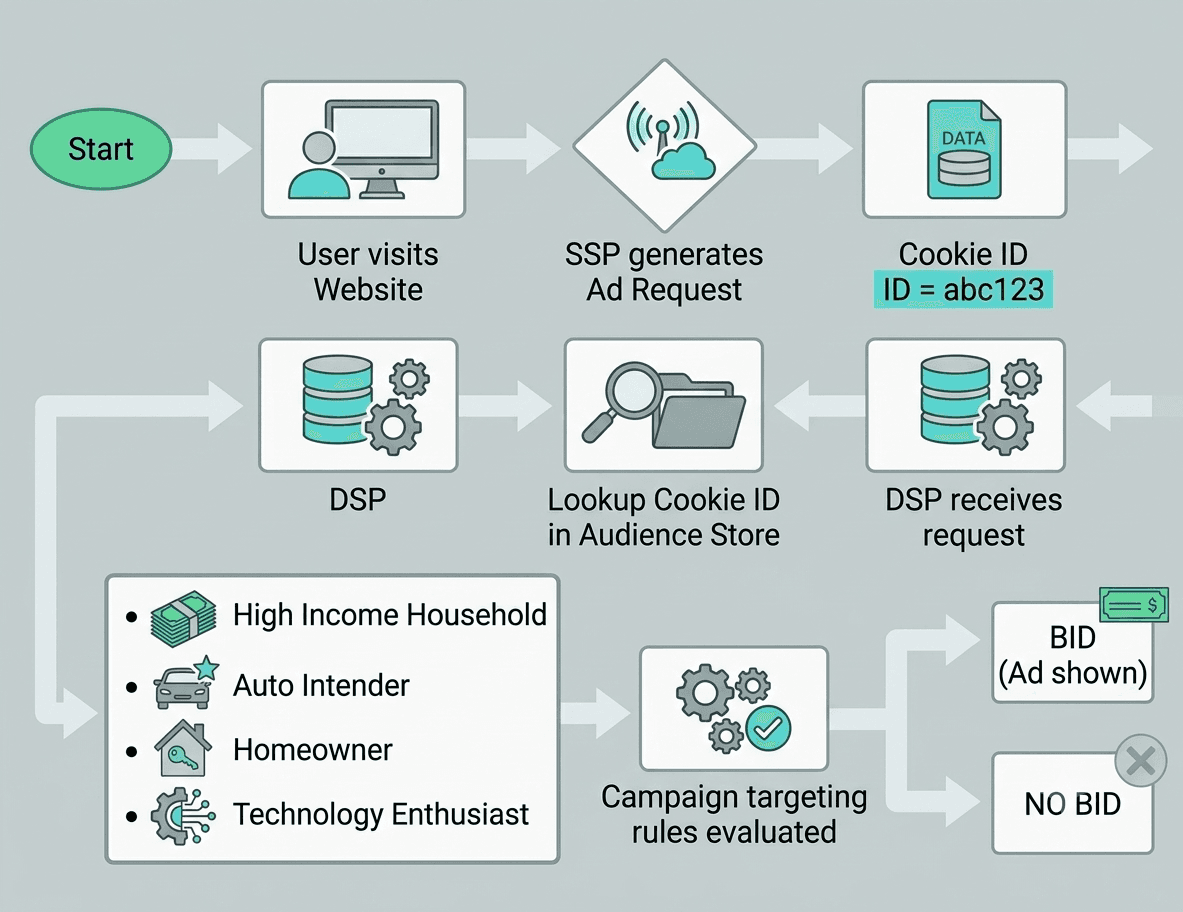
This article outlines the engineering architecture behind ad-tech audience segmentation, detailing how distributed systems like Spark and Kafka are used to process and resolve anonymized identity data. It provides a technical high-level overview of the pipelines required to ingest, validate, and activate audience segments for programmatic advertising.
The transition from demographic to behavioral targeting requires a more sophisticated engineering stack to manage the scale of CTV data. As programmatic buying now accounts for the vast majority of streaming ad transactions, the accuracy of these identity-resolution pipelines determines the efficiency of billions in ad spend. For the ecosystem, this means a shift away from broad reach toward precise, modeled outcomes, placing data engineers at the center of monetization strategy. Expect to watch for increased adoption of first-party data clean rooms as platforms seek to resolve identity without compromising privacy regulations like GDPR or CCPA.
The technical complexity of audience segmentation is meeting a high-stakes market in 2026. Per eMarketer (February 2026), U.S. connected TV ad spending is projected to reach $38 billion this year, with 88% of transactions occurring programmatically. However, this shift toward automated buying has exposed significant data quality gaps. A 'State of Data Accuracy' report from Truthset in February 2026 estimated that roughly 40% of open CTV programmatic spend—approximately $7.4 billion—is wasted due to inaccurate identity matching and unreliable audience segments, highlighting a systemic 'accuracy tax' on the industry.
To combat this waste and adapt to the post-cookie landscape, the industry is gravitating toward 'Composable Identity' frameworks. Per Intent IQ (June 2026), platforms are increasingly activating first-party data directly within cloud environments like Snowflake to maintain privacy-compliant identity maps without moving sensitive data. This trend is complemented by the rise of retail media on CTV, which according to Digital Applied (June 2026), reached $4.46 billion in 2025 and is expected to double by 2029. This growth is driven by the fusion of deterministic shopper data with big-screen reach, often facilitated by maturing data clean rooms.
Furthermore, standardization efforts are beginning to unify the fragmented CTV landscape. In March 2026, the IAB Tech Lab introduced a standardized CTV Ad Portfolio to provide a 'common language' for ad formats and technical signals across platforms. This move, combined with the June 2026 acquisition of self-serve platform Vibe.co by Walmart for $1.2 billion, signals a consolidation of identity and measurement layers as major players seek to control the full stack from impression to transaction.
Add StreamingMeme as a preferred source on Google to see more of our streaming news at the top of your Search results.
Add as preferred source