

DoubleVerify reports 24% fraud drop as geo-targeting violations climb 12%
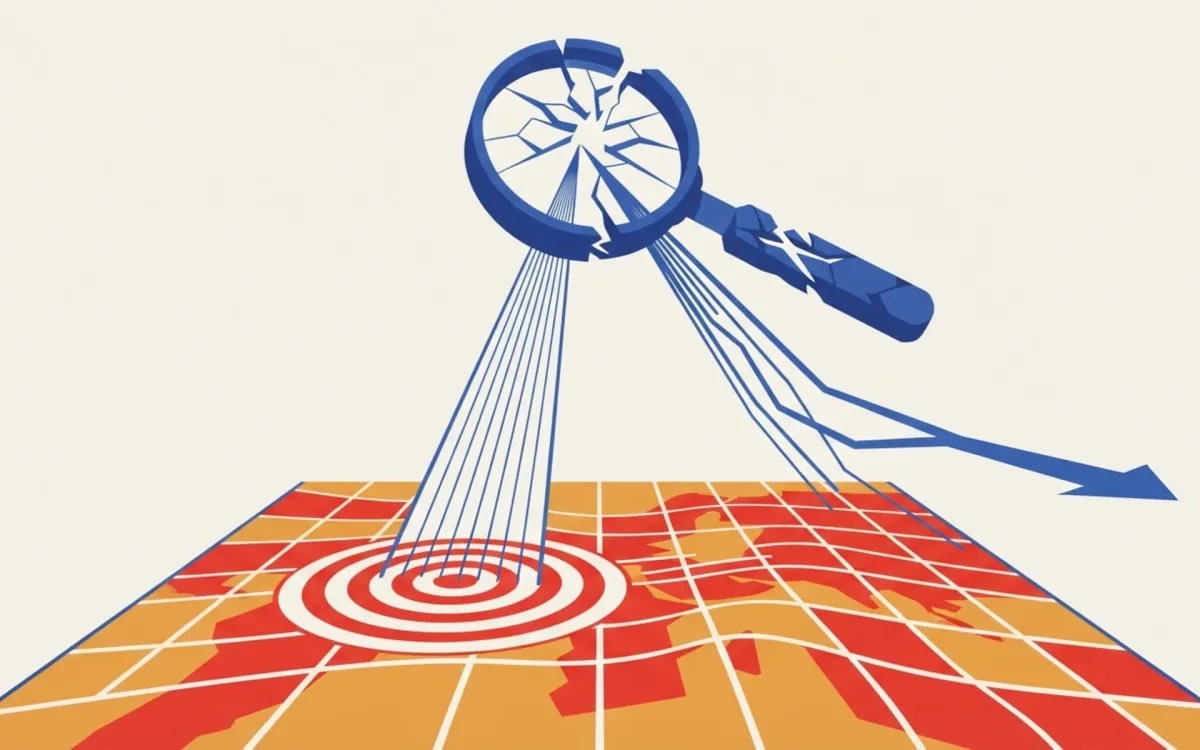
DoubleVerify's Q1 2026 benchmarks report indicates that while fraud and invalid traffic decreased by 24 percent, ads served outside intended geographic regions increased by 12 percent. The findings provide comparative metrics for media buyers to evaluate technical performance, attention, and quality across various device types and regions.
Key Takeaways
- Global fraud and sophisticated invalid traffic (SIVT) violations fell 24% year-over-year to a record low of 0.5%.
- Out-of-geo violations increased 12% to 1.2%, making it the only headline quality metric to worsen during the quarter.
- Mobile app environments achieved the highest display viewable rate at 82% but the lowest video viewable rate at 77%.
- The 'Audible and In-View on Completion' (AVOC) rate reached only 11% globally, despite a 69% video completion rate.
- EMEA led all regions with an Attention Index of 110, while North America matched the baseline at 99.
Why It Matters
The decoupling of fraud reduction from geo-targeting accuracy suggests that advertisers must audit localized delivery settings as strictly as bot traffic. As programmatic buying scales, the 12% jump in out-of-geo errors represents significant waste for brands with strict regional licensing or physical footprints. This data forces a shift from 'opportunity to see' toward 'attention' metrics, as high viewability no longer guarantees engagement, especially in mobile environments where display and video performance diverge sharply. Watch for whether buy-side platforms integrate real-time geo-correction tools to mirror the success seen in fraud-detection automation.
Additional Context
The emphasis on refined measurement comes as the verification sector faces heightened scrutiny regarding its core efficacy. Per PPC Land in December 2025, DoubleVerify was hit with a shareholder derivative lawsuit alleging that executives misrepresented the capabilities of its bot-detection technology over a 15-month period. This legal challenge followed a significant stock decline in early 2025 after the company reported quarterly results that missed analyst expectations, highlighting the financial pressure on measurement firms to maintain technical dominance in a crowded market.
While open web fraud has stabilized, the connected TV (CTV) segment remains a primary battleground for sophisticated threats. According to DoubleVerify's Global Insights report from May 2026, CTV fraud schemes plummeted into high gear with a 140% year-over-year increase in variants. This correlates with the March 2026 'AutoBait' investigation, where researchers identified over 200 domains using large language models and AI-generated imagery to manufacture clickbait at scale. These AI-driven networks are capable of generating tens of millions of fraudulent impressions, complicating the 24% fraud reduction seen in traditional digital channels.
Furthermore, the industry is grappling with 'zombie' impressions in the living room. Per coverage in March 2026, DoubleVerify found that one in three monitored CTV impressions were served to television sets that were actually switched off. This finding has accelerated the adoption of its 'Authentic Attention' framework, which moved into social media via a Snap partnership in June 2025. By shifting toward engagement signals like touch and audio controls, verification firms aim to recapture buy-side trust that has been eroded by these technical delivery failures.
Read full article at ppc.land
Enjoy our coverage?
Add StreamingMeme as a preferred source on Google to see more of our streaming news at the top of your Search results.
Add as preferred source