

Deutsche Telekom deploys multi-vendor REMI workflow for NYC-to-Munich World Cup coverage
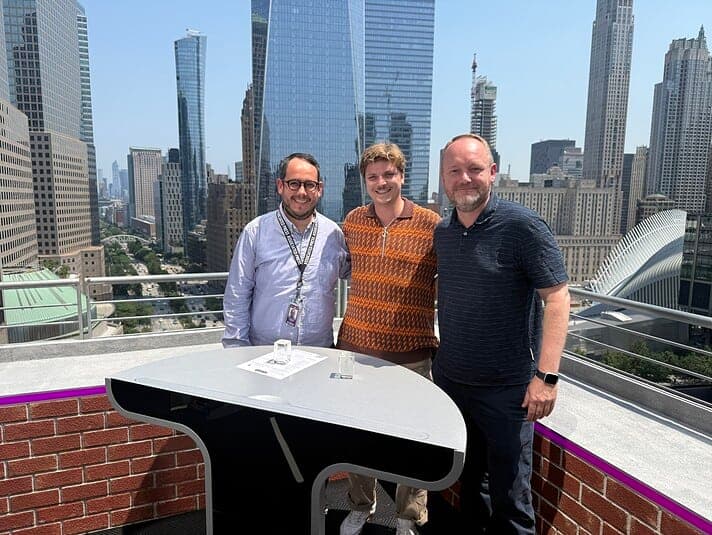
TV Skyline, thinXpool, and DMC Production are providing REMI production infrastructure for Deutsche Telekom's 2026 World Cup coverage, utilizing a New York studio and Munich-based control rooms. The workflow features sub-500 ms round-trip latency over redundant fiber backbones and incorporates remote camera management and 50Hz/59.94Hz frame rate conversion.
Key Takeaways
- Workflow manages sub-500 ms round-trip latency for remote camera control and audio mixing across the Atlantic
- TV Skyline converts 24 incoming stadium feeds from the U.S. 59.94Hz standard to 50Hz for European distribution
- DMC Production uses a 16.5-meter LED wall in Munich to simulate local match environments and lighting
- On-site Manhattan studio equipment includes Sony FR7 PTZ cameras, FX3 gimbal units, and Atom One HDR polecams
- Centralized audio control room handles live match mixing in Dolby Atmos 5.4 format
Why It Matters
The successful execution of sub-500 ms round-trip latency over standard global fiber backbones confirms that large-scale REMI has matured beyond proof-of-concept for tier-one global sports. By decoupling studio presentation from technical control, Deutsche Telekom reduces on-site personnel costs while maintaining high-end production features like Dolby Atmos and localized HDR. This multi-partner operational structure sets a technical blueprint for the 2030 World Cup, which will face even more extreme geographic fragmentation across three continents. Watch for whether high-latency stadium feeds can remain synchronized with social-first content channels during peak-load knockout rounds.
Additional Context
The 2026 World Cup marks a pivot toward fully HDR and IP-first production workflows for major rights holders. Per TV Technology (May 2026), Deutsche Telekom’s MagentaTV successfully transitioned its entire production chain to HDR for the first time, delivering 104 matches to German viewers via its dedicated World Cup channels. While Telekom holds master rights, it sublicensed 60 matches to public broadcasters ARD and ZDF, per SVG Europe (June 2026). This hybrid rights model necessitates highly reliable signal routing to ensure that shared feeds reach the National Broadcast Centre in Mainz for free-to-air distribution while maintaining exclusive UHD features for MagentaTV subscribers.
Technological convergence across the tournament is also driven by centralized infrastructure at the International Broadcast Centre (IBC) in Dallas. According to ISE (June 2026), the tournament's overall media operations rely on a software-defined environment using SMPTE ST 2110 networking and JPEG XS contribution. These standards allow broadcasters to manage approximately 600Gbps of capacity per stadium, enabling remote shading and replay operations that were previously restricted to on-site trucks. MTI Teleport, the fiber provider for the project, has utilized its national German fiber ring and international points of presence to bridge these U.S.-based stadium feeds directly to German production hubs.
This shift reflects a broader industry trend toward 'Reliability as a Service.' LiveU reported (June 2026) that nearly 60% of supported sessions during the tournament utilized IP contribution as a primary workflow, emphasizing a move away from traditional satellite links. As digital-first platforms like TikTok and YouTube are now designated preferred partners, production teams must simultaneously output vertical video and real-time social assets without increasing technical overhead. This multi-platform demand justifies the investment in remote control systems that can drive secondary analysis and social-media channels from a single centralized hub.
Read full article at sportsvideo.org
Enjoy our coverage?
Add StreamingMeme as a preferred source on Google to see more of our streaming news at the top of your Search results.
Add as preferred source