

Computex 2026: AI Infrastructure Replaces PC Focus, Record Attendance
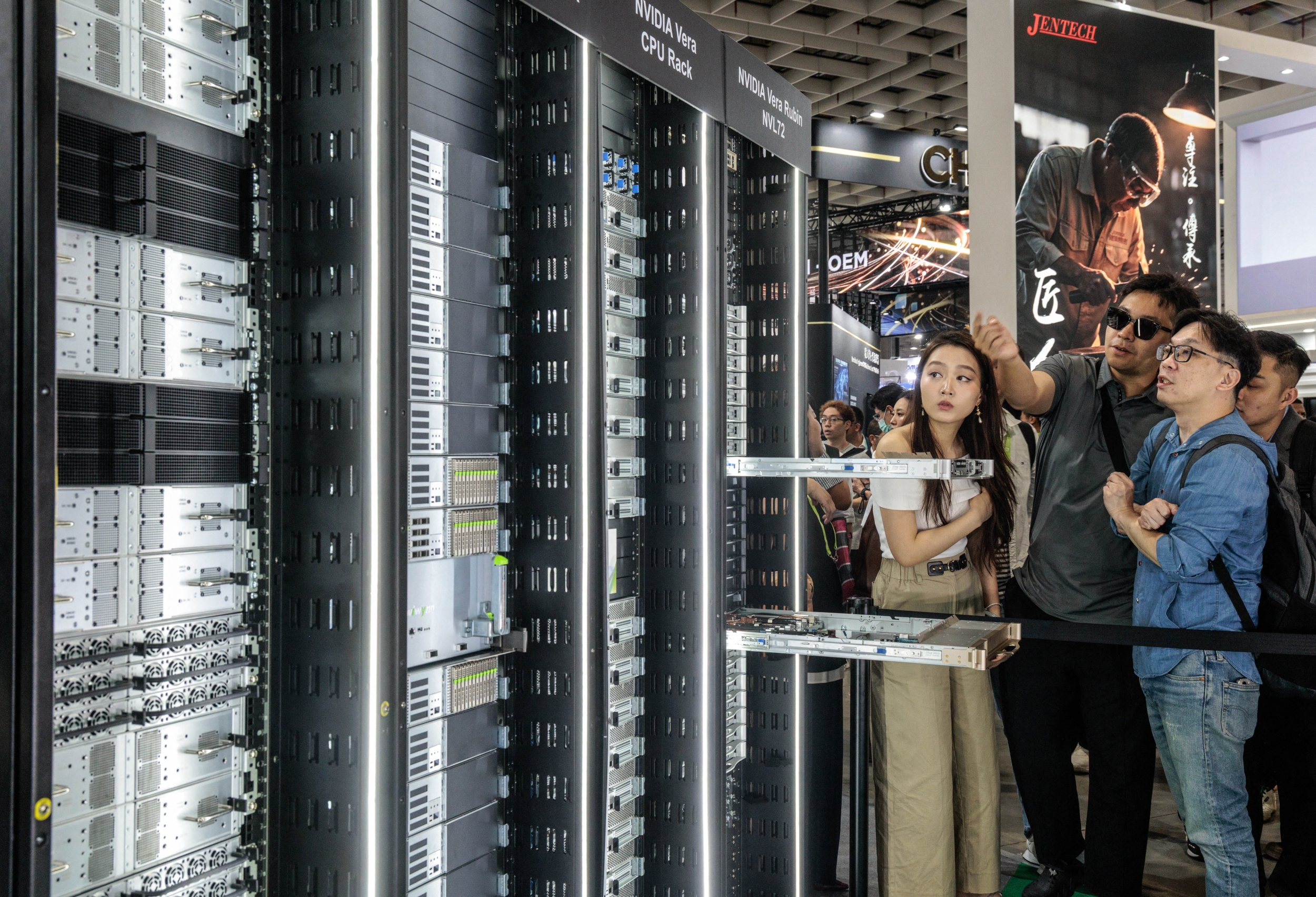
Computex 2026 set a 45-year attendance record, shifting its focus from traditional PC hardware to agentic AI infrastructure, physical robotics, and compute platforms. Key silicon announcements included Nvidia's RTX Spark Superchip for Windows PCs, Intel's 18A process node data center processors (Clearwater Forest), and AMD's extended AM5 socket support through 2029. The event also featured an inaugural AI Robotics Zone and highlighted critical component and platform developments relevant to AI-driven video processing and delivery.
Key Takeaways
- Computex 2026 attendance reached 111,312 visitors from 152 countries, a 45-year record.
- Nvidia introduced the RTX Spark Superchip, a 3nm SoC combining a Blackwell GPU (6,144 CUDA cores) and a MediaTek-designed 20-core Arm CPU, sharing 128GB of unified LPDDR5X memory.
- Intel launched the Xeon 6+ "Clearwater Forest" data center CPUs on its 18A process node, featuring RibbonFET (gate-all-around transistors) and PowerVia (backside power delivery).
- AMD pledged AM5 desktop socket support through at least 2029, promising compatibility for future Ryzen CPUs.
- An inaugural AI Robotics Zone was dedicated to embodied AI and robotics hardware, aligning with a projected €430 billion Physical AI market by 2030.
Why It Matters
The record attendance at Computex 2026, driven by a pivot to AI infrastructure, signals a hardware market realignment towards agentic AI and physical robotics. This shift affects component suppliers and system builders as compute demands for AI inference and real-world AI applications escalate rapidly. Streaming providers and video platforms should monitor the maturation of unified memory architectures like Nvidia's RTX Spark and advanced process nodes like Intel's 18A, as these will underpin future on-device AI capabilities and data center efficiency for content processing and delivery.
Additional Context
The transition at Computex 2026 reflects a broader semiconductor realignment where CPUs are increasingly repurposed as orchestrators for complex AI agent tasks. Per Focus Taiwan (June 2026), Intel CEO Lip-Bu Tan emphasized that while GPUs handle parallel inference, the next wave of 'agentic AI' relies on purpose-built CPUs to coordinate tool access and file interaction. This orchestration role is central to the Intel-Foxconn partnership announced during the show, which seeks to deploy rack-scale AI systems capable of high-density inference. Recent market reports emphasize the scale of this shift; per Strategy& (March 2026), the Physical AI sector is transitioning from research pilots to industrial deployment, with automotive and warehousing sectors expected to lead the €430 billion market by 2030. Competitive movements have also sharpened. Per PCMag (June 2026), Nvidia’s collaboration with MediaTek on the RTX Spark represents a 'hedging' strategy against data center power constraints by moving inference to local grids. This hardware is supported by the new OpenShell runtime, which provides a security framework for locally hosted agents. Simultaneously, the manufacturing landscape is evolving as Intel moves to 18A. Reporting from The Bull (June 2026) suggests that even rivals like Nvidia are evaluating Intel's 18A node for specialized multi-chip packages, though no firm orders are yet confirmed. AMD’s commitment to the AM5 socket through 2029, as reported by Ars Technica (June 2026), serves as a strategic counter-move against rising system costs, ensuring hardware longevity as PCIe Gen 6 and DDR6 technologies approach. These developments collectively indicate that the next five years will be defined by 'embodied AI'—intelligence that perceives and acts via sensors and actuators rather than purely digital output.
Read full article at techtimes.com
Get this in your inbox → Subscribe
Enjoy our coverage?
Add StreamingMeme as a preferred source on Google to see more of our streaming news at the top of your Search results.
Add as preferred source