

Chyron bets on one-to-many live localization with PRIME Translate
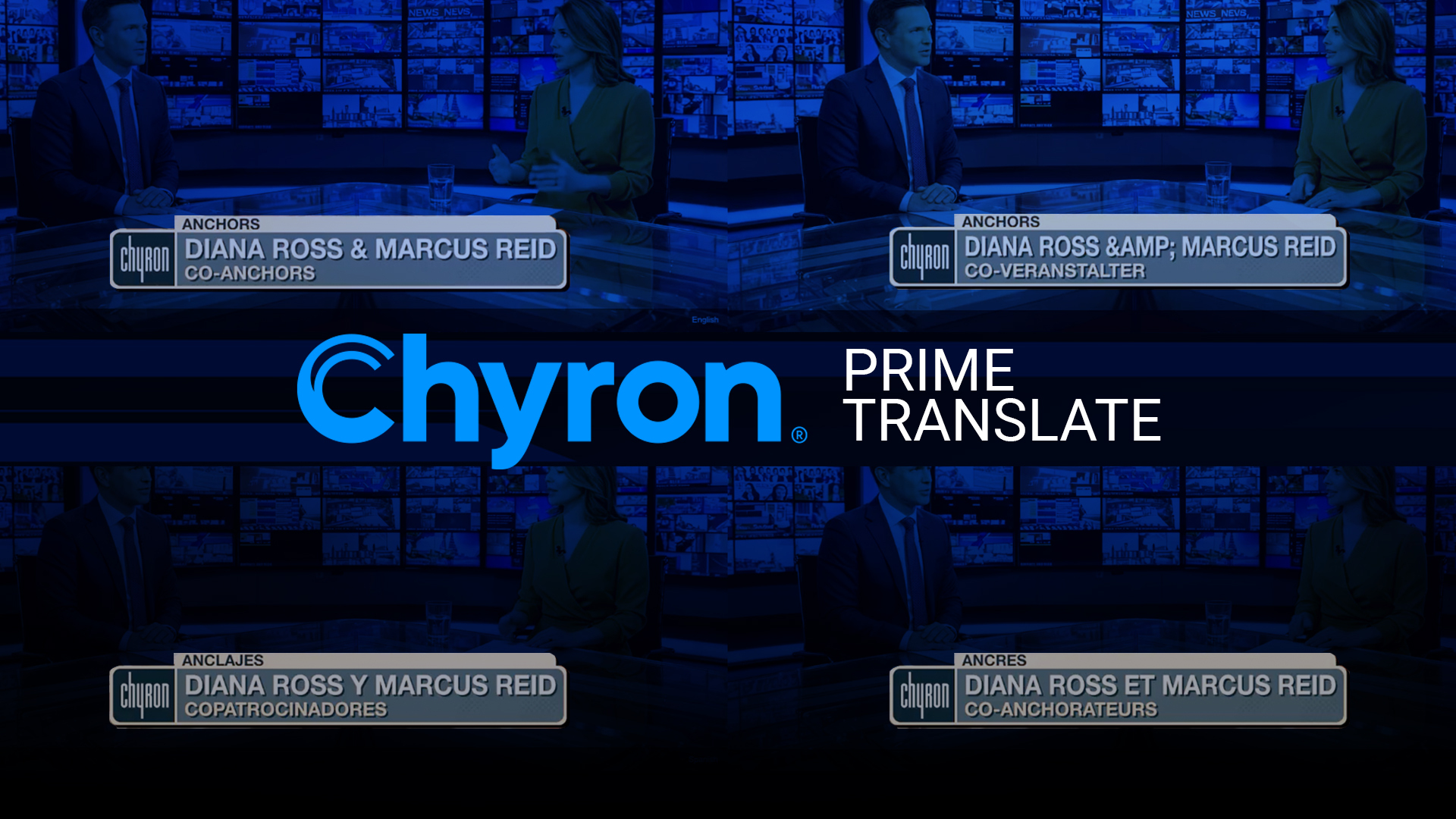
Chyron launched PRIME Translate, an AI-assisted live production workflow aimed at enabling regional and local broadcasters to generate multiple language versions of the same live content simultaneously, including translated audio, facial movement, and graphics overlays. The product is built to work with NVIDIA technology (including Holoscan for Media and NVIDIA AI for Media’s Content Localization Blueprint) to support scalable localization and create additional localized outputs that can be monetized via expanded ad inventory.
Key Takeaways
- PRIME Translate generates simultaneous multi-language live outputs, including audio translation, lip/facial movement adaptation, and translated graphics overlays.
- Designed for regional and local broadcasters, plus sports rights holders and news orgs seeking broader reach without duplicative production teams.
- Deep integration with NVIDIA’s media stack (Holoscan for Media + AI for Media Content Localization Blueprint) to run localization in real time on AI infrastructure.
- Chyron positions the product as a new ad inventory lever: more localized feeds enable more hyper-local, language-specific ad sales.
- Extends Chyron PRIME’s multi-version live production capabilities (graphics package switching, logic-based parameters, playout controls).
Why It Matters
Live localization is shifting from “clone the control room” to “software fan-out.” If PRIME Translate works as advertised, it compresses the cost curve for adding language markets—especially for news and mid-tier sports where full parallel productions never penciled out. That changes the monetization math: more localized streams mean more addressable sponsorships and region-specific ad packages, without waiting for full streaming platform localization roadmaps. The bigger meme: NVIDIA’s media blueprints are becoming the default substrate for real-time video AI—turning infrastructure choices into product strategy (and vendor lock-in) for broadcasters and streamers alike.
Read full article at tvtechnology.com
Get this in your inbox → Subscribe
Enjoy our coverage?
Add StreamingMeme as a preferred source on Google to see more of our streaming news at the top of your Search results.
Add as preferred source