
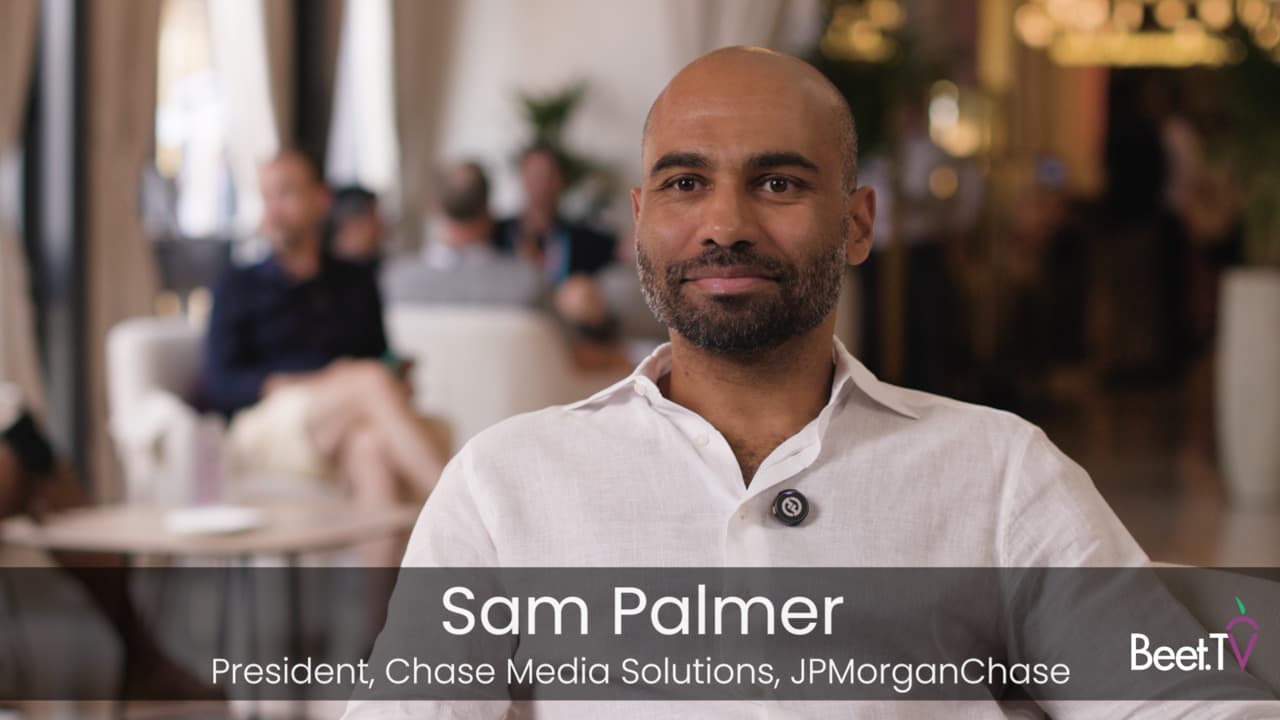
Chase Media Solutions is utilizing first-party transaction data from JPMorgan Chase to scale retail media advertising, focusing on algorithmically determining the optimal timing for personalized offers within its mobile banking app. The strategy emphasizes restraint to build consumer trust and aims to provide advertisers with measurable incrementality and proof of real-world sales.
As retail media moves beyond traditional e-commerce into financial services, the strategy of 'restraint' highlights a critical pivot from basic targeting to long-term audience management. For the streaming ecosystem, this indicates a maturation of ad-supported models where high-fidelity transaction data replaces generic reach metrics. By proving incrementality through closed-loop attribution, Chase is setting a benchmark that video platforms must meet as major advertisers demand clear evidence that media spend drives net-new retail outcomes. Watch for whether banking-led media networks begin integrating with shoppable CTV environments to link living room impressions directly to verified bank-card transactions.
The strategic focus on high-fidelity transaction data comes as the retail media sector enters a phase of rapid expansion and diversification. Per eMarketer, U.S. retail media ad spend is projected to reach $71.09 billion in 2026, growing nearly 18% year-over-year. While the market is dominated by giants like Amazon and Walmart, which control roughly 88% of spend, a new category of 'commerce media' is emerging from financial services, travel, and delivery platforms. These nontraditional networks are growing at a 107% CAGR as they offer what traditional publishers cannot: a direct link between an ad exposure and a credit card swipe.
Technologically, this shift is supported by JPMorgan's 2022 acquisition of the card-linked marketing platform Figg, which provided the infrastructure to bridge banking apps with retail offers. According to reports from Tinuiti and Mirakl in January 2026, the industry is increasingly moving toward 'agentic commerce' and AI-orchestrated experiences that prioritize efficiency over volume. This is evident in early pilot results; in a 30-day campaign for Air Canada, Chase Media Solutions reportedly generated over $2.3 million in incremental sales by targeting 10,000 new customers who had no prior purchase history with the airline, per international banking reports.
Financially, the move into advertising offers high-margin potential for banks facing a cooling interest rate environment. Per JPMorgan's Q4 2025 earnings release, while firm-wide revenue remains strong at $45.8 billion, non-interest revenue streams like payments and media services are becoming more critical. As commerce media spend is forecast by WPP’s GroupM to surpass total linear and connected TV spend for the first time in 2026, financial-led media networks like Chase are positioning themselves as the ultimate attribution engines in a post-cookie landscape.
Add StreamingMeme as a preferred source on Google to see more of our streaming news at the top of your Search results.
Add as preferred source